






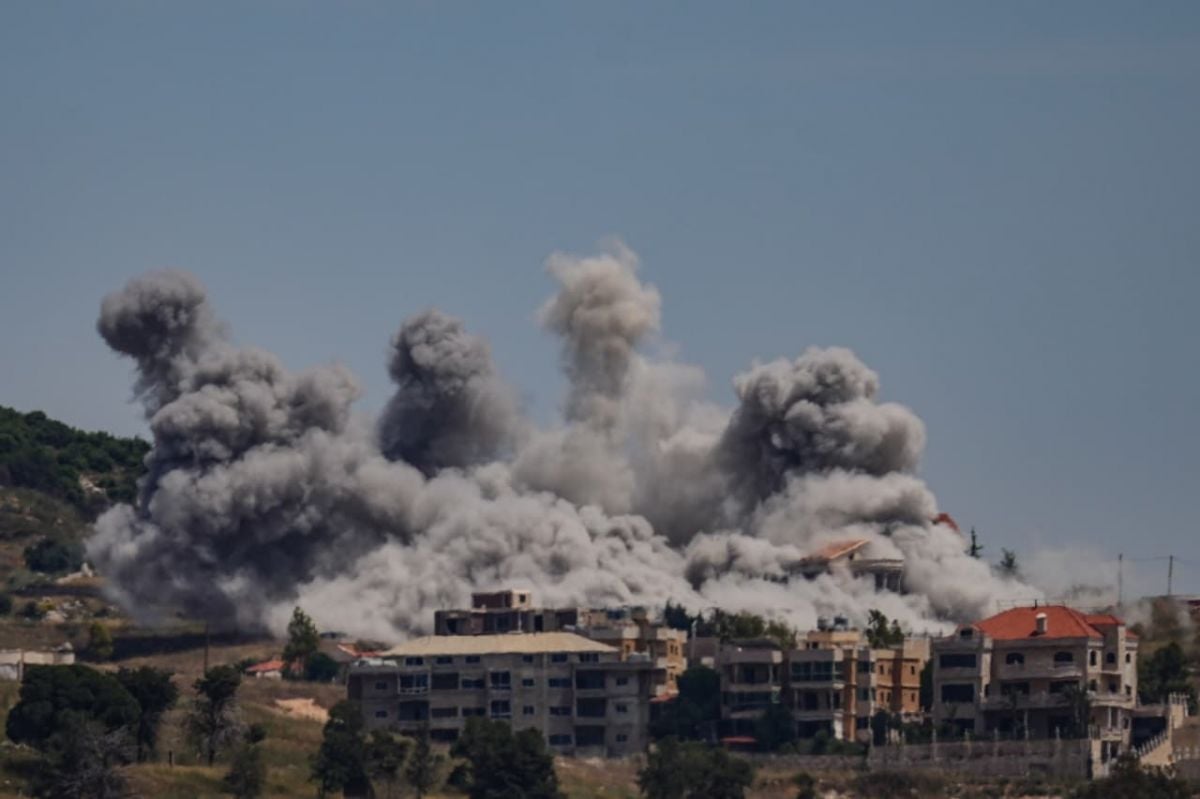
An Israeli strike on Kfar Tibnit, in the Nabatieh district, on June 3, 2026. (Credit: Mohammad Yassine / L'Orient-Le Jour)






BEIRUT — Israel intensified its drone strikes on south Lebanon on Wednesday, killing several people and reaching as far as Khalde on the highway between Saida and Beirut.
An Israeli air strike targeted a Lebanese Army vehicle traveling on the Deir Zahrani (Nabatieh district) road. The army described the strike as a deliberate attack that wounded an officer and a soldier. It condemned what it called the "systematic targeting" of army personnel, vehicles, and positions.
The army also denounced the "systematic Israeli attacks" that it said aim to force residents from their towns and villages, revealing the broader objectives behind the escalation.
Meanwhile, rescuers recovered the body of a Lebanese soldier killed by an Israeli strike on Nabatieh Fawqa. The Lebanese Red Cross transported the body out of the village, subject to repeated Israeli bombardment, according to information from L'Orient Today's correspondent. The Lebanese Army has not yet commented on the incident.
Israel targets first responders again
In Khalde, two Israeli missiles struck a vehicle. An ambulance arrived at the scene, but authorities had not released an official casualty toll by the time of publication.
An Israeli drone strike on a motorcycle killed a woman, Lama Basma, on the Housh–Ain Baal road in the Sour district. A paramedic was also killed and another person seriously wounded in a separate strike on a motorcycle at the Batouliyeh–Ain Baal junction, according to information from our correspondent.
Israeli drone strikes also killed three rescuers in Shahour (Sour). An initial strike killed an ambulance worker, and a second strike killed two colleagues who had rushed to the scene.
Another Israeli attack killed a rescuer in Arab Salim (Nabatieh). In nearby Zibdin, an Israeli strike hit a team from the Islamic Health Committee, affiliated with Hezbollah, wounding several members.
An Israeli drone strike on Tibnin (Bint Jbeil) killed a man driving a motorcycle.
Israeli airstrikes killed about 10 other people across the South. In Hosh (Sour), an Israeli strike killed four Syrian agricultural workers and two Palestinian nationals. Rescue teams also pulled two Syrian nationals from the rubble after a strike on the Siddiqine-Qana road (Sour).
Heavy Israeli bombardment on Debbine
During the day, the Israeli army ordered residents to evacuate Arzi, Kawthariyet al-Rez, Zrarieh, and Irkay (Saida), as well as Jbaa and Houmin Fawqa (Nabatieh). Israeli forces also threatened a building in Kharayeb (Saida).
Several areas came under particularly heavy bombardment. Israel struck Debbine (Marjayoun) at least 10 times before attempting to advance its invasion towards it.
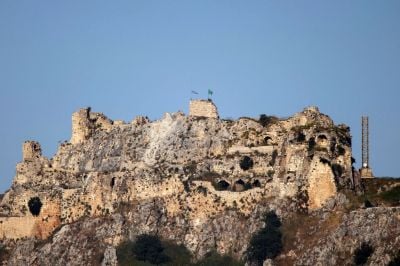
It also hit Kfar Tibnit (Nabatieh) three times, including near a Lebanese Army barracks. The village is north of Beaufort Castle in Arnoun, the strategic hilltop position that Israel captured on Sunday.
An Israeli strike killed one person in Zrarieh.
In response, Hezbollah said it launched two exploding drone attacks against Israeli soldiers or vehicles on the eastern outskirts of Zawtar Sharqieh, north of the Litani River, and claimed two similar attacks near Yohmor al-Shaqif (Nabatieh). The group also claimed an artillery strike on Israeli soldiers gathered in Odaisseh (Marjayoun).
After Israel intercepted projectiles fired from Lebanon, Hezbollah claimed responsibility for an attack on al-Marj military position in northern Israel, opposite the Lebanese villages of Odaisseh and Markaba.
Israel has warned that it will strike Beirut's southern suburbs if Hezbollah continues firing on northern Israel, while direct negotiations between the two sides continue in Washington on Wednesday.
‘No cease-fire in southern Lebanon,’ says Israeli army chief
Israeli army Chief of Staff Eyal Zamir said there was “no cease-fire” in southern Lebanon, as Israeli forces continue their strikes and expand their ground offensive in the south.
He added that the Israeli military “will not tolerate” attacks by Hezbollah and said Israel would not withdraw from its new “security zone” until “the threat to communities in northern Israel has been removed.”
“In Lebanon, the mission assigned to us by the political leadership is to position ourselves along the line [the Yellow Line marking the buffer zone imposed by Israel in southern Lebanon] in order to prevent direct fire on the communities. We have achieved that; this is the line on which we are positioned. We may have to remain there,” Zamir said during a visit earlier in the day to the occupied village of Taybeh (Marjayoun district).
Israeli attacks have killed at least 3,516 people and wounded 10,674 others since the resumption of the war on March 2, according to the Health Ministry.
Additional reporting by Muntasser Abdallah.

 US strike on Iran this weekend? ‘Absolutely,’ says Barrack; ‘I have no idea,’ says Trump