


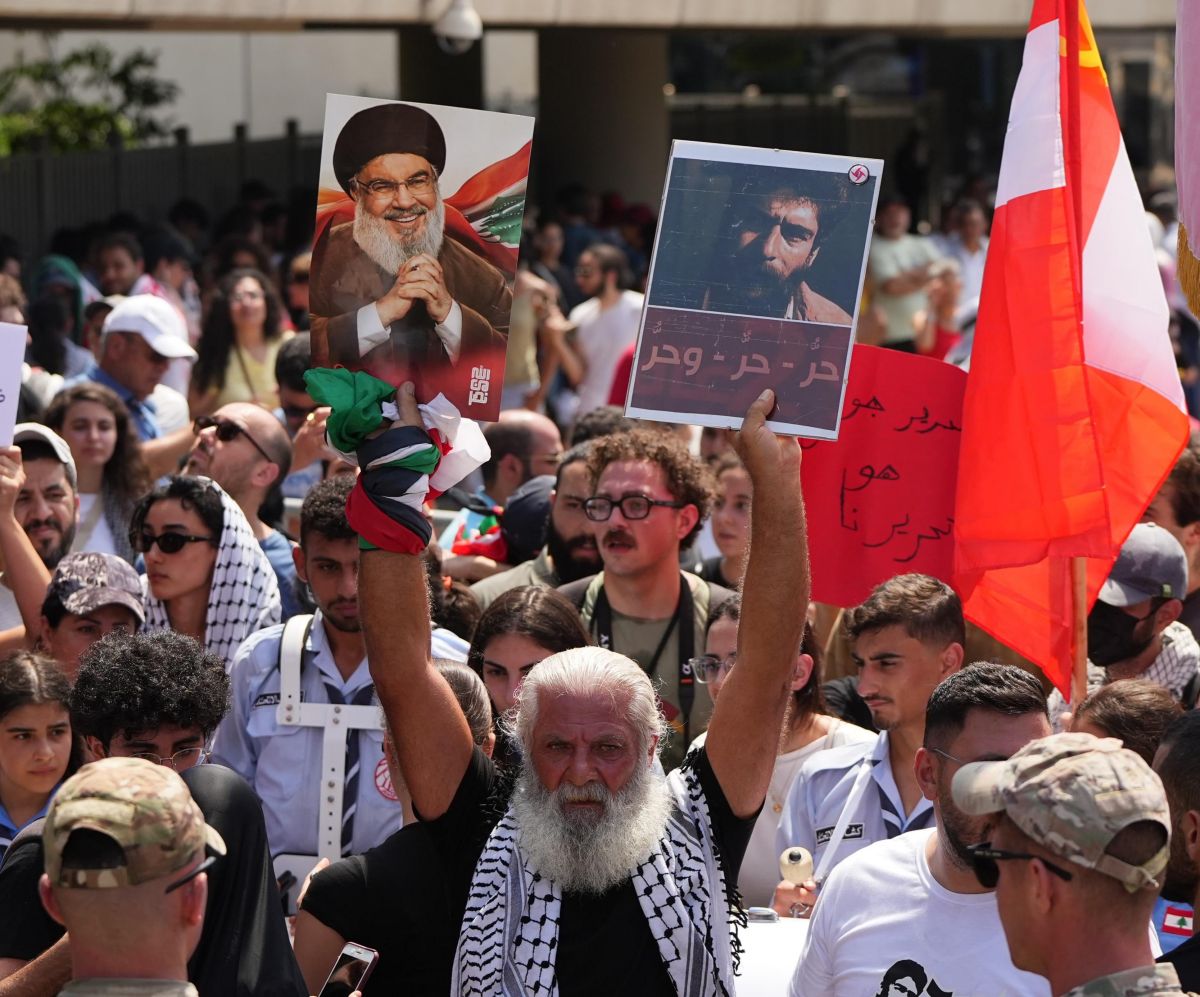
Supporters gathered at Beirut's airport on July 25, 2025, for the arrival of George Abdallah, released after 40 years in prison in France, notably waving a flag of the Lebanese Communist Party. (Credit: Mohammad Yassine/L'Orient-Le Jour)






In southern Lebanon, the history of the “resistance” does not begin with Hezbollah. It began long before, in villages accustomed to Israeli bombardments even before the party’s name appeared, in homes used since the 1970s to the roar of Israeli aircraft, and in a long-standing relationship where land, fear, borders, and occupation are intertwined. In the wake of the 1982 Israeli invasion, the Lebanese National Resistance Front (LNRL; Jammoul in Arabic) emerged as a cross-sectarian resistance movement, without a religious identity but driven by a broad national project. It was led by figures such as George Hawi and Mohsen Ibrahim, who promoted the idea that liberating the territory could serve as a unifying national project rather than the privilege of a community or ideology.At the time, the communist fighter confronting Israel still...
In southern Lebanon, the history of the “resistance” does not begin with Hezbollah. It began long before, in villages accustomed to Israeli bombardments even before the party’s name appeared, in homes used since the 1970s to the roar of Israeli aircraft, and in a long-standing relationship where land, fear, borders, and occupation are intertwined. In the wake of the 1982 Israeli invasion, the Lebanese National Resistance Front (LNRL; Jammoul in Arabic) emerged as a cross-sectarian resistance movement, without a religious identity but driven by a broad national project. It was led by figures such as George Hawi and Mohsen Ibrahim, who promoted the idea that liberating the territory could serve as a unifying national project rather than the privilege of a community or ideology.At the time, the communist fighter confronting Israel...

 7 p.m. recap: Netanyahu seeks mastermind behind Flydubai incident; Washington sanctions 2 French nationals; Ben Gvir's 'I want to kill you' threat