





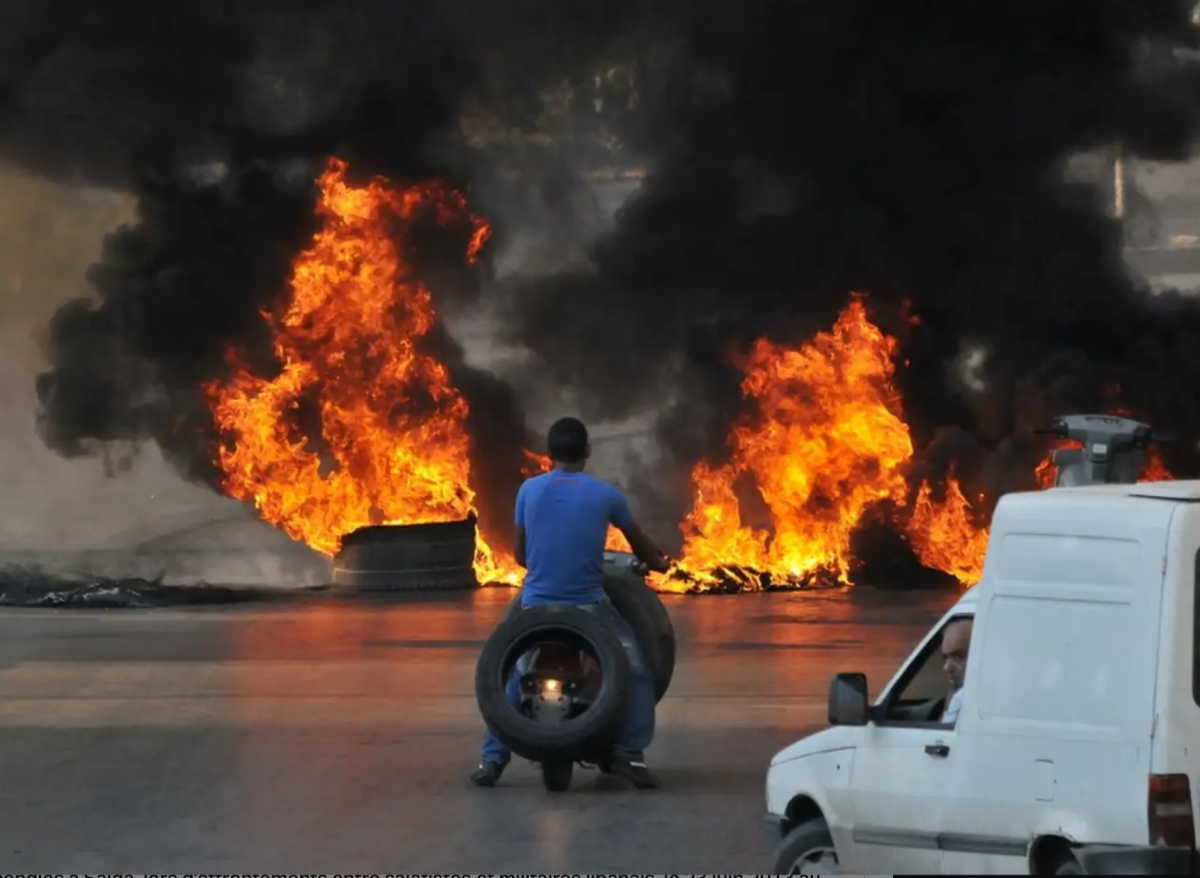
Burning tires in Saida during clashes between Salafists, allegedly led by Sheikh Ahmad al-Assir, and Lebanese soldiers, on June 23, 2013 in southern Lebanon. (Credit: Ibrahim Chalhoub/AFP)






BEIRUT — Sunni MP for Akkar Walid Baarini said Thursday in an interview with Radio Voice of Lebanon that he would withdraw his signature from the proposed general amnesty law, adopted Tuesday by the joint parliamentary committees, if Salafist Sheikh Ahmad al-Assir was not included in the amnesty.
Assir, who has been imprisoned since 2015 after being accused of killing Lebanese Army soldiers during the battle of Abra (Saida) in June 2013, remains one of the most contentious figures in parliamentary debate over the bill. Sunni MPs have been accused of pushing for a law tailored to case.
Baarini said that "the heart of the matter lies in the case of Sheikh Ahmad al-Assir and people with similar cases," insisting on "the need to resolve the issue of Islamists, or else to cancel the general amnesty altogether and resume fair trials, because some people have been wronged." He added that "if Assir is not included in the general amnesty, we go back to square one," and said that he would "withdraw [his] signature if the general amnesty does not deliver to the expected result," refusing "to be a false witness in the face of injustice."
Sheikh Assir was sentenced to death on Sept. 28, 2017, over the Abra clashes, which left 29 dead, including 18 Lebanese soldiers and 11 fighters. At the time, amid Hezbollah's involvement in the Syrian civil war alongside the Assad regime, the controversial preacher said he was defending Sunnis against what he described as Iran's fifth column in Lebanon, Hezbollah, and called for building military capacity to create a "balance of power" with the group.
"There was one very specific side that exercised control and domination and succeeded in obtaining unjust rulings, but we must appeal to conscience and review the calculations," Baarini said, in a clear reference to Hezbollah, which Assir's supporters accuse of involvement in the clashes in Abra, and of influencing the military court ruling against the sheikh.
He also questioned if "previous rulings targeted Sunnis because they stood in the way of the Iranian system and others?"
While the Sunni community considers the draft law as "unjust" in its current form, Parliament Speaker Nabih Berri said Wednesday that the Parliament plenary session, expected to adopt the text, has been postponed "to a later date under the banner of consensus."