


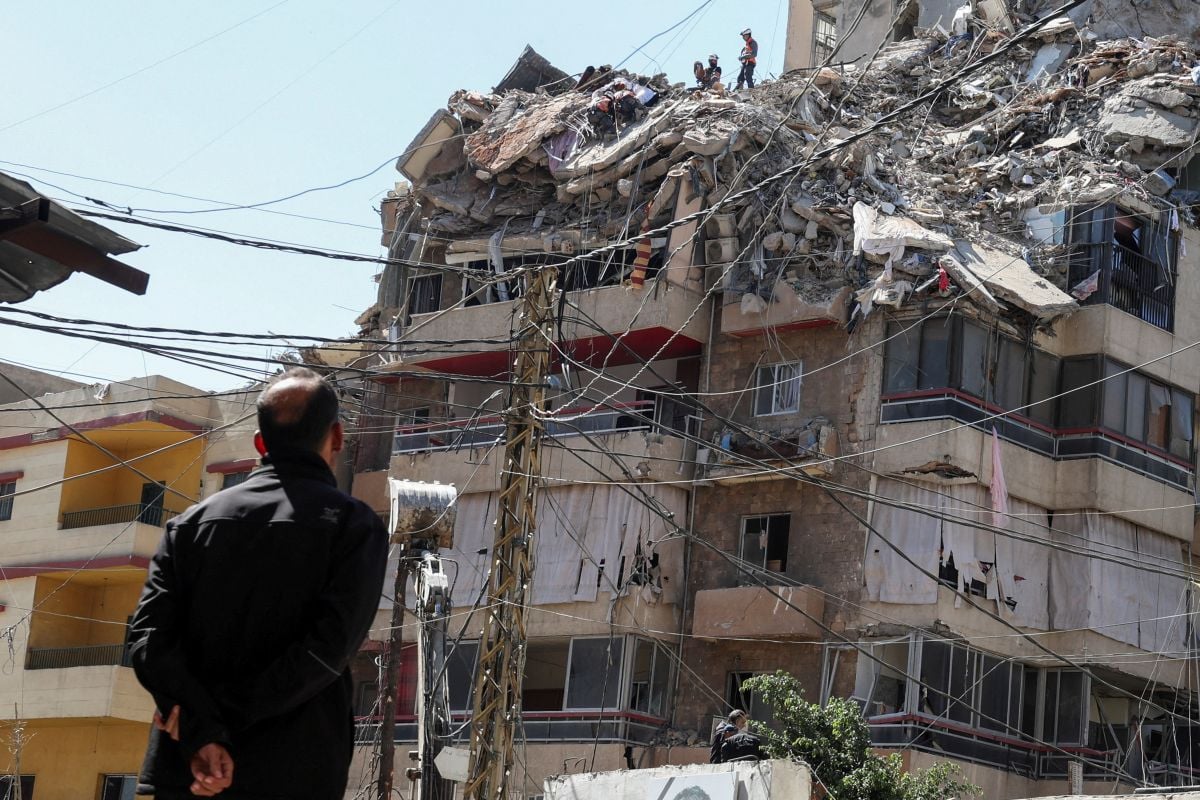
A man watches as rescuers work at the site of an Israeli strike that took place yesterday, in the southern suburbs of Beirut, Lebanon, May 7, 2026. (Credit: Mohamad Azakir / Reuters)






BEIRUT — In a statement issued Thursday, the Israeli army claimed responsibility for a strike on Haret Hreik, in Beirut's southern suburbs, the day before, claiming it had killed a “commander” from Hezbollah’s elite Radwan Force.
The assassination was also confirmed by a source close to Hezbollah cited by AFP, but no official death toll has otherwise been made available.
According to Lebanon's state-run National News Agency (NNA), the strike was carried out by a warship at 8:07 p.m. and targeted an apartment in Haret Hreik.
Israel reportedly fired three missiles at an apartment on the fourth floor of a building near the Mohammad Koeik high school.
Clearing operations were completed Thursday morning, but neither the Health Ministry nor Civil Defense had released casualty figures by then, and both institutions were not immediately available for comment.
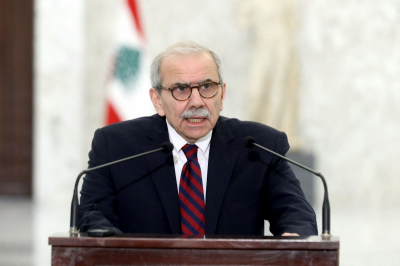
The only identified victim so far is the target of the strike, whom the Israeli army named as Ahmad Ghaleb Ballout, described as a “commander of the Radwan Force, Hezbollah’s elite commando unit.”
Israeli Prime Minister Benjamin Netanyahu and Defense Minister Israel Katz had earlier announced the operation. A Hezbollah-affiliated source cited by AFP on Wednesday identified the victim as Malek Ballout.
'Dozens of terrorist attacks'
According to the Israeli army statement, "For years, Ballout has held various positions within the al-Radwan Force, including as operations commander. In this role, he was responsible for the preparation and mobilization of the unit for combat against” the Israeli army, its spokesperson Ella Waweya wrote on X.
The Israeli army also accused Ballout of "strengthening the capabilities of the al-Radwan Force, including by implementing the 'Galilee Occupation Plan.'"
On the ground in Beirut’s southern suburbs, residents fled the neighborhood immediately after the strike, while many displaced people who had left at the outbreak of the war in early March remain reluctant to return.
Since the war resumed, Israel had already ordered the evacuation of Beirut’s southern suburbs on March 5. The area is home to an estimated 600,000 to 800,000 people.
Hezbollah itself has not actively encouraged residents to return. “People are still afraid,” one Hezbollah supporter, speaking anonymously during a media tour organized before the strike, told reporters Wednesday.
The strike marked the first attack on Beirut’s southern suburbs since the “Black Wednesday” bombardments of April 8, when Israeli warplanes launched large-scale strikes across Lebanon within minutes, including several on Beirut, killing over 325 people that day.
Following those attacks, several countries — including the United States — reportedly pressured Israel to stop targeting the Lebanese capital. A cease-fire between Hezbollah and Israel came into effect on April 17, but Israel has continued strikes in southern and eastern Lebanon daily.
According to the Health Ministry, Israeli strikes have killed at least 2,702 people and wounded 8,311 others since March 2, when the war resumed between Israel and Hezbollah after more than a year of cease-fire violations, during which Israel carried out near-daily strikes on Lebanon.

 1 p.m. recap: Salam in Nabatieh; up to 10,000 more US troops heading to Middle East
 Exchange of strikes between Saudi Arabia, Houthis; Sanaa, Medina targeted