






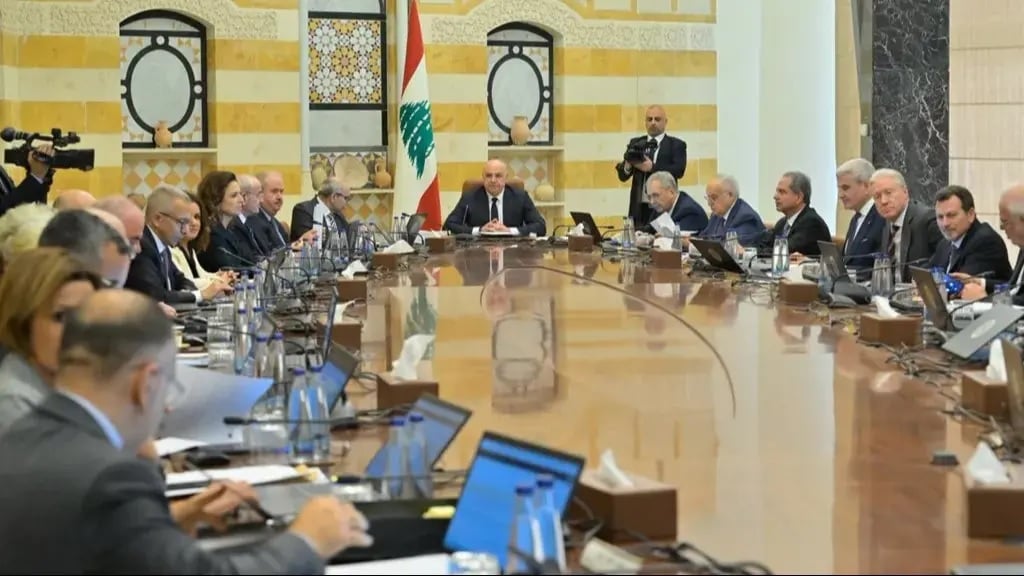
The Cabinet met in Baabda on April 30, 2026. (Credit: NNA)






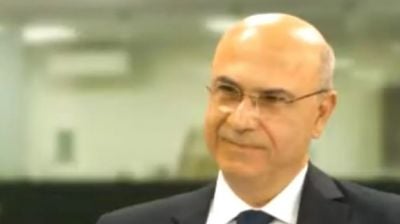
BEIRUT — The government appointed on Thursday during its session Judge Ahmad Rami Hajj as public prosecutor at the Court of Cassation, succeeding Jamal Hajjar, who retired Saturday, the state-run National News Agency reported.
Deputy public prosecutor at the Court of Cassation, Pierre Francis, had assumed the role in an interim capacity for several days pending a formal appointment, and is set to hand over his duties.
The Cabinet had not named a successor at its previous session due to the absence of Justice Minister Adel Nassar, who was abroad, and a lack of political consensus.
The Lebanese Judges Association criticized the decision, denouncing “persistent interference and negotiations” that it said had turned the appointment into a “veritable political bazaar.” The group said this once again highlighted shortcomings in the judicial appointments system and the executive’s failure to respect judicial deadlines free from quota-based considerations.
It renewed its call for the election of all members of the Higher Judicial Council, including the public prosecutor at the Court of Cassation, by judges themselves, across all ranks and categories, based on clear and objective criteria.
It said such a reform would help avoid the deficiencies of the current law and the institutional deadlock it produces. Under existing legislation, the group stressed the need to respect formal procedures and adopt a sound and transparent mechanism for judicial appointments, particularly for the post of public prosecutor.
It added that the Cabinet and the justice minister should consult the Higher Judicial Council and seek its advisory opinion on qualified candidates by reviewing their records in line with objective criteria, in accordance with the principle of judicial independence, and to avoid practices that undermine the integrity of the judiciary.
A judicial source contacted after the session criticized the current legal framework, saying it grants the Cabinet the authority to appoint the public prosecutor instead of the Higher Judicial Council.
“If the law on judicial independence had been adopted, the appointment would not have been made this way,” the source said, adding that the political class still does not want an independent judiciary.
The incoming prosecutor faces several sensitive cases, including the Beirut port explosion of Aug. 4, 2020; legal proceedings involving senior officials in connection with the 2019 financial crisis; and prosecutions against Hezbollah members following the government’s March 2 decision to consider the party’s military and security activities illegal.
Earlier Thursday, before the Cabinet decision, the Higher Judicial Council commented on the issue, saying it hoped the appointment would “ensure the proper functioning of the judiciary.”
It stressed that a state governed by the rule of law requires an independent and effective judiciary, noting that the president, prime minister, and justice minister had all expressed commitment to preserving judicial independence in official statements and during judicial appointments and training.
The council also noted that this commitment had led to the adoption of a new judicial organization law, which was later annulled by the Constitutional Council because it had not been submitted in advance to the council for review.
It said the law had granted the Higher Judicial Council the authority to appoint three of its own members, including the public prosecutor and the head of the Judicial Inspection Authority. After consulting the justice minister, who informed it of the Cabinet’s position, the council reiterated its hope that the government’s decision would ensure the proper functioning of the judiciary.
Separately, the Cabinet approved several items on its agenda, including the appointment of Oussama Mneimneh as head of the Judicial Inspection Authority, according to Information Minister Paul Morcos, who read out the decisions.
It also approved a request by the Finance Ministry to amend provisions of the law on bank restructuring, as well as two grants: one from Germany for the Lebanese Army and another from China to the Council for Development and Reconstruction for humanitarian aid and development projects.
At the same time, residents of villages along Lebanon’s southern border staged a sit-in in Martyrs’ Square in downtown Beirut. The protest coincided with several Israeli evacuation orders issued Thursday for villages and towns in southern Lebanon.