





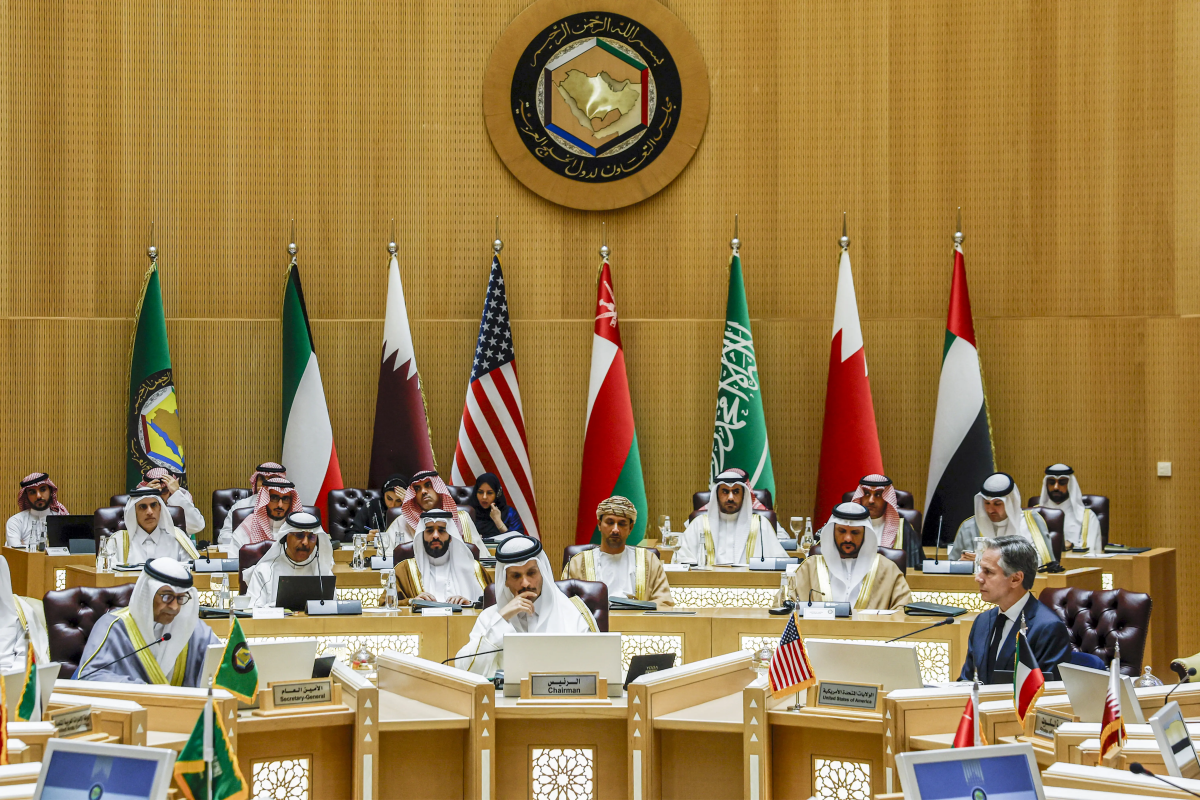
Joint ministerial meeting within the framework of the strategic partnership between the Gulf Cooperation Council (GCC) and the United States, at the GCC headquarters in Riyadh, on April 29, 2024. (Credit: Evelyn Hockstein/AFP)






When the United Arab Emirates announced this week its withdrawal from the Organization of the Petroleum Exporting Countries (OPEC), the move appeared surprising at first, coming amid a regional crisis triggered by the war with Iran. In reality, it reflects a deeper shift within the Gulf Cooperation Council, where a system once built on coordination and shared strategy is steadily eroding. Beyond a dispute over oil quotas, the decision underscores a broader trend: Gulf states no longer act as a unified bloc but increasingly pursue independent economic, security, and geopolitical agendas.For decades, the GCC projected cohesion. Established in 1981 after the Iranian Revolution, it rested on a shared perception of threat and an oil-based political economy dominated by Saudi Arabia. That cohesion has weakened over time. The 2017–2021 rift...
When the United Arab Emirates announced this week its withdrawal from the Organization of the Petroleum Exporting Countries (OPEC), the move appeared surprising at first, coming amid a regional crisis triggered by the war with Iran. In reality, it reflects a deeper shift within the Gulf Cooperation Council, where a system once built on coordination and shared strategy is steadily eroding. Beyond a dispute over oil quotas, the decision underscores a broader trend: Gulf states no longer act as a unified bloc but increasingly pursue independent economic, security, and geopolitical agendas.For decades, the GCC projected cohesion. Established in 1981 after the Iranian Revolution, it rested on a shared perception of threat and an oil-based political economy dominated by Saudi Arabia. That cohesion has weakened over time. The 2017–2021 rift...

 Evening recap: Netanyahu announces West Bank offensive; 7 killed in Jordan church shooting; tents burned in south Lebanon
 US strike on Iran this weekend? ‘Absolutely,’ says Barrack; ‘I have no idea,’ says Trump