



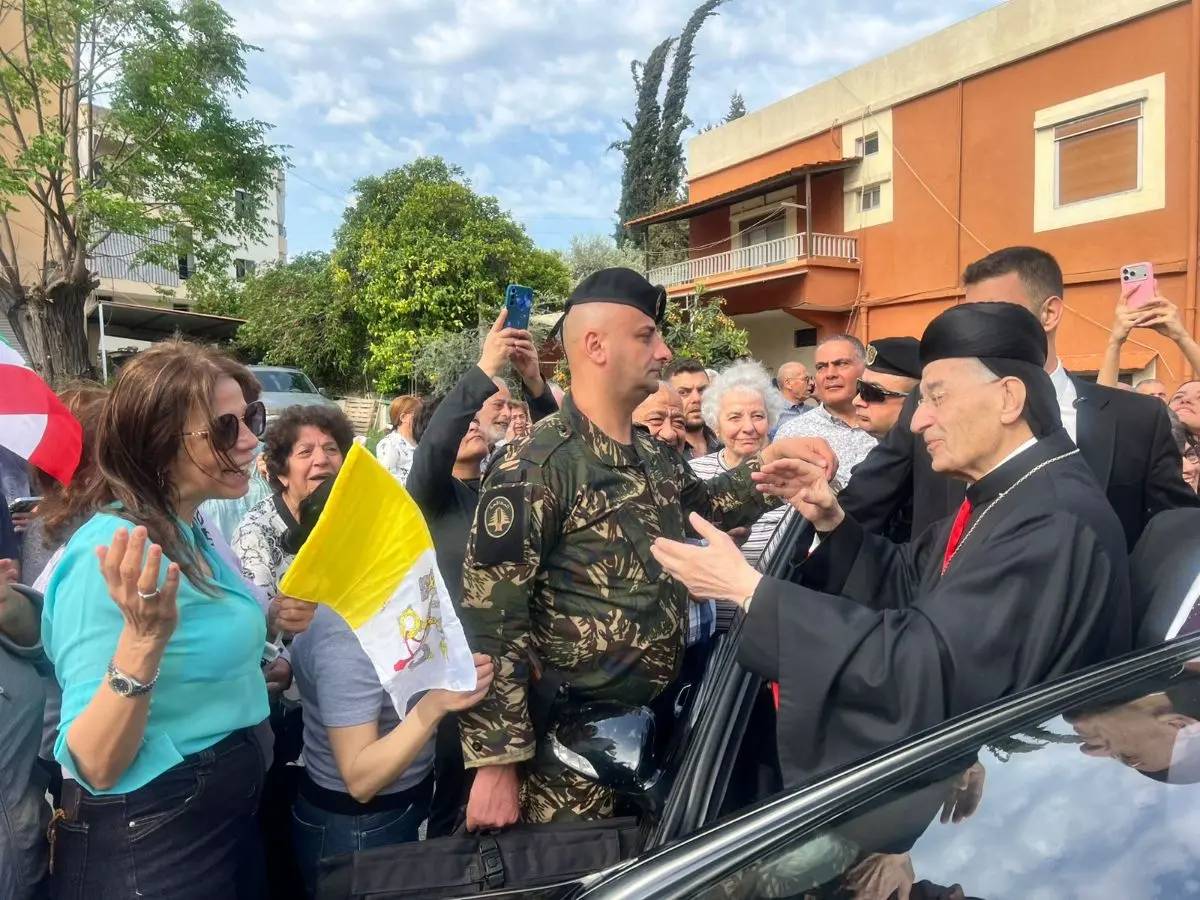
The Maronite Patriarch, Bechara Raï, in Qrayyeh, during a pastoral tour in Jezzine, on Friday, April 17, 2026. (Credit: National News Agency)






BEIRUT — Maronite Patriarch Bechara Rai on Friday welcomed the cease-fire in Lebanon, which took effect at midnight the same day, describing it as “the beginning of a new chapter” and an “urgent necessity,” during a visit to Qrayyeh, the first stop of a pastoral tour in the Jezzine region of South Lebanon. He called for “the consolidation of peace and an end to the cycle of violence,” asserting that “Lebanon was created to be a country of peace and not a battlefield,” according to statements reported by the state-run National News Agency (NNA).
“War only brings destruction, death and enmity,” the religious leader said, according to whom “the scenes of displaced people returning to their villages reflect the profound aspiration of the Lebanese for stability and tranquility.” He also expressed hope that “efforts and international negotiations aiming to consolidate stability will continue.”
Lebanon, 'one single family'
In a show of support for resilience in rural areas, the Maronite patriarch then traveled to Kfar Falous, where he inaugurated, alongside the Order of Malta, a project to support 1,000 farmers from the Jezzine region, aimed at strengthening local agricultural production and keeping residents on their land. He later arrived at the Qattine Monastery of the Antonine Fathers, the third stop of his pastoral tour, where he again stressed “the need to move to a genuine peace project,” and called to “consolidate the cease-fire,” expressing the wish that “all displaced people return home in peace.” He was joined at the convent, which has served as a refuge for displaced families from various border regions, both Christian and Muslim, by Apostolic Nuncio Paolo Borgia. There, he said that the reception of the displaced in the monastery represented “the image of Lebanon that we desire: one single diverse family, enriched by mutual support.”
In Jezzine, where he celebrated mass at St. Maron Church, Cardinal Rai described in his homily the “moving scenes” of displaced people returning to their villages in the South. “This image makes the heart bleed, because people are forced to return to ruins, but at the same time, it opens a door of hope, as it expresses their attachment to their land and the belief that life is stronger than destruction,” he said.
'The dialogue of equals'
“The Lebanese are tired of wars, killings, and destruction, and of seeing their youth emigrate, while their lifelong efforts are lost in vain, because a single bomb can destroy what was built over many years,” he observed. “True bravery lies in the ability to engage in dialogue and to sit at the table of dialogue as equals,” he added, as Lebanon and Israel launch their first direct negotiations since 1983.
The Maronite patriarch, accompanied by Apostolic Nuncio Mgr Paolo Borgia, concluded his visit to Jezzine with a stop at the Mashmoush Monastery of the Lebanese Maronite Order. He was welcomed by the superior general of the Order, Father Hadi Mahfouz, and by the monastery’s superior, Father Marc Saadeh.
“The Lebanese, despite successive crises, do not abandon their homeland, but rise up each time, as if an invisible hand lifts them up. This strength comes from faith and deep spiritual roots,” Mgr Rai said, praying that “the ordeal the country is going through will come to an end.”
On April 8, Mgr Rai had toured several Christian localities in south Lebanon, near the border with Israel.
From March 2, when the country was drawn into the regional war, to April 17, when the cease-fire came into effect, at least 2,200 people were killed by Israel in Lebanon.

 7 p.m. recap: 1 person killed near border with Lebanon; 200 kilos of explosives carried by mules; Riyadh shuts its airspace