







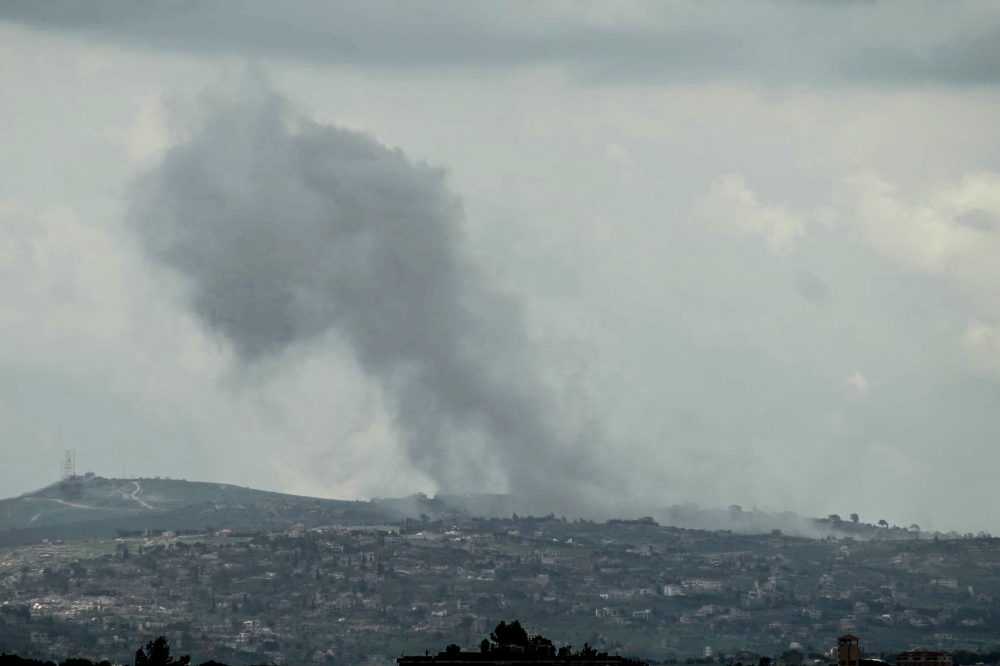
Smoke rises from the site of an Israeli airstrike that targeted the outskirts of the village of Taybeh, in southern Lebanon, on April 10, 2026. (Credit: Abbas Fakih/AFP)






The United Nations warned Friday of the rapid increase in food insecurity in Lebanon due to the war and the impact of the regional war, although unions representing food importers and supermarket owners asserted there were no food shortages on the horizon.
"World Food Program [WFP] convoys are still moving, but the operational environment is becoming increasingly complex," said Allison Oman, the head of the U.N. agency in Lebanon. "Security can no longer be taken for granted, even as needs are rising rapidly," she told journalists in Geneva, speaking from Beirut.
"While ten convoys have been able to set out" since the beginning of the war for people in need in Lebanon, especially in the South, "very many" others have not been able to do so because "security could not be guaranteed," she explained.
Transport difficulties and the impact of war on agriculture
Beyond difficulties in getting convoys through, Oman explained that disruptions in supply chains and the rise in food insecurity were due in particular to the inability of some farmers to work their lands in southern Lebanon and to transport challenges.
Added to this are the global increases in fuel and fertilizer prices, she noted. The WFP is calling for "safe and sustained access" to deliver necessary aid to affected communities, particularly those in hard-to-reach areas.
The crisis in Lebanon "is rapidly becoming a food security crisis," Oman said, explaining that WFP is already seeing clear signs of rising prices for food, especially bread and vegetables, across the country.
"For families who are already struggling to make ends meet, the situation is extremely worrying, and we are now witnessing a very troubling situation: prices are rising, incomes are down, and demand is increasing," she warned, recalling that Lebanon was already facing a severe economic crisis before this war.
"Even before this latest escalation, about 900,000 people in Lebanon were food insecure, and our latest analysis, which will likely be published next week, indicates that this number is set to rise," she stressed.
No shortages in the country, supplies sufficient for at least three months
Meanwhile, as a phrase from the WFP’s statements — taken out of context — circulated in local media, saying that "traders complained of only having enough essential food stocks for less than a week," union leaders denied any risk of food shortages.
According to a source at WFP contacted by L’Orient-Le Jour, it is "the traders in Nabatieh and southern Lebanon who say they have less than a week's worth of essential food stocks remaining." Elsewhere in the country, "markets remain well supplied," the source noted.
In a joint statement, Hani Bohsali, president of the food importers' union, and Nabil Fahd, president of the supermarket owners' union, categorically denied any shortages. "The situation remains unchanged, the supply lines via Beirut port and airport remain operational, and the stock of essential foodstuffs in Lebanon’s local market is sufficient for about three months."
Hezbollah and Israel have been at war since March 2, after the militia-party opened a support front with Iran following the American-Israeli attack against that country. Since then, areas of southern Lebanon — especially south of the Litani River — have been largely emptied of their residents, and fighting between the two parties has raged. The road to the still-populated border villages is nearly cut off.