


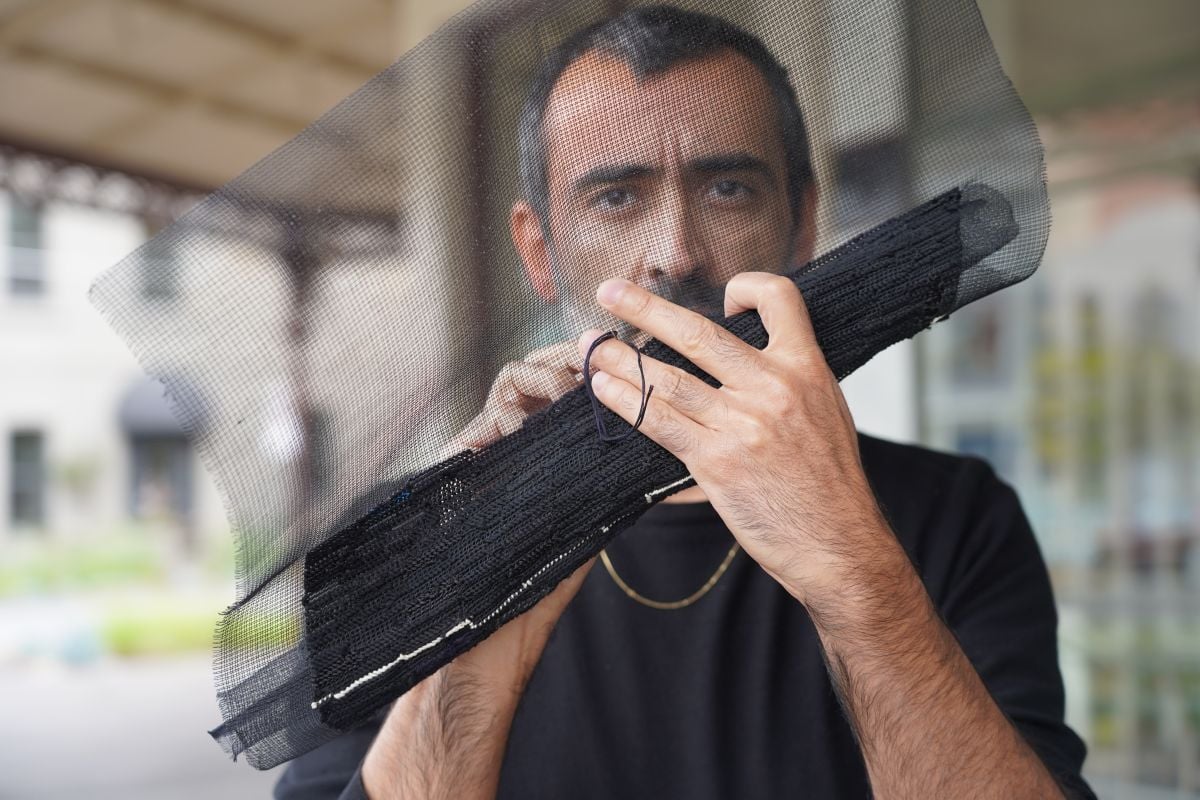
Nasri Sayegh, embroidering the fragments of a raw country. (Credit: Michelle Sakaris/ATW)






He embroiders as one dresses a wound, slowly, stubbornly, never quite closing it. Lebanese artist Nasri Sayegh, born in 1978, first trained in film and image before returning years later to embroidery, a practice learned in childhood during the civil war, which he has transformed into his own visual language. His work also includes Radio Karantina, a sound platform launched in March 2020 on the first day of Lebanon’s lockdown, a digital space broadcasting music, texts, and images “from Beirut to the world and back,” born from isolation and evolving into a space of collective exchange connecting artists and audiences across cities. Beyond the headlines From the archives: Radiokarantina, Rayess Bek reveal unreleased 60s Lebanese song Drawing on both intimate and collective archives, his work stands at the intersection of body and...
He embroiders as one dresses a wound, slowly, stubbornly, never quite closing it. Lebanese artist Nasri Sayegh, born in 1978, first trained in film and image before returning years later to embroidery, a practice learned in childhood during the civil war, which he has transformed into his own visual language. His work also includes Radio Karantina, a sound platform launched in March 2020 on the first day of Lebanon’s lockdown, a digital space broadcasting music, texts, and images “from Beirut to the world and back,” born from isolation and evolving into a space of collective exchange connecting artists and audiences across cities. Beyond the headlines From the archives: Radiokarantina, Rayess Bek reveal unreleased 60s Lebanese song Drawing on both intimate and collective archives, his work stands at the intersection of body...