






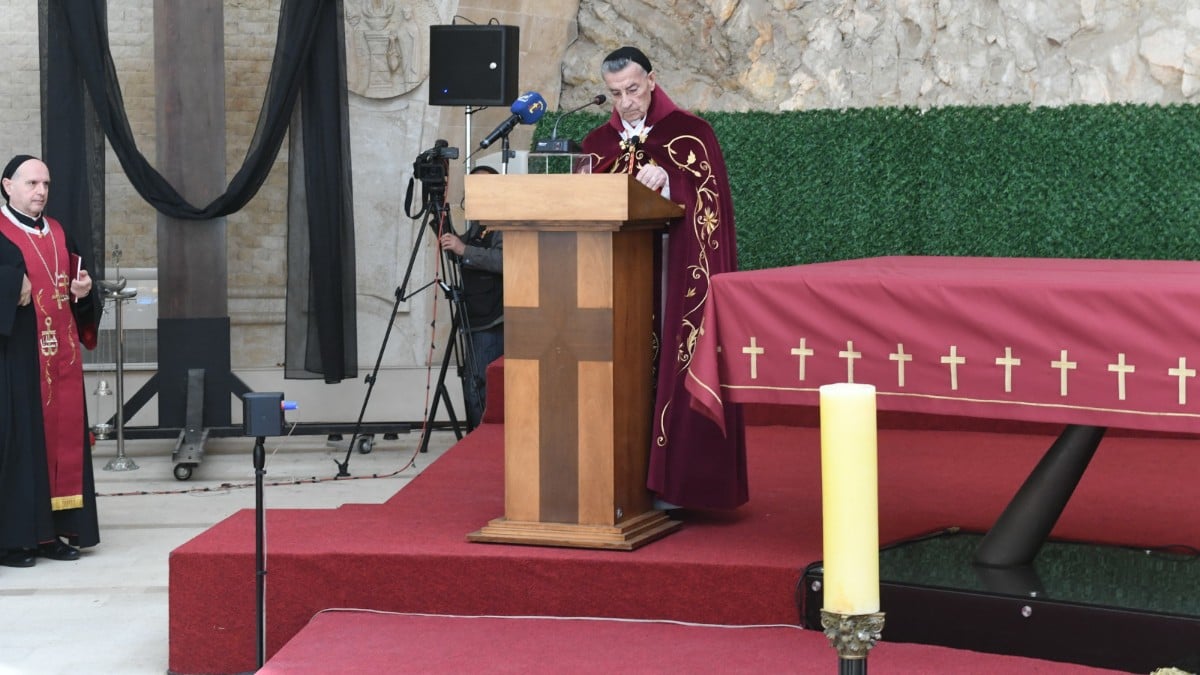
The Maronite patriarch celebrating the Good Friday prayer at the Church of Our Lady of Bkirki, on April 3, 2026. (Photo: NNA)






BEIRUT — President Joseph Aoun and First Lady Neemat, along with several public figures, attended Good Friday prayers celebrated at the church of the Holy Spirit University of Kaslik (USEK) in the city of Jounieh, Kesrouan, by the superior of the Lebanese Maronite Order, Father Hadi Mahfouz. Father Mahfouz told Aoun that "those who want peace support the principle of state that you defend."
"We are counting on you and your work for the recovery of the state, and we support your commitment to the preservation of national unity. We are by your side in everything you do. Those who want peace in Lebanon support the principle of state that you defend," Father Mahfouz said to the president. He also condemned the ongoing new war in Lebanon, saying that experience has shown that "ties with foreign powers have only brought disasters and weakened the state," in a clear reference to Hezbollah, which opened a new front in Lebanon against Israel on March 2 in support of Iran.
The Lebanese government, together with the president, declared Hezbollah's military operations "illegal" as of March 2, but has been unable to enforce this decision on the ground.
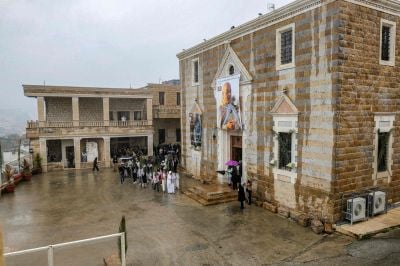
Good Friday at Bkirki
For his part, Rai, who celebrated Good Friday prayers at the Church of Our Lady of Bkirki, the patriarchal seat in Kesrouan, also referenced the ongoing fighting, especially the Christian villages of southern Lebanon whose residents refuse to leave despite all dangers.
"I address my message to our displaced people, and to those who resist in their villages, to speak not only of their suffering, but also of hope," the patriarch said, recalling "the duty to ensure humanitarian corridors so that these still-inhabited villages are regularly supplied, in accordance with international laws, notably the Geneva Conventions."
Since the outbreak of this new conflict a month ago, more than a million Lebanese from southern Lebanon and the southern suburbs of Beirut have had to leave their homes. Only the inhabitants of a few Christian villages south of the Litani continue to resist, refusing to abandon their towns. They have found themselves isolated, as the Lebanese Army has had to "reposition," and the U.N. peacekeepers have not been able to break the blockade imposed on them.

 8 p.m. recap: Israel again threatens Beirut’s south suburbs; 2 ships hit near Hormuz; Riyadh football matches canceled