


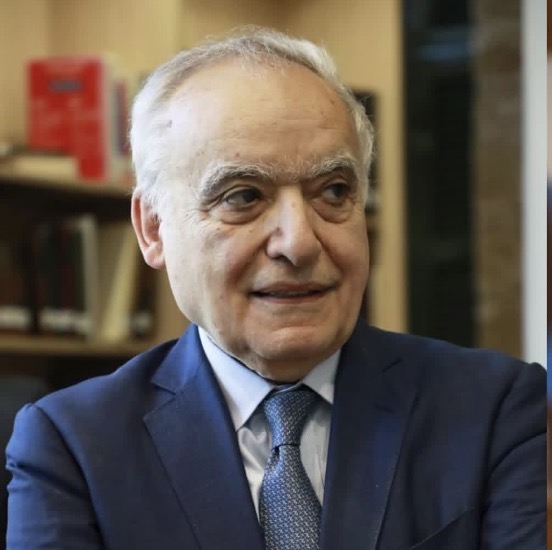
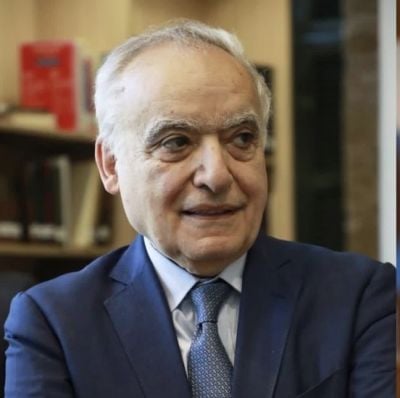
Culture Minister of Culture, Ghassan Salameh. Archive photo Ministry of Culture






At the initiative of Culture Minister Ghassan Salameh, Lebanon recently appealed to UNESCO to draw attention to the growing threats to its cultural heritage during wartime.
An extraordinary meeting of the Committee for the Protection of Cultural Property in the Event of Armed Conflict was then convened, resulting in the granting of temporary enhanced protection to 39 sites, accompanied by international emergency aid exceeding $100,000.
These sites now benefit from the highest level of legal protection provided for by the 1954 Hague Convention and its 1999 Second Protocol.
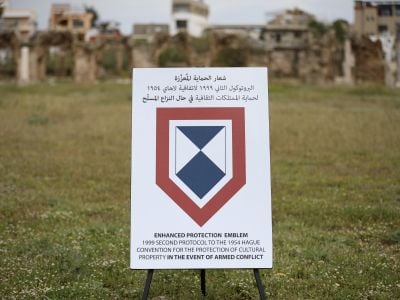
ince then, a new milestone has been reached. The number of sites placed under this protection regime has been increased to 73, reflecting a growing legal, diplomatic, and operational response to the expanding risks across the country. In this context, a series of questions arises in L’Orient-Le Jour’s conversation with Salameh.
L’Orient-Le Jour: The expansion to 73 protected sites marks a turning point: what considerations guided this extension, which sites remain outside the scope, and, most importantly, what does this concretely change on the ground, starting now?
Ghassan Salameh: The expansion to 73 sites is based on a precise process of assessment, taking into account the sites’ heritage value, use, and level of exposure to current risks.
In November 2024, 34 cultural properties had already received enhanced protection. These were primarily sites listed as World Heritage, as well as those most directly exposed, particularly in the South and the Bekaa Valley. Since then, with risks extending across the entire territory, it became necessary to broaden this scope.
This new milestone now allows a significant portion of Lebanon’s cultural heritage to be covered under the enhanced protection regime recognized by the international community. Other files are in preparation, particularly for certain archaeological sites in Beirut as well as for remarkable monuments in the historic cities of Sour and Baalbeck, which will complement the two areas’ existing listings.
Some sites remain outside the scope at this stage, either for technical reasons or because their situation still requires further assessment.
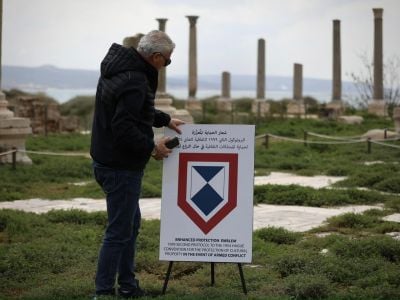
In practical terms, this expansion has immediate effects: it strengthens the legal protection of the sites concerned, clarifies their status under international law, and enables the activation of monitoring, alert, and assistance mechanisms in the event of a threat.
It also paves the way for increased mobilization by the international community, in recognition of the exceptional value of these sites for humanity, particularly regarding their conservation and rehabilitation.
L’OLJ: This extraordinary meeting is part of a broader diplomatic offensive. What political signal is Lebanon seeking to send to the international community at this stage of the war?
G.S.: Lebanon aims to make it clear that even in a context of conflict, respect for international law — and in particular the protection of cultural heritage — remains a non-negotiable obligation.
It is also a message of responsibility. Despite the scale of the humanitarian crisis and massive displacement, the state continues to uphold its commitments and calls on the international community to do the same, in a spirit of concrete solidarity and respect for shared norms.
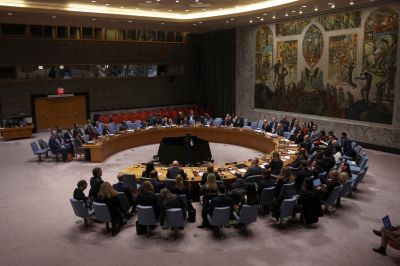
L’OLJ: What concrete forms of engagement do you expect from the international community for this initiative to have measurable effects?
G.S.: We hope to rely on concrete forms of engagement, in addition to the widely shared principles. This can include support for emergency mechanisms, particularly those activated in collaboration with UNESCO, as well as highly operational assistance in identifying, documenting, and securing sites, along with technical and financial support for national institutions.
In a context where nearly a quarter of the population is displaced, protecting heritage becomes a collective challenge. It benefits from being pursued in a spirit of cooperation, proportional to the significance of this heritage, which extends beyond Lebanon and represents our shared history.
This article was originally published in French in L'Orient-Le Jour and translated by Joelle El-Khoury.

 7 p.m. recap: Netanyahu seeks mastermind behind Flydubai incident; Washington sanctions 2 French nationals; Ben Gvir's 'I want to kill you' threat
 Iran executes man linked to anti-government protests