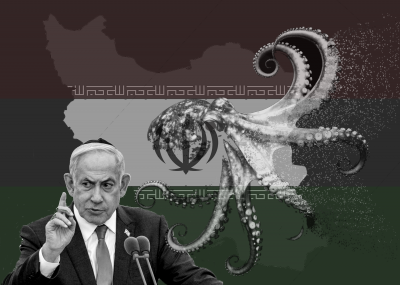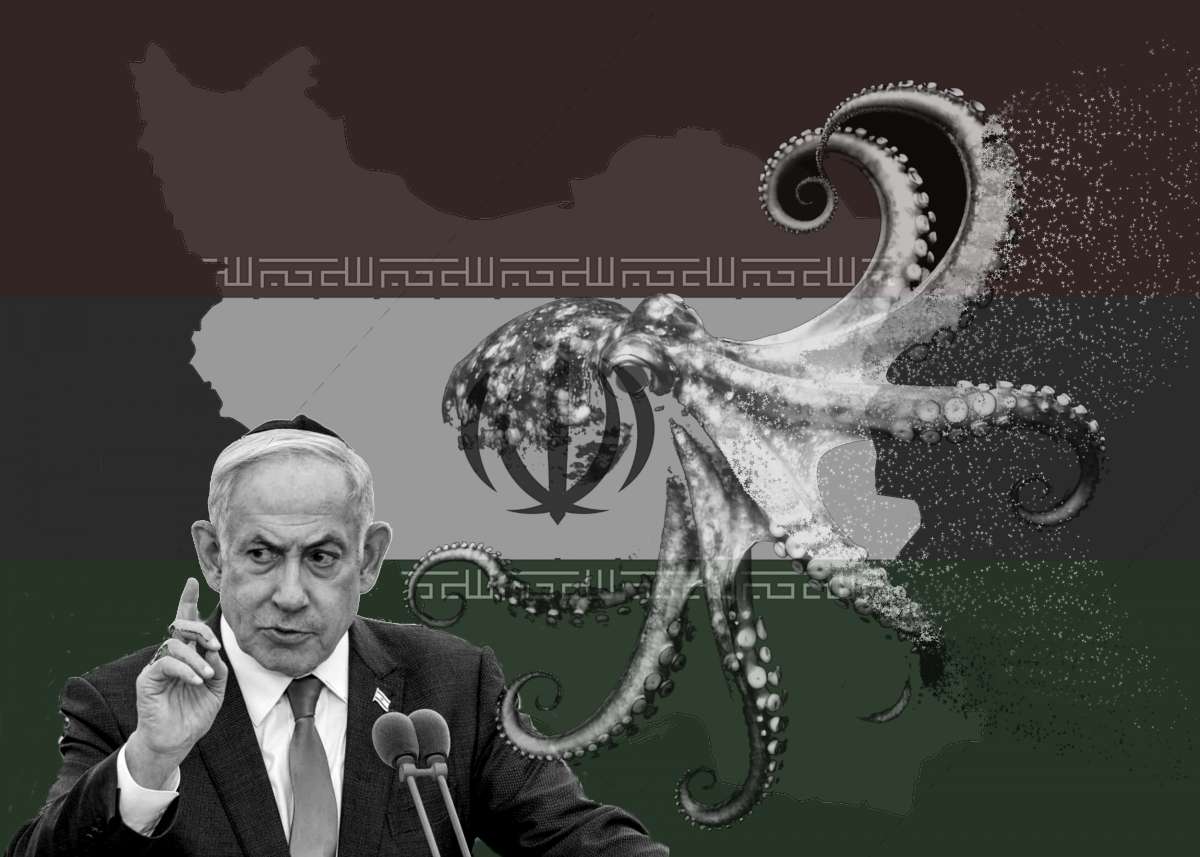
(Collage: L’Orient Today)






Benjamin Netanyahu has spent four decades explaining the Middle East through a single, immutable metaphor: an octopus. Its tentacles stretch across the region — Hezbollah in Lebanon, Hamas in Gaza, militias in Iraq, the Houthis in Yemen. The head sits in Tehran. Cut the arms, eventually you cut the head.
It is a reading he has refined — or at least repeated — relentlessly.
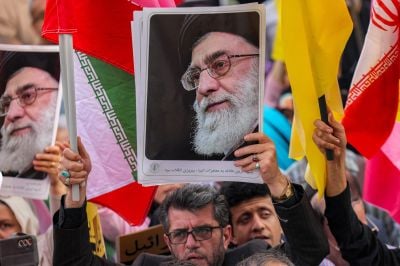
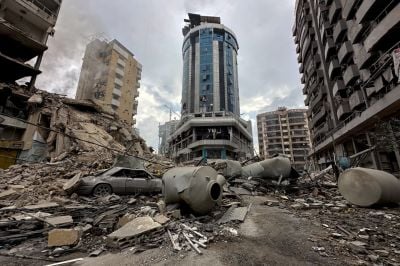
Today, his chessboard is ablaze. On Feb. 28, 2026, Ayatollah Ali Khamenei was assassinated, marking the threshold of direct war between the U.S., Israel and Iran. Iranian ballistic missiles now strike American forces across the Gulf; Israeli fighter jets pummel Hezbollah positions in Lebanon with relentless intensity; Gaza remains under intermittent bombardment despite a fragile cease-fire. The conflict has regionalized entirely — no longer contained but spreading across shipping routes in the Strait of Hormuz and destabilizing the very Arab states Netanyahu once hoped to bind against Iran through the Abraham Accords. Meanwhile, he faces historic legal pressure — the first sitting Israeli prime minister on trial for bribery, fraud and breach of trust.
But the octopus is not merely geopolitical. As his “unofficial” biographer, Anshel Pfeffer writes in “Bibi: The Turbulent Life and Times of Benjamin Netanyahu” (2018), his "selfishness is without parallel; he has put his own interests ahead of Israel's at every turn."
Is the war now unfolding across the Middle East the culmination of his strategic security-heavy vision, the moment he has spent four decades preparing for? Or is it the last gamble of a political survivor who has so thoroughly weaponized his own theory that he can no longer distinguish between national interest and personal survival?
Netanyahu seeks to secure his own legacy, and for that, he must first secure Israel itself. This dual-lens frames his entire career. The question is no longer whether his vision was prescient, but whether it will save him as much as it may (continue to) reshape the region.
The formation of a theory
Netanyahu's worldview was not chosen so much as inherited, almost passed down like a family business. His father, historian Benzion Netanyahu, had spent his career studying the Spanish Inquisition, extracting from it a lesson so absolute it bordered on religious: Jewish history followed an immutable pattern. Tolerance inevitably collapsed, violence inevitably followed. The son absorbed this with a lot of literalism: threats to Jewish survival, once identified, were not problems to negotiate; they were problems to destroy.
This assumption was cemented in two very different places. In the United States, where the family landed during Netanyahu's adolescence, he discovered something his father's books could not teach him: the power of American television and the art of performing for a democratic audience. He learned to "be an Israeli on the American stage," as Pfeffer puts it, a distinction that would define his entire career. It was there, in American high schools and lecture halls, that Netanyahu absorbed a principle which would animate his political method: in democratic politics, imagery travels faster than argument. A cartoon bomb at the U.N. would accomplish more than a hundred policy papers.
Back in Israel, military service in the elite Sayeret Matkal commando unit hammered in the core belief: survival meant striking before threats materialized. But the defining moment came in 1976, when his older brother Yonatan was killed while leading the Entebbe hostage rescue in Uganda. The operation would be mythologized. For Netanyahu, it became something closer to scripture — proof that bold, preemptive action could succeed, and that audacity and sacrifice were redemptive.
In the years that followed, he founded the Jonathan Institute and organized international conferences on terrorism. The intellectual architecture of what would become his security doctrine was already visible: to map the hidden geometry of global violence, to find the pattern everyone else had missed, and crucially, to position himself as the only person capable of seeing it.
Iran was once a friend
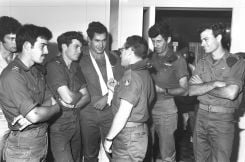
In the 1960s and early 1970s, the Shah's Iran was Israel's largest trading partner in the Muslim world. Israeli businessmen operated freely in Tehran. Military and intelligence cooperation was extensive. The two nations shared a common interest: containing Arab nationalism and preventing Soviet expansion into the Gulf.
Then came 1979. The Islamic Revolution upended everything. The Shah fell. Ayatollah Khomeini took power. And Netanyahu's worldview suddenly had a new focal point.
In a 1982 television interview, an early articulation: "the more we looked," he said, "the more we found out that terrorist incidents and terror groups are not isolated. There is a major force behind most of these groups." At the time, that force was the Soviet Union. Again, if you removed the patron, the system collapsed. Then the Cold War ended. The head of the octopus simply changed.

In 1992, he declared before the Knesset: “Within 3 to 5 years, we can assume that Iran will become autonomous in its ability to develop and produce a nuclear bomb.” Three years later, he had published “Fighting Terrorism,” reiterating the same threat — the timeline he would maintain for the next three decades, even as the deadline perpetually receded.
“Fighting Terrorism” made his argument: Iran's nuclear capability posed a unique threat because it would empower a network of satellite militant groups taking both inspiration and directives from Tehran. Unlike the Soviet Union, these proxies operated from religious ideology more than calculated state interest, making them harder to control and more dangerous.
In 1993, the Oslo Accords were signed, ostensibly creating a pathway toward Palestinian statehood. Many would later view Oslo as a carefully constructed dead-end: it created the Palestinian Authority without genuine sovereignty, froze settlement expansion in theory while permitting it in practice and left the most contentious issues deliberately unresolved. For Netanyahu — who had consistently rejected Palestinian statehood as incompatible with Israeli security — even this managed version was intolerable. Speaking before settler crowds, he mobilized opposition: Oslo was a death sentence for Israel itself.
When Rabin was assassinated in November 1995 by a right-wing extremist, the Oslo process lost one of its political champions. Rabin had internally justified Oslo by arguing that the Palestinian Liberation Organization (PLO), for all its faults, represented secular Palestinian nationalism — the last bulwark against the then-emerging Hamas.
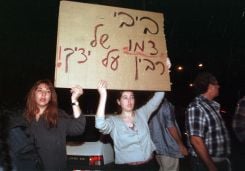
Netanyahu ascended to power two months later, positioned as the guardian against the very Palestinian state the Accords had promised. By dismantling Oslo from within, he had achieved the elimination of Palestinian statehood. And in doing so, ensured that their resistance would later flow through Tehran's networks. The Palestinian state Oslo promised became a casualty of the agreement itself, leaving a vacuum that Iranian proxies and militant networks would inevitably fill.
Meanwhile, the region was evolving in ways that confirmed his theory: the Iran-Iraq War of the 1980s strengthened the Revolutionary Guards; Hezbollah formed after Israel's 1982 invasion of Lebanon; Iran's influence extended into Iraq, Syria and Yemen. The tentacles were forming, exactly as he had predicted.
By the time Netanyahu became prime minister for the first time in 1996, the intellectual skeleton of his worldview was complete. During those first years, from 96 to 99, Netanyahu was "more risk-averse, more cautious, more willing to be flexible, with certain parameters," as analyst Aaron David Miller observes.
He allowed the Islamist movement to flourish as a deliberate counterweight to the PLO's secular nationalism, implicitly arming and enabling the former to fracture Palestinian unity. By strengthening Hamas, he ensured that any unified Palestinian front capable of negotiating statehood would remain impossible. But something shifted with duration. By the time he fashioned himself "a sort of Winston Churchill figure," as Miller puts it, Netanyahu had become convinced of his own indispensability.
The long game
The attacks of Sept. 11, 2001, transformed the global political climate in ways that seemed almost tailor-made for Netanyahu's arguments. Suddenly, Washington was speaking the language he had been using for years: global terrorism, hostile regimes, militant networks. At the time, Netanyahu was Israel's Finance Minister under Prime Minister Ariel Sharon — the dominant force in right-wing Israeli politics. Netanyahu became an enthusiastic public advocate for the U.S. invasion of Iraq in 2003, arguing that removing Saddam Hussein would trigger "enormous positive reverberations" across the Middle East.
Reality was less cooperative. The Iraq War ultimately expanded Iranian influence in Iraq, destabilizing the very balance Israel sought to preserve.
During this period — even as Sharon governed — Netanyahu was the ideological spine of the Israeli right, the voice slowly shaping how Israel understood itself and its region. When Sharon abruptly announced Israel's disengagement from Gaza in 2004, Netanyahu publicly opposed the move. It was a calculated risk: by resigning in 2005 and walking away from Sharon's government in protest, Netanyahu cemented his credentials as the uncompromising security hawk — the one who would never negotiate, never retreat. It was a masterstroke of political theater. He could not govern, but he could define what governance should look like.
Meanwhile, the 2006 war with Hezbollah under Ehud Olmert began reshaping the regional balance in ways that would later preoccupy Netanyahu. Widely perceived as an Israeli defeat, the war strengthened Iran's hand. Tehran emerged with its proxy network intact, its strategic depth expanded, and Israel's invincibility punctured. Iran capitalized on this opening, rearming methodically and deepening its foothold across the Levant.
When Netanyahu returned to power in 2009 and as Iranian ascendancy accelerated, the region descended into further chaos. The Arab Spring uprisings destabilized long-standing regimes, Syria collapsed into civil war, and Iran and Hezbollah intervened decisively to save Bashar al-Assad.
In 2012, he arrived at the U.N. General Assembly holding a diagram of a cartoon bomb. The image became famous — and widely mocked. But the performance was deliberate.
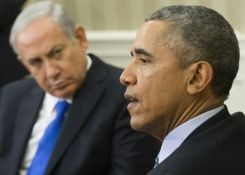
Netanyahu's campaign against the 2015 nuclear deal became the defining diplomatic battle of this period. The Joint Comprehensive Plan or Action (JCPOA) aimed to curb Tehran's nuclear program through strict limits and inspections in exchange for sanctions relief. Netanyahu warned the deal did not "block Iran's path to the bomb" but "paved it," and that sanctions relief would embolden Iran's regional ambitions. His 2015 address to Congress — openly challenging President Obama — was unprecedented and cemented his role as the world's most persistent voice against Iran's nuclear program.
But for Netanyahu’s narrative — and belief — the JCPOA was also something else. As Sylvain Cypel, journalist and author of “The State of Israel Against the Jews” (2020) observes, Netanyahu embodied a conviction that most Israelis share: "No one has the right to impose anything on us ... Therefore, international law does not exist." He did not simply disagree with the agreement; he rejected the entire framework that had produced it. International consensus was irrelevant. Israel's survival superseded everything else.
But here is what is crucial: even as Netanyahu was delivering speeches, he was not simply reacting. Across Israeli intelligence and military services, a decades-long operation was unfolding. By the late 2010s, Israeli agents had infiltrated Hezbollah's supply chain. They had identified vulnerabilities. They had begun to plan what would be revealed, in September 2024, to be one of the biggest covert operations in modern warfare: the simultaneous detonation of thousands of pagers and walkie-talkies across Lebanon, killing dozens and wounding hundreds in a single coordinated strike that devastated Hezbollah's command structure and paved the way for the assassination of Hassan Nasrallah himself.
The extreme right ascends, the public fragments
Beginning in 2016, Netanyahu entered a treacherous phase. In 2019, he was formally indicted on bribery, fraud and breach of trust — the first sitting Israeli prime minister to face criminal prosecution. Though protests erupted demanding his resignation, Israel's parliamentary system required only a coalition majority, not public approval.
Between 2019 and 2022, Israel held five elections amid strong instability. By 2022, Netanyahu had assembled a coalition, but at a cost: the extreme right ascended to power. Figures such as Itamar Ben Gvir and Bezalel Smotrich brought annexationist ideologies, aggressive settlement expansion, and rhetoric that demonized Palestinians into mainstream governance. His coalition held because the alternative for him was not political defeat but prosecution.
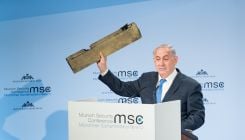
The trial became a decision-making force. As Miller observes, Netanyahu "has conflated his own political survival with the best interests of the Israeli state, particularly with respect to its national security." But with the urgency brought by the trial came desperation. If he lost power: "conviction could materialize, or he would have to negotiate a plea agreement which would basically end his political career."
Meanwhile, the 2020 Abraham Accords had forged a Sunni-Arab alignment against Tehran, offering a vision of regional peace that neatly sidestepped the Palestinian state question altogether. A validation of Netanyahu's longstanding theory that moderate Arab states would eventually align with Israel against Iran.
Oct. 7, 2023
The Hamas attacks of Oct. 7, 2023, were a catastrophic security failure for Israel — the Islamist counterweight to the PLO Netanyahu had cultivated had turned on him with a vengeance. Hundreds were killed. 251 hostages taken. On Oct. 8, Hezbollah joined the front in solidarity with Hamas, firing rockets at Israeli positions in the occupied Shebaa farms, thus extending the conflict into Lebanon. The conditions for his political demise were all there: public outrage rippling across Israel, families of hostages camping outside his residence, his corruption trials hanging over him, and Israelis who had once trusted his security instincts now openly questioning whether he had any at all. Following clashes with Iran in 2024, Israel launched a surprise attack on Iran in June 2025, igniting the Twelve-Day War, a conflict that rapidly draws in the United States, broadening the scope of the war to the region.
Yet he survived the crisis. Netanyahu absorbed the attack by making it Iranian, fitting it into a tentacle and invoking ‘sacred union’ among Israelis. In doing so, he transformed Oct. 7’s catastrophic security failure into vindication of his strategic vision — justifying an expansive military response while displacing accountability for the intelligence and preparedness lapses that had enabled the attack in the first place.
The war in Gaza became one of the deadliest and most controversial of the century. Israeli airstrikes, ground assaults and blockades exacted a horrific toll on the territory's population. By early 2026, the Israeli army killed more than 70,000 Palestinians and wounded over 170,000 others — a toll that many rights groups describe as unprecedented in its scale and human cost.
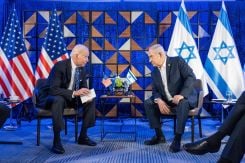
In 2024, the International Criminal Court issued arrest warrants for Netanyahu and then-Defence Minister Yoav Gallant for war crimes and crimes against humanity in Gaza. South Africa brought proceedings against Israel at the International Court of Justice for violation of the Genocide Convention. Netanyahu's office denounced them as a "modern Dreyfus trial" and an act of antisemitism designed to delegitimize Israel's defence efforts.
Yet as Miller observed, Oct. 7 forced Netanyahu into a corner: “He needed to remain in power in an effort to extinguish, if that's possible, the legacy of Oct. 7." He needed to stay in office both to evade accountability through domestic inquiries and to "erase or compensate for what happened on Oct. 7 by asserting Israeli power and defeating Israel's enemies elsewhere." In this logic, an Iranian strategic defeat today would serve as the counterbalance to Oct. 7's humiliation.
But the calculus transcends avoiding prosecution and reaches toward legacy. To quote his own words, he wants to be remembered as “the protector of Israel,” the statesman who ensured Israel's dominance for generations. Some who had called for Netanyahu's prosecution now consider him essential to national security. Others recognize the trap: a leader's survival fused with the state's, until the state itself rots from the inside and the state itself corrodes.
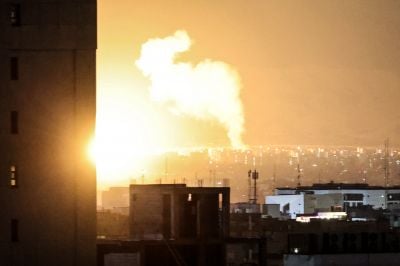
On Feb. 28, 2026, Ayatollah Khamenei was assassinated — the strike at the head of the octopus. The operation, another that had been prepared for years alongside the CIA, through infiltration into Tehran's infrastructure, did not bring about the collapse of the regime. Within days, a direct large-scale war engulfed the entire Middle East.
The reckoning
The current war with Iran seems to offer Netanyahu no clear electoral salvation. Previous victories came with defined endpoints and undeniable achievements. This war offers neither, leaving voters unconvinced that military triumph will resolve their fundamental doubts about his leadership.
But Iran operates as a different kind of threat in Israeli politics. The Iranian regime's explicit threats of destruction register as existential across the population. Miller notes the distance also matters: Iran shares no border with Israel, creating no proximity-based tensions that fracture the country. Post-Oct. 7, this distinction sharpens. Iran becomes the adversary without internal contradiction, the enemy that allows Israelis to cohere around security rather than splinter over settlement policy or occupation.
Netanyahu has exploited this ruthlessly, taking it further by orchestrating a psychological duality that keeps the nation suspended between terror and dominance. As Cypel says, "Netanyahu manipulates a paradox: he simultaneously feeds existential fear and claims invincibility. The threat is constant, the danger perpetual, yet so too is Israeli supremacy. In this manipulation, he is masterful."
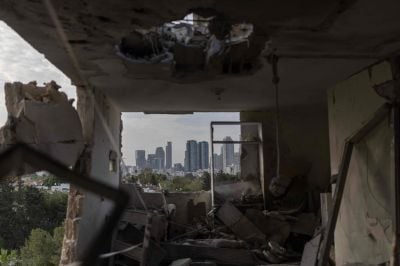
Consolidate authority, postpone domestic reckonings, and create the illusion that the leader who began the war is the only one capable of finishing it. As long as the war continues, parliament cannot remove him. As long as he remains in office, he will avoid being tried. The survival of the state and the survival of Netanyahu have become, in his calculus, identical.
But in the process of "securing the future of Israel," Netanyahu is systematically undermining its present. He is alienating citizens, stocking parliamentary conflicts, and exposing the country to both internal and external pressures. The extreme right, once marginal, now shapes policy — pushing for annexation, expanding settlements, advocating for Palestinian displacement. The judiciary is embattled. The social fabric frays.
Yet even if Netanyahu's political career were to end tomorrow, "his influence will endure... The Israel he has helped make is a hybrid of ancient phobia and high-tech hope, tribalism and globalism, just like the man himself," says Pfeffer.
The question that lingers is whether, in that last gamble of a political survivor, he has hollowed out the very state he claims to be securing. The answer, it seems, will determine not just Netanyahu's fate but Israel's trajectory for decades to come. Because the price of securing Israel's future — if that is indeed what Netanyahu is doing — may well be the destruction of Israel as it once was.