





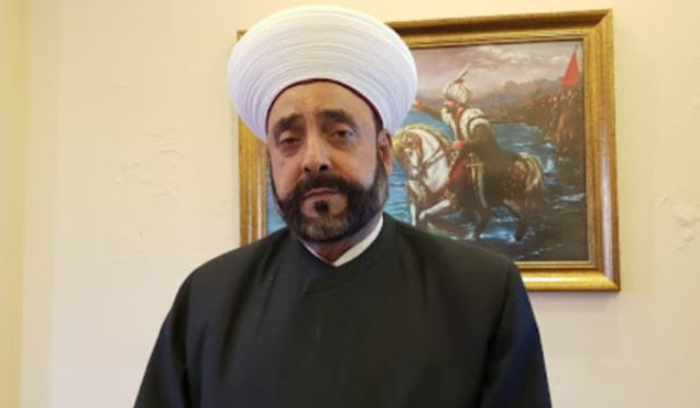
Sunni sheikh Khaldoun Oraymet. (Credit: NNA)






BEIRUT — Beirut’s first investigative judge, Roula Osman, concluded her investigation last week in the “Abu Omar” case and referred the file to the Court of Cassation’s prosecution for its opinion, a preliminary step before issuing an indictment, according to L’Orient-Le Jour's information.
The opinion of the public prosecutor at the Court of Cassation, Jamal Hajjar, will not be binding; the final decision rests with Judge Osman, who will rule according to her own judgment.
“Abu Omar” is the nickname of Mostafa Hessiane, a mechanic from Akkar in northern Lebanon, who posed to politicians and businessmen as a Saudi emir capable of securing support from the Wahhabi kingdom in exchange for payments. He has been in detention since last December, along with Khaldoun Oraymet, a Sunni sheikh suspected of facilitating contact between Hessiane and his alleged victims.
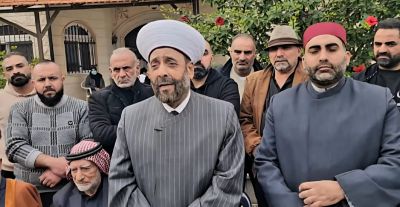
During the hearing before the close of the investigation, Judge Osman arranged a confrontation between Sheikh Oraymet and Ahmad Haddara, a businessman who, in December, exposed the scheme by filing a complaint with the Court of Cassation’s prosecution.
Notably, no politician named by Abu Omar during the investigation has admitted to being defrauded. Some told the public prosecutor that their payments had gone to charities linked to Sheikh Oraymet, while others said their contributions were directed to hospitalization funds.
Media reports indicate that Haddara even retracted earlier statements to Judge Osman, in which he alleged that Sheikh Oraymet’s son, Mohammed, had extorted the price of a car from him in exchange for political services. In his latest testimony, Haddara reportedly said he had merely lent the vehicle, which was later returned to him.

 Evening recap: Netanyahu announces West Bank offensive; 7 killed in Jordan church shooting; tents burned in south Lebanon
 US strike on Iran this weekend? ‘Absolutely,’ says Barrack; ‘I have no idea,’ says Trump