



Waad Lamaa






Waad Lamaa, 20, lives in the village of Arab Salim, in Nabatieh district. She speaks about her hesitation to leave: "At first, I wanted to leave. We didn’t know how the Israeli strikes would unfold, whether they would be random or not." Fear gripped the village, but the parents of the young graphic design student at the Lebanese International University (LIU) in Nabatieh decided to remain at home. Waad notes the absence of likely targets nearby and the lack of direct threats in her neighborhood. Nevertheless, she does not rule out leaving the village “if the situation becomes too dangerous,” she confides.
Marilyne Hanna also chose to stay under threat, but with her family. She was in Beirut at the start of the strikes for her first year of biochemistry studies at the Lebanese University (LU), but later joined her family in Dibil, in the Bint Jbeil district.
Although her village is not directly targeted, the tension is constant. The 19-year-old student says she was deeply affected by the death of the priest from Qlayaa parish in the Marjayoun district, killed by an Israeli artillery shell on March 9. “We were very scared,” she insists. “Very scared! The residents of that village were not directly targeted like us, yet this happened.”
Hanna also recalls the displacement experienced in 2024: “It was so harrowing that you don’t want to live through it a second time. I’m staying with my family, despite the fragile situation here,” she concludes.
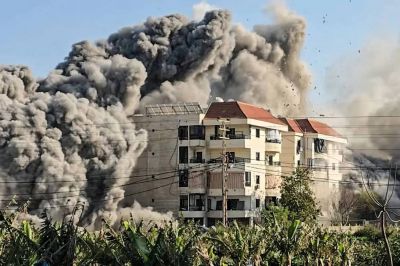
Malek*, 28, who holds a degree in international relations, currently lives in Jarjou in the Nabatieh district, explains: "We already experienced a forced displacement in 2024. I had sleepless nights thinking about the house. I can't find the words to describe the fear and anxiety we went through." He adds he "felt physically protected during the last war, but I was drowning in anxiety and the fear of losing my house, a family member, or even a friend." Yet this time, Malek’s family has decided: "We will stay as long as it is physically possible, as long as we feel protected, or at least as long as our area is not directly bombed." Deciding to abandon your village and home is always heartbreaking. He explains: "It will be difficult, first for me personally, for my family who has lived their entire life in the village, and for my grandfather who is with us. We are attached to our roots, to our land."
As for Jimmy*, 19, who lives in Deir Mimas in the Marjayoun district, he expresses his constant hesitation: "The idea of leaving is always there; we hesitate all the time. For now, as long as there is a way to communicate with the outside world, especially via the Internet, we are staying. But the situation is far from stable. We are, in fact, surrounded by combat zones like Kfar Kila, Taybeh, and Marjayoun."
The choice is to hold on, because in the end, "there’s no place like home," he says. The first-year mechanical engineering student at LIU adds: "It's horribly difficult to carry your whole life in bags and leave."
Jimmy highlights the important role of young people in protecting the village. "Young people, in coordination with the municipality, organize patrols at intersections to prevent thefts and secure the area."
Razane Abou Ghannam, a second-year sociology student at University Saint Joseph of Beirut (USJ), currently lives in Ain Ibl, in the Bint Jbeil district. She says: "Our village is in the central sector, very close to the border, surrounded by localities such as Rmeish, Bint Jbeil, and Maroun al-Ras." The 20-year-old speaks about the choice to stay: "This choice imposed itself. We do not want to abandon our houses and land for an unknown fate. Leaving means risking never being able to return, especially with the current discussions about setting up a buffer zone. I don’t want to end up somewhere without knowing if I will see my parents or my home again," she states angrily.
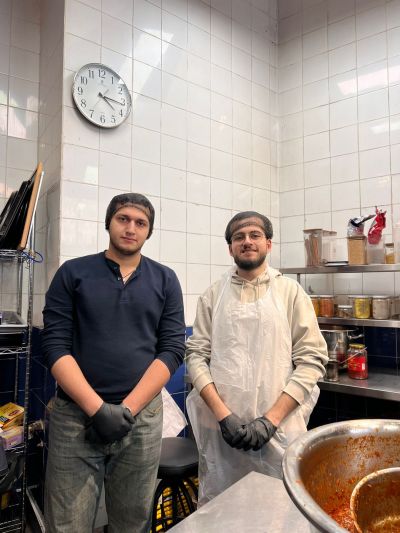
Razane chose to stay close to her family. She recalls her difficult experience in 2024 and says: "During previous clashes, I was stuck in Beirut while my parents were in the South. It was a terrible time of anxiety. Communications were cut, no internet, no mobile network ... and I didn’t even know if they were alive. My father was one of the only three people who stayed in the village to watch over the houses, while everyone else sought refuge in Rmeish. This time, I preferred to stay with them. Even if we are living under bombs and aircraft, being together brings me a kind of serenity I didn’t have at a distance."
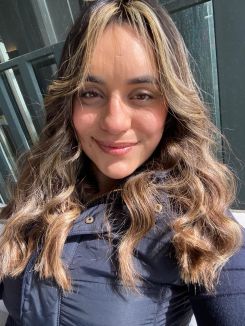
Life is no longer normal
Waad Lamaa says she feels comfortable fasting and spending Ramadan at home, in Arab Salim. Food is still available and accessible in her village. She avoids going out to prevent any unexpected incidents. However, she is struggling with online classes. "I can't concentrate," she admits.
Hanna shares the same situation in Dibil. "Life is no longer normal," she says. "You can’t do anything like before. I spend my days at home. I could go out for a walk or see the sun, but fear holds me back. You never know what might happen once you are outside, away from the safety of home. To break the boredom and anxiety of my 10-year-old sister, I try to keep her busy. Since schools are closed, we play together. Today, we just went downstairs to the bottom of the house to play ball, but that's the most we allow ourselves," she says.
In terms of basic needs, Marilyne and her family rely on the 'mouneh' (traditional Lebanese provisions) she has prepared. She describes the current situation in her village: "For bread, a bakery in the nearby village of Rmeish continues to operate and supply us. It’s about a 15-minute drive away. Local stores and gas stations are closed due to lack of fuel, so shopkeepers organize small, risky convoys to bring vegetables and fruits from other localities. Electricity has become complicated. Subscriptions to private generators are rationed because diesel is scarce. Fortunately, almost everyone here has installed solar panels."
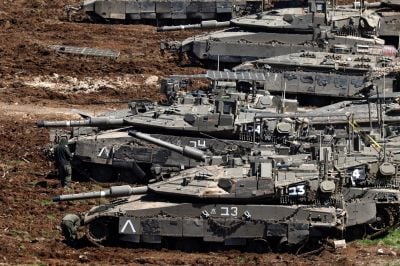
Malek describes daily life in his village of Jarjou: "Life has been reorganized. There are no more grocery stores open, but we manage to get supplies in neighboring villages." His family, having experienced previous wars, anticipated the situation. "Since the end of 2023, we have built up a stockpile of essential products at home. We manage day by day, monitoring the news 24/7 to look out for evacuation orders or the approach of bombings. We simply try to live with dignity at home, in the midst of uncertainty," he says, seeming to have accepted the harsh reality.

Jimmy describes the situation in his village of Deir Mimas: "A few grocery stores are still open, taken over by those who stayed behind, but vegetables have become unaffordable. For everything else, we have to make a risky 15- to 20-minute trip to Qlaya to bring back everything we need in one go. Infrastructure is precarious – a missile hit the power grid and no one can come to fix it. We depend on the village generator, which only runs a few hours a day to save diesel. The Internet is unstable, and once you leave the house, there is no signal at all, not even 3G." The young man expresses frustration about continuing his studies online. "I loved the in-person experience," he recalls.
In Ain Ibl, Razane says: "We spend most of our time shut in at home. Going outside is too risky; you always fear a sudden strike on the road. Our resources are gradually running out: water, food, diesel for heating, and especially gasoline. The stations are only open intermittently, with very strict quotas so everyone can get a little, especially in case of an emergency evacuation. We try to save every drop. Cooking gas also ran out for a time before being replenished in limited quantities." She concludes: "I fear for my future. We don’t know how long this will last, or how much it will affect our studies."
*Names have been changed.
 2 Israeli soldiers injured in 'operational accident,' as army continues attacks in the South