



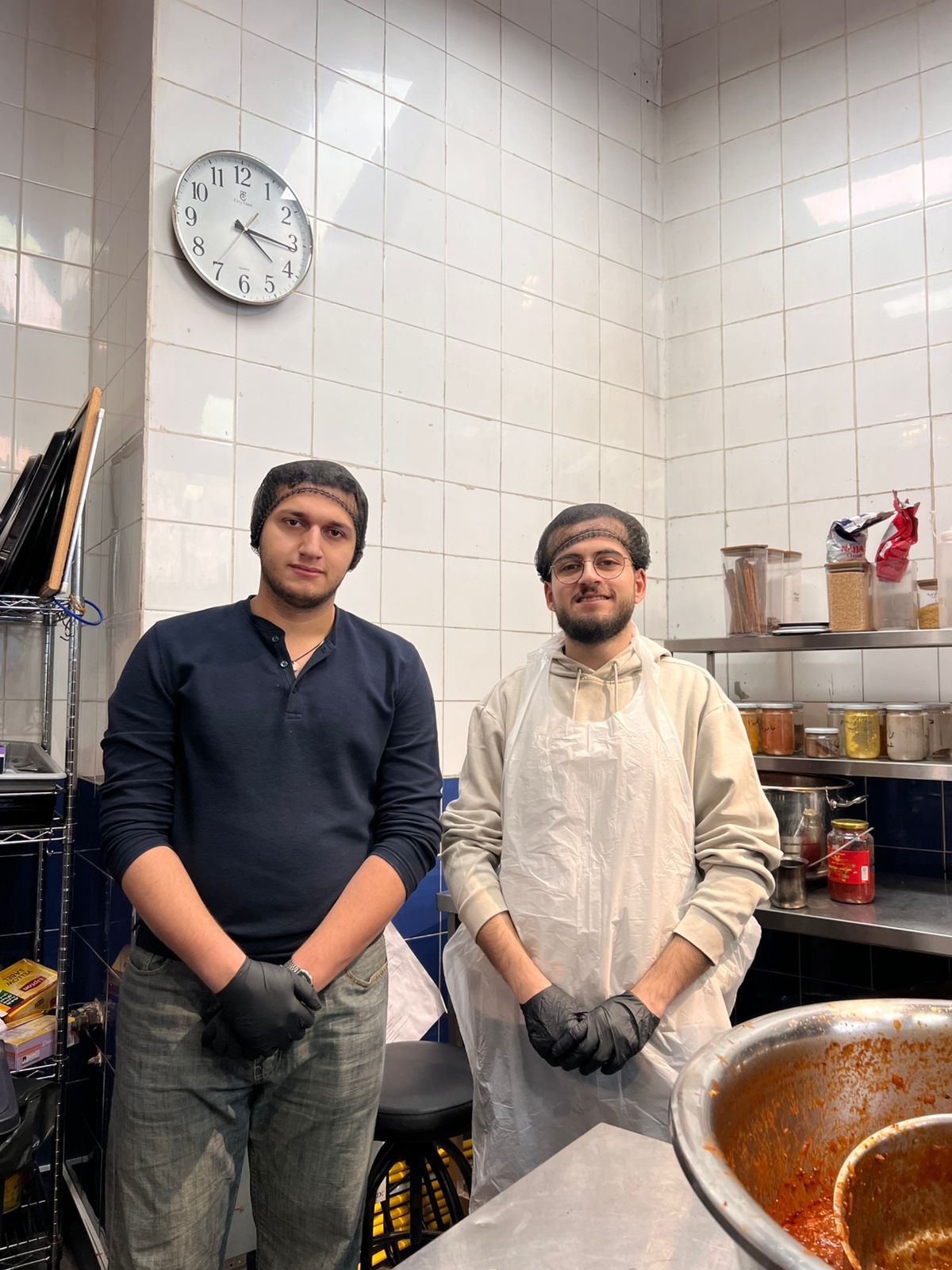
Mohammad el-Khatib (L) and Tarek Kaadan (R), members of the Secular Club. (Credit: Karma Sakkal)






Two days after the escalation and first wave of mass displacements in Lebanon, members of the Secular Club at AUB were confronted with the urgent need to act – not only to cope with their own sense of despair, but, more importantly, to help those in need across Beirut.
"I remember one moment in particular. Looking at one of my friends, who is usually very active in the club, I could tell his spirits were especially low. It was the first time I had seen him like that. At that moment, I realized we had to do something bigger," says Ghadi Maadad, president of the Secular Club.
Driven by students, the support platform Campus Choice Relief Initiative was created, founded by Secular Club members alongside representatives from the University Student Faculty Committee (USFC) and the Student Representative Committee (SRC) at AUB. "We thought it was time to take the lead and create something tangible, something that would encourage all students, not only at AUB, but across the country, to move in this direction," continues the 20-year-old student.
Initially led by a few Secular Club members, the initiative now brings together between 200 and 250 young volunteers. "What surprised me the most was the positive reaction from students," admits Ghadi Maadad. "The initiative ultimately inspired many people, and many clubs and associations decided to join the effort, even if some had previously disagreed with us." Knowing they lacked the capacity to launch an initiative from scratch, the group focused on connecting students with organizations "not affiliated with political parties or sects" that are active on the ground. "This is a space where we can generate a desire to act, and where young people can volunteer" Maadad adds.

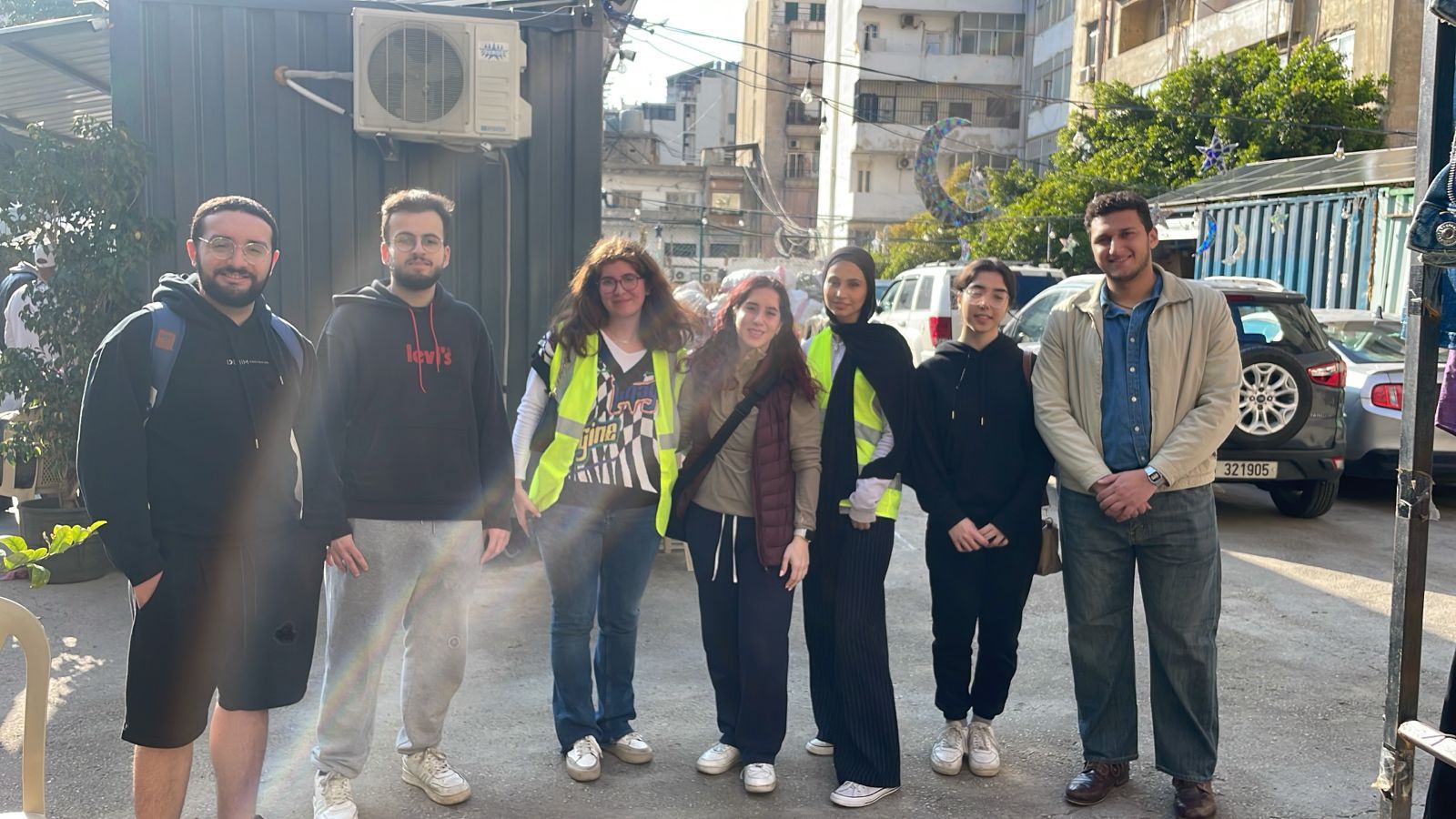
Mobilized in this way, the volunteers assist NGOs by preparing meals or distributing hygiene products, food and clothing. Beyond these on-the-ground efforts, the initiative leaders also work on other fronts. They share the names of humanitarian organizations with which they maintain regular contact on their networks. At the same time, they coordinate with AUB's administration, organize volunteer activities and connect volunteers with NGOs.
"Donations come in, sometimes in large quantities, and some people are willing to volunteer, but we need more volunteers. This is why, from the outset, our call has been very clear: we need volunteers, and we want the student body to feel concerned and involved in what is happening," says Maadad, a media and communications student at AUB's Faculty of Arts and Sciences.
Making young voices heard
Furthermore, the Campus Choice Relief initiative aims to foster what the Secular Club president calls a "student discourse." By encouraging a unified student voice, the initiative seeks to promote civic engagement while rejecting sectarianism and misinformation. "There needs to be a genuine discussion. Students must feel a sense of urgency and understand they are part of this country. For years, we've been convinced that the student body is incapable of acting and that student politics are ineffective. We reject that idea," affirms Ghadi Maadad.
Convinced that students can have a real impact – measured through the conversations and value systems they help create – the Secular Club leaders aspire "to create a more connected nation, capable of overcoming despair and ready to set aside differences for the common good." In this way, the initiative encourages young people to work together in order to make an impact. "Because if we don’t regain control of the discourse, we risk becoming groups of people with different convictions who will ultimately, to some extent, oppose one another," he continues.

In short, under current circumstances, the mission of the Secular Club is to foster dialogue among students and to remind everyone that all communities are part of the country. "There is no group outside of Lebanon, and that's precisely why we were drawn into a civil war. Seeing Lebanese people as different from one another is not the solution. The solution is to correct this perception," Maadad explains.
Aware of the challenges, he adds that what drives these young people to follow through on their commitment is "humanitarian support and being there for people when they need it."
For now, Campus Choice Relief initiative's actions are focused on Beirut, but young people supporting other regions do so remotely, particularly by assisting with logistics or online tasks – such as, managing databases, supporting communications, or coordinating group efforts. "However, we believe this isn’t enough. We see major needs in Mount Lebanon and plan to extend our efforts there," Maadad adds.
Even if the war were to intensify, the organizers are determined to persevere as long as safety conditions allow. "We hope to expand our work, collaborate with more NGOs, establish support networks for displaced people, and work with other clubs and associations. We also want to develop a national-level student coordination, so we can reclaim space in public debate and make our voices heard," concludes the AUB Secular Club president.

 1 p.m. recap: Salam in Nabatieh; up to 10,000 more US troops heading to Middle East