







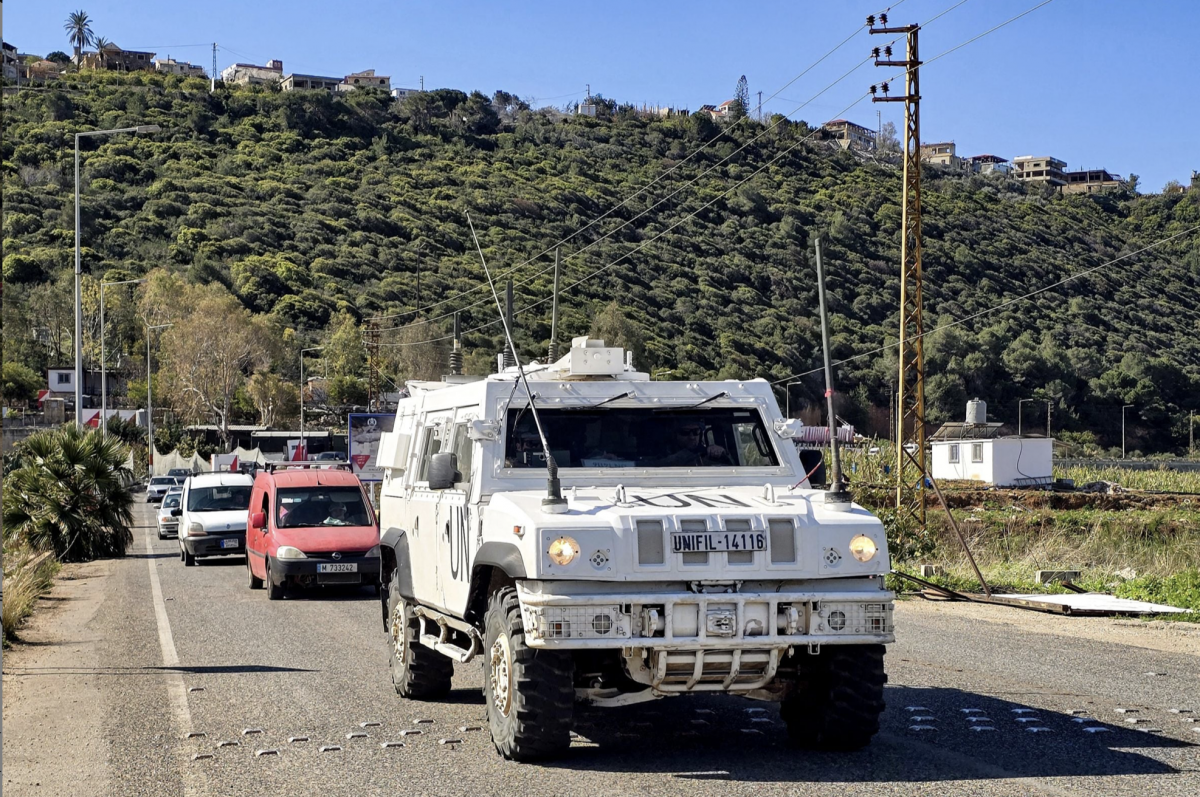
Vehicles of the United Nations Interim Force in Lebanon (UNIFIL) escort a convoy of residents from the Christian village of Alma al-Shaab, who are evacuating the village located in southern Lebanon, passing through the Naqoura region, on March 10, 2026. (Credit: Kawnat Haju / AFP)






BEIRUT – The Israeli army acknowledged Wednesday that tank fire had struck a United Nations position in southern Lebanon on March 6, injuring Ghanaian peacekeepers, according to Reuters. The initial findings of a U.N. internal investigation had suggested that Israel was responsible for the attack, which was carried out by a tank that fired three shells, a Western military source told the international agency.
The Israeli military said it was responding to anti-tank missile fire from Hezbollah, which had wounded two of its soldiers. It told Reuters that "a thorough investigation concluded in recent days established that the fire which hit the UNIFIL personnel, the United Nations Interim Force in Lebanon, mistakenly came from Israeli soldiers, who had confused the peacekeepers with the source of the anti-tank fire that had occurred moments earlier."
The fire was made using 120mm M339 HE-MP-T shells, the Western military source said Tuesday. "Israeli involvement in the attack against UNIFIL is undeniable, given that these munitions are manufactured by Israel Military Industries (IMI)," the source said. The conclusions of the UNIFIL investigation had not been previously made public.
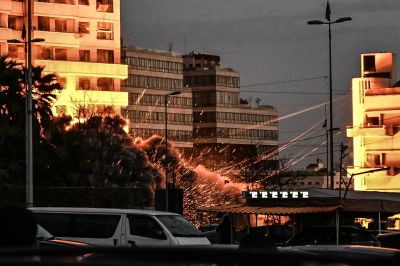
The international force said on March 6 that Ghanaian peacekeepers had been injured during heavy exchanges of fire, and described the incident as "unacceptable," but had not specified who was responsible.
Alarming deterioration
UNIFIL also warned on Wednesday of an “alarming deterioration” last night in southern Lebanon, where the intensity of fighting between Hezbollah fighters and the Israeli troops continues to escalate as Israel’s air and ground offensive in Lebanon continues.
In a statement, the international force reported “intense exchanges of fire,” an “escalation of air and ground operations,” as well as an “increased presence” of Israeli forces inside Lebanese territory, describing these developments as “deeply concerning."
UNIFIL also expressed concern over the resumption of evacuation orders issued by the Israeli army and Hezbollah, which “affect civilians on both sides of the Blue Line,” the demarcation line between Lebanon and Israel.
The U.N. peacekeepers, whose mandate in southern Lebanon is due to expire at the end of 2026, have reiterated their call on the various parties to comply with U.N. Security Council Resolution 1701 and to achieve a complete cessation of hostilities, which they regard as the only path to lasting stability.
The peacekeeping force has also given assurances that its contingents remain deployed throughout their area of operations in southern Lebanon and along the Blue Line, “continuing their mission to monitor violations, liaise between the parties and, where possible, facilitate humanitarian access and protect civilians.”

