






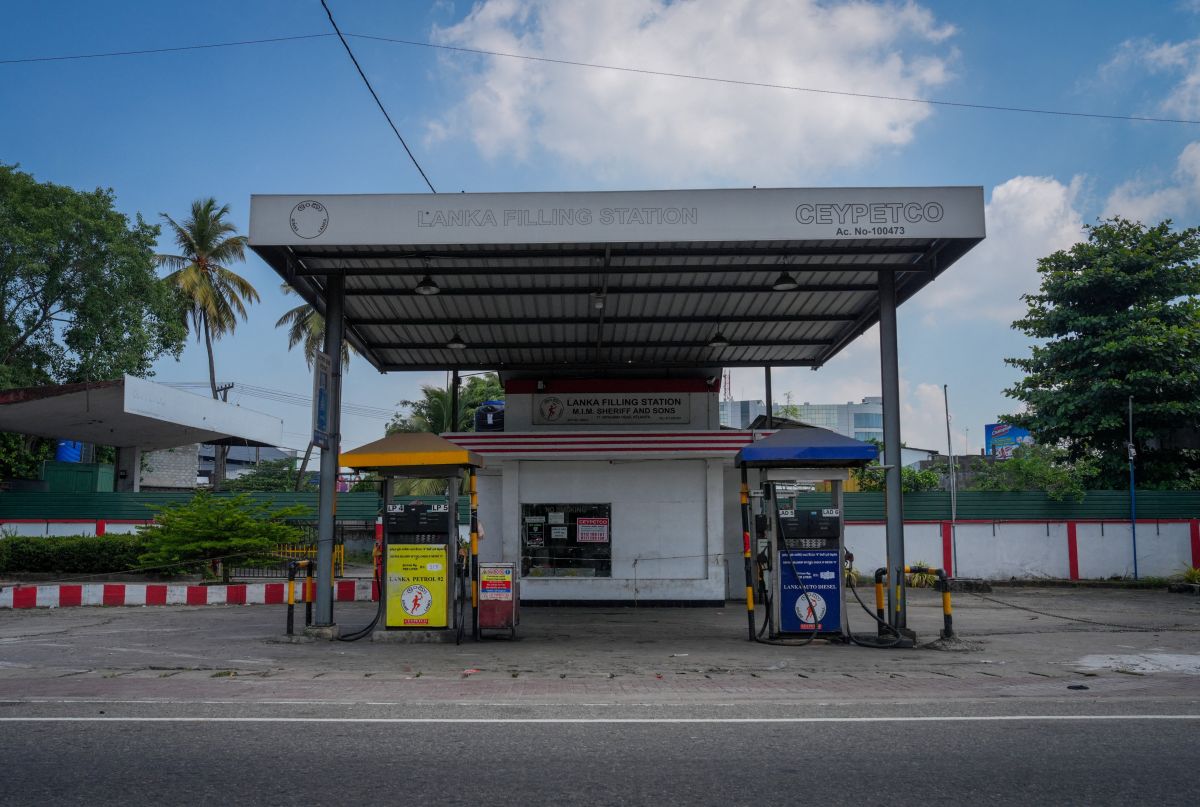
A closed fuel station, due to concerns over fuel supply amid the U.S.-Israel conflict with Iran, in Colombo, Sri Lanka, March 16, 2026. (Credit: Thilina Kaluthotage/AFP)






Neutralizing Iran could make crude oil much cheaper because the threat posed by Tehran imposed a "terror premium" that inflated global oil prices for decades, a top White House adviser said in a report to be released on Monday.
Peter Navarro, who leads the White House Office of Trade and Manufacturing Policy, has written in a 13-page report that tensions with Iran have added a $5 to $15 per barrel premium to crude prices, as markets price the risk of attacks or disruptions through the critical oil transit route of the Strait of Hormuz. Reuters viewed a draft of the report prepared by the White House trade and manufacturing office.
The report's conclusion has drawn skepticism from energy market specialists. Ed Hirs, an energy economist at the University of Houston, has not seen the report but said he knows of no verifiable evidence of such a premium, while it appears to ignore costs associated with military action against Iran.
U.S. and Israeli strikes on Iran have jolted global energy markets, sending oil prices higher and raising gasoline costs for U.S. consumers. The surge threatens to complicate President Donald Trump's domestic economic agenda and could weigh on Republican prospects in November midterm elections.
The report is consistent with the administration's case for a hardline approach toward Iran. By arguing that Iran-related geopolitical risk has artificially inflated oil prices for decades, the analysis frames aggressive action against Tehran as a long-term economic benefit.
Reducing Iran's ability to threaten regional energy infrastructure or shipping routes could shrink or eliminate the geopolitical premium embedded in oil prices, the report says.
"In that scenario, oil prices would likely move back toward equilibrium levels and potentially settle well below $60 per barrel under current supply conditions," the report said.
The report estimates Iran-related risks have historically raised oil prices 7 percent to 21 percent above fundamentals, reducing global output by 0.1 percent to 0.4 percent annually, or $100 billion to $450 billion per year. Over 25 years, the cumulative economic impact could exceed $10 trillion, roughly the combined annual output of Germany and Japan.
The University of Houston's Hirs questioned the report's contention that oil prices would fall below $60 a barrel if Iran-related risks disappeared. He cited research from the Federal Reserve showing that U.S. oil producers need roughly $70 per barrel to break even.
He added that researchers often overlook the potentially enormous costs of military conflict.
"The question is what will it cost to obtain the goals," Hirs said. "The truth is we just put it on the government Mastercard."
