






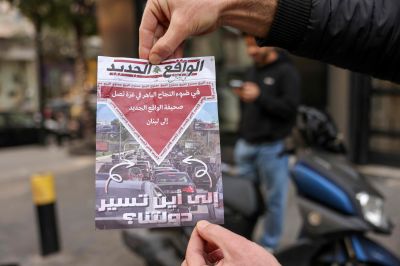
A man holds a warning leaflet dropped by the Israeli army over the Lebanese capital, Beirut, on March 13, 2026. (Credit: Anwar Amro/AFP)







What L’Orient-Le Jour learned
- Israel rejected the Lebanese proposal of a one-month cease-fire during which direct negotiations would have been launched.
- Israeli officials insist on continuing the war and military escalation, and demand that Lebanon enter negotiations while fighting continues.
- This option continues to be rejected by Parliament Speaker Nabih Berri and the Hezbollah-Amal alliance, which also refuse to name and appoint a Shiite representative to the Lebanese delegation as long as Israel does not commit to a cease-fire.
- So far, Israel has not responded to whether it would participate in the direct negotiations while the war continues.
- Efforts are underway to determine the location for the talks, with Cyprus as the main contender.
- Some reports suggest a meeting could take place next week if Israel agrees to attend, but only after achieving further military gains on the ground, particularly by increasing pressure on Beirut and the Lebanese state.
- Israeli Defense Minister Israel Katz directly threatened the Lebanese state, saying Israel could strike state infrastructure and hold it responsible if it fails to act against Hezbollah. This raises the possibility that Israel could intensify and expand its attacks to include roads and bridges, especially after it destroyed the Zrarieh–Tayr Filsey bridge in the Sour district on Friday.
- According to messages conveyed to Lebanese officials through several channels, Israel expects the Lebanese Army to move quickly toward Hezbollah positions, take control of them and remove the group’s weapons, even if this leads to a confrontation between the army and the party.
- For its part, the Lebanese state says it is studying all options and continues to push for negotiations, even if they take place while fighting continues.
- At the same time, officials are examining how the army could be deployed, particularly in Beirut’s southern suburbs and other areas.
- Diplomatic sources say Israel and the United States are hardening their demands toward Lebanon, insisting on swift action and a clear timetable for removing Hezbollah’s weapons, without making a cease-fire a precondition.
- Messages conveyed to Beirut also suggest that Hezbollah would not be able to confront the Lebanese state.
- As Lebanon prepares for possible negotiations, Israel continues to escalate militarily, both from the air and on the ground, while advancing in southern Lebanon.
- No area now appears excluded from Israeli attacks, raising concerns in Lebanon about the possible expansion of assassinations to political or civilian figures linked to the group, especially after the strike on the Lebanese University in Hadath.
- Diplomatic messages conveyed to Lebanon also point to Israel’s intention to launch a ground offensive that could reach up to 15 kilometers inside Lebanese territory. However, this does not necessarily mean operations would stop there.
- Such a scenario could lead to a prolonged war, potentially resembling the pattern of the Gaza war. The exact nature of potential Israeli operations remains unclear, but they could include ground invasions in Beirut similar to those Israel may seek to conduct in the Bekaa.
What L’Orient-Le Jour learnedIsrael rejected the Lebanese proposal of a one-month cease-fire during which direct negotiations would have been launched. Israeli officials insist on continuing the war and military escalation, and demand that Lebanon enter negotiations while fighting continues.This option continues to be rejected by Parliament Speaker Nabih Berri and the Hezbollah-Amal alliance, which also refuse to name and appoint a Shiite representative to the Lebanese delegation as long as Israel does not commit to a cease-fire. Need the context? Negotiations with Israel: Lebanon proposes a one-month cease-fire So far, Israel has not responded to whether it would participate in the direct negotiations while the war continues. Efforts are underway to determine the location for the talks, with Cyprus as the main contender.Some...

 7 p.m. recap: Iran warns Egypt, Israeli soldiers vote in south Lebanon, Haret Hreik responds to Kataeb