







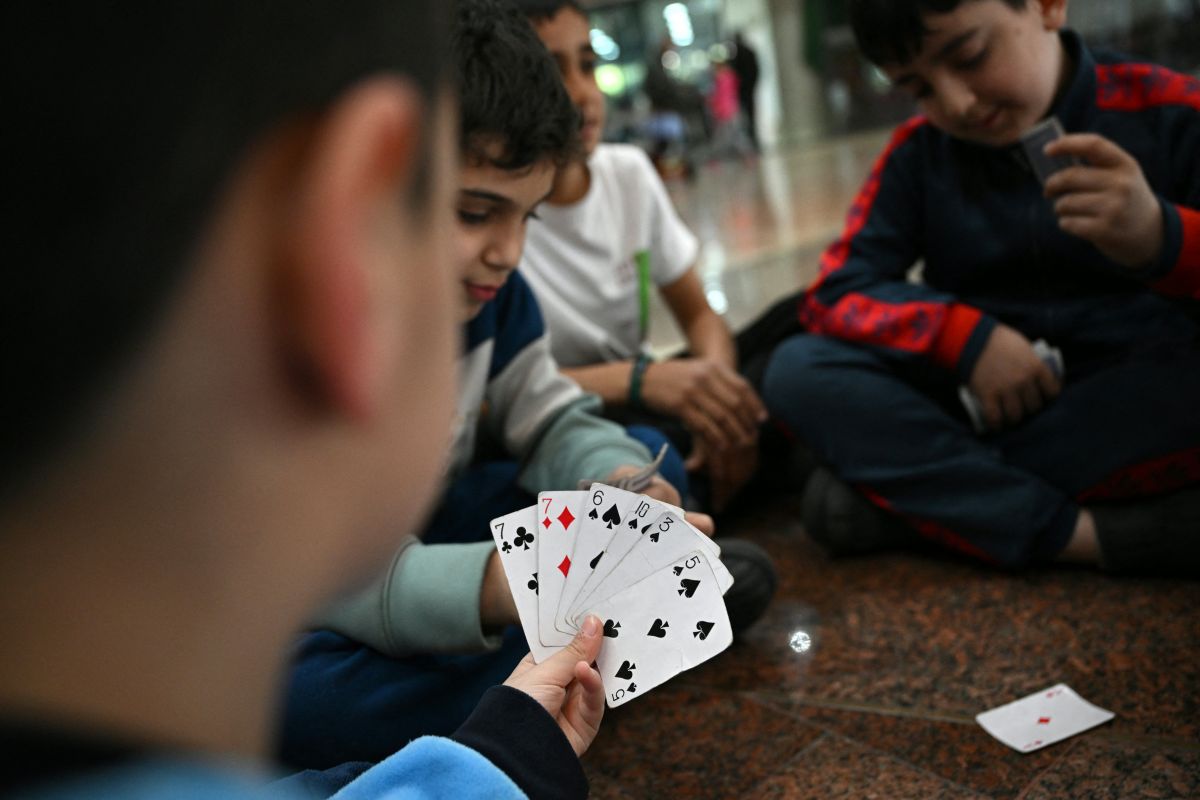
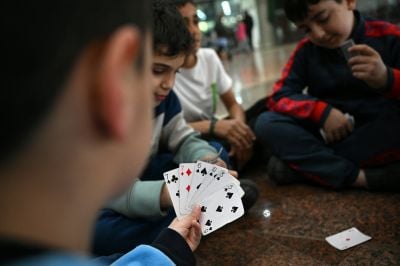
Children play cards in a school turned into a shelter for internally displaced people in the city of Dikwaneh, north of Beirut, on March 5, 2026. (Credit: Joseph Eid/AFP)






Since the Israeli war launched overnight in response to rocket fire by Hezbollah, the lives of many families in Lebanon have been turned upside down.
Israeli attacks and threats have forced hundreds of thousands to flee, while others have seen their daily lives disrupted: schools have closed, activities stopped and movement is limited.
Here is some advice from specialists to help children cope during this difficult period.
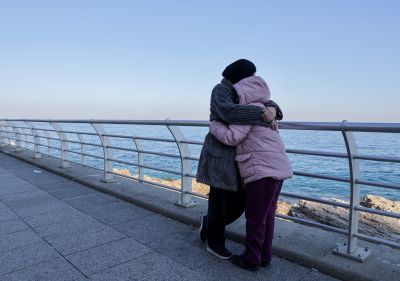
Maintaining routine
Tarek Saghbini, a child protection specialist, stresses the importance of maintaining a routine. A regular wake-up time, bedtime rituals, family moments or time dedicated to studying can help provide stability.
“Predictability helps children regulate their nervous system,” he said. He offers this advice both to families in relatively safe areas and to those who have fled their homes.
Within a week, more than 800,000 people — including about 200,000 children — were displaced in Lebanon after evacuation orders targeting Beirut’s southern suburbs, dozens of villages in southern Lebanon and the Bekaa, and the entire area south of the Litani River.
In this context, maintaining familiar markers becomes crucial for children. “The goal is not to pretend life is normal, but to create a minimum structure, a recognizable rhythm for the child,” Saghbini said.
Simple repeated gestures — sleeping on the same mattress, stretching with a parent after waking up or sharing breakfast as a family — can help children manage their emotions and feel safer. “Children do not need perfect conditions, but small repeated signals that show them they are safe and in a familiar environment,” he said.
Another way to help is by restoring a sense of control. Displacement and instability can leave children feeling disoriented. Allowing them to make small choices like where to sit, what to eat or which activity to do can help them regain some control over their daily lives.
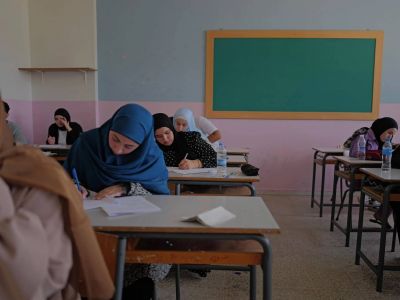
Balancing study and leisure
Some schools are gradually reopening on a case-by-case basis. But for many students, especially those whose schools have been turned into shelters for displaced families, classes remain suspended. The situation also affects children in neighboring countries impacted by the wider regional conflict.
For home learning, Julien Lopes, a teacher at the Grand Lycée Franco-Libanais of Beirut, recommends adapting the school rhythm.
“Work sessions should not be too long. Asking a child to study for hours at home can be counterproductive,” he said.
Parents can structure the day by alternating learning periods with more playful moments. For example, computer-based learning followed by activities without screens.
Creative activities can also help. Drawing, coloring, origami or writing stimulates imagination while allowing children to express emotions and build self-confidence. “The most important thing is to give them space to work independently, then talk with them about what they have done,” Lopes said.
For working parents, implementing these routines can be difficult. Possible solutions include seeking help from relatives, working from home or organizing childcare rotations with other parents.
Movement, play and social connection
Physical activity also plays an important role in reducing stress. When conditions allow, outdoor activities can provide relief. When going outside is not possible, keeping children active remains essential.
“Children need to move,” Saghbini said, especially those who are displaced or who lack access to outdoor spaces. Dancing, children’s yoga or small indoor gymnastics competitions can help release energy.
Simple games such as “Simon Says” can also stimulate coordination, balance and body awareness, and can be played almost anywhere.
Maintaining social connections is equally important. “I organized several playdates near our home with my son’s friends,” said Yasmine, a mother of two in Beirut. Role-playing games or family games can also provide a safe space for children to express emotions while strengthening family bonds.
Some venues in Lebanon now offer child-friendly spaces where parents can work or relax while children play and socialize, such as Beit Bouyout and Espace L.
The emotional state of adults
“An often overlooked factor in supporting children during wartime is the emotional state of the adults around them,” Saghbini said.
During crises, adults often follow the news constantly by watching footage, reading updates or scrolling through social media. But children, even very young ones, can sense this stress.
In conversations with his students, Lopes said many express concern about their parents. In such cases, adult anxiety can become an additional source of stress for children.
Parents should therefore allow themselves breaks so they remain emotionally available: stepping away from screens, speaking with loved ones or sharing responsibilities with other adults.
Caroline, a mother of two, said the support of her in-laws helped during this period. “Fortunately, my in-laws helped my daughters with their homework and maintained a school rhythm,” she said.
In difficult times, strong social ties and community support remain essential for the well-being of both children and parents.

 8 p.m. recap: Israel again threatens Beirut’s south suburbs; 2 ships hit near Hormuz; Riyadh football matches canceled