



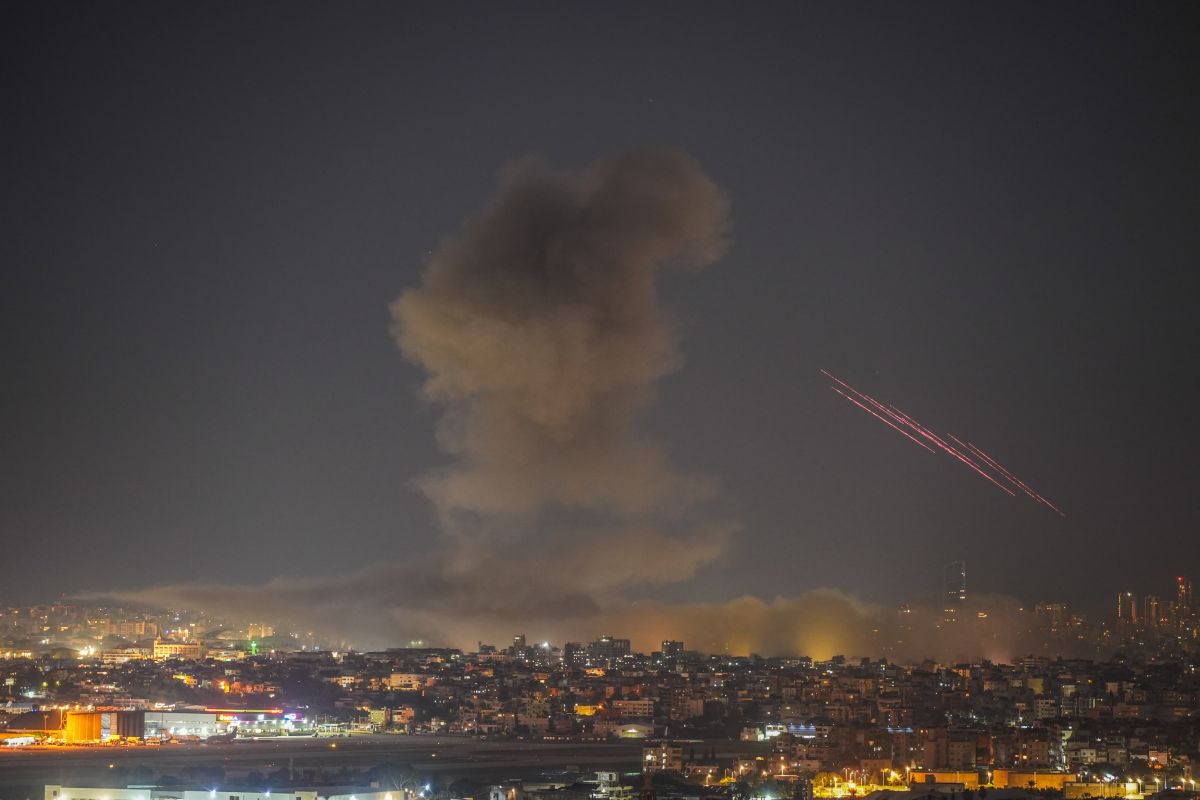
A plume of smoke and bursts of automatic gunfire over the southern suburbs of Beirut at dawn on March 3, after an Israeli bombardment. Photo Mohammad Yassine/L’Orient-Le Jour






And the war resumes with renewed intensity. Two days after Hezbollah fired a barrage of drones and missiles into Israel on the night of March 2, in retaliation for the assassination of Iranian Supreme Leader Ali Khamenei in Tehran, the Israeli army launched massive airstrikes across Lebanon and a ground offensive in the South.
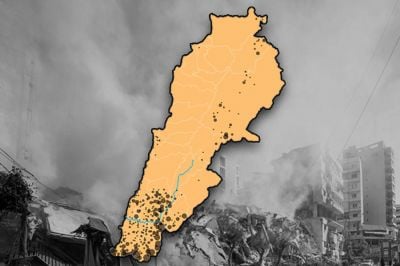
Based on reporting from correspondents on the ground, L’Orient-Le Jour tallied at least 152 Israeli airstrikes hitting at least 88 Lebanese villages between the time of Hezbollah’s attack and 3 p.m. on March 3, Beirut time.
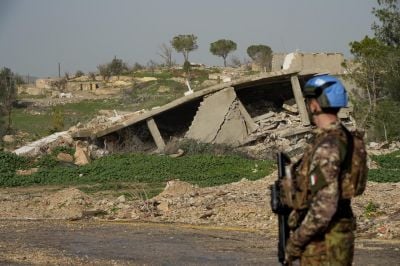
The Lebanese Health Ministry’s latest report, published Tuesday, said the strikes killed at least 40 people and injured 246. A previous government report had listed 52 casualties, but the ministry later explained that the discrepancy was due to a “technical error.” The ministry also said the offensive displaced 58,000 people.
While the Lebanese Army announced the disarmament of Hezbollah south of the Litani River, most Israeli strikes have concentrated in that area. Nearly half targeted the districts of Sour, Bint Jbeil and Marjayoun along the border strip between the Litani River and Israel. It remains unclear whether Hezbollah launched its attacks from south or north of the river.

Sour and Beirut’s southern suburbs were hit hardest, with 36 strikes each, followed by Nabatieh (24 strikes), Bint Jbeil (23), and Marjayoun (14). Other districts were less affected. In the Bekaa Valley, for example, West Bekaa and Baalbeck combined saw eight strikes.
Border villages are bearing the brunt of the Israeli attacks. Aita al-Shaab in Bint Jbeil is currently the most heavily struck village, excluding the southern suburbs of Beirut. L’Orient-Le Jour’s count last November found that the village had already been the most targeted since the cease-fire between Hezbollah and Israel in November 2024, bearing 50 strikes in one year. Aitaroun in Bint Jbeil has been hit three times, while Khiam in Marjayoun has been bombarded five times by Israeli artillery.
With these strikes, the Israeli army claimed it targeted several strategic sites. Some were clearly military, including weapons depots and senior officials of Hezbollah and Islamic Jihad in Beirut’s southern suburbs. Israel claimed responsibility for killing Hezbollah intelligence chief Hussein Moukalled and his Islamic Jihad counterpart in Lebanon, Adham Adnan al-Othman.
Other targets are not strictly military but were hit because of their affiliation with Hezbollah. Twelve branches of the party’s microfinance institution, al-Qard al-Hassan, were destroyed. Offices of Hezbollah-affiliated television channel Al-Manar and the headquarters of al-Jamaa al-Islamiya, the Lebanese branch of the Muslim Brotherhood, were also hit. Jamaa Islamiya has grown closer to Hezbollah and the 'Axis of Resistance' since Hamas’s Oct. 7, 2023, operation against Israel.
Finally, some clearly civilian targets have been hit: homes in Sour district, a water treatment facility in Kharayeb, Saida district, and numerous non-military casualties. Among them, Ibrahim Fares, a rescuer killed on March 2 during a raid in Wadi Jilo, in the Sour district, as well as two paramedics killed in the same area the following day, while six of their colleagues were injured trying to recover their bodies. A four-month-old baby also died in the bombing of the family’s building, where the bodies of four people are still being searched for.
Israeli strikes have also hit clearly civilian targets. Homes in Sour, a water treatment facility in Kharayeb in the Saida district, and other non-military sites suffered damage. Among the casualties were rescuer Ibrahim Fares, killed on March 2 during a strike in Wadi Jilo, Sour, and two paramedics killed the following day while trying to recover his body. Six rescuers were also injured in the recovery operation. A four-month-old baby was also killed in an Israeli strike on the family's building, while rescue operations continue for four people, as of the time of reporting.
Alongside the airstrikes, the Israeli army — which already occupies several positions in southern Lebanon since the last war — launched a ground offensive into a border area on Tuesday, a military source told AFP. The offensive started following Israel’s Defense Ministry had authorized the army to “take control” of new positions in southern Lebanon. Israeli Defense Minister Israel Katz said the army would seize “additional strategic territories in Lebanon in order to prevent attacks and protect Israeli border communities.”
This article was originally published in French in L'Orient-Le Jour.

 7 p.m. recap: Netanyahu seeks mastermind behind Flydubai incident; Washington sanctions 2 French nationals; Ben Gvir's 'I want to kill you' threat