







A displaced woman and children sheltering in school in Beirut on 2 March 2026. (Credit: Mohammed Yassin/L'Orient Today)






As Israeli strikes pound south Lebanon and ripple into Beirut’s southern suburbs and the Bekaa, some families are once again loading their belongings into cars and fleeing north. Others are making a different choice: They are staying.
“I live by a principle: a person should die before being driven from their home,” said Abbas Abu Khalil, a middle-aged resident of Sour. “I want to die in my house, on my land."
Overnight, Hezbollah claimed an attack on Israel in retaliation for the death of Iran’s Supreme Leader. Israeli strikes that followed hit south Lebanon, Beirut’s southern suburbs and the Bekaa, killing at least 31 people and injuring 149 others, according to preliminary figures.
For many, leaving is financially difficult
“Paying $3,000 for an unfurnished one-bedroom apartment around Faraya [Kesrouan], this is crazy, I can’t afford it,” said Rima Fouani, a mother of two from the Bekaa whose husband, a civilian, was killed in Douris during the 2024 war. Speaking to L’Orient Today on Monday, she described soaring rents in areas where displaced families have taken refuge.
Rising demand in mountain and coastal towns has pushed rental prices far beyond the reach of many families, especially those who have lost homes, businesses, or breadwinners.
For Abu Khalil, the decision is "not economic but existential."
“We saw those who left their homes … I stayed throughout the 66-day war. I didn’t pack, I didn’t leave, I remained at home during the war. They asked us to evacuate once when a building next to mine was marked by the Israeli army in red and was later targeted, so I left. I moved away from the house,” he said.
He insists he only evacuated once from his building when directly ordered to do so by the Civil Defense. "Attachment to land is not sentimentality it is principle," he said.
'Our own Lebanese asked us to leave'
Staying in Batroun in October 2024, Dalida Dib said she and her elderly parents were asked to leave the house they rented with her brother's "hard earned money in Abidjan [Ivory Coast]." “Our own Lebanese asked us to leave after people in the building were scared of us. Why? Because we are veiled Shia from the south? We have no ties to Hezbollah. We are civilians. We will stay in our house,” she said, declining to name the village for safety reasons. “Rather than rent an uninhabitable house [...] I will stay in my two-storey villa on my land.”
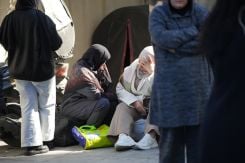
During the last war, several strikes hit areas sheltering displaced civilians. One such attack occurred on Oct. 14, 2024, when an Israeli airstrike in Aito, in the Zgharta district, struck a home housing a family displaced from southern Lebanon, killing all of its members. The incident heightened tensions between displaced families and host communities.
“Call me in 10 minutes, I’m sorry,” said Mostafa, in his late 20s, letting out a nervous laugh after receiving an evacuation alert from the Israeli army targeting a nearby building in Sour. “I need to go somewhere safer, but I will remain in the south,” he added quickly. He did not respond when contacted again by L’Orient Today at the time of this article’s publication.
