





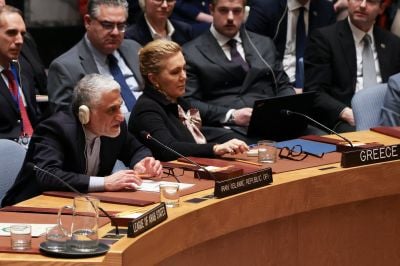
Iran's Ambassador to the United Nations, Amir-Saeid Iravani, attends a United Nations Security Council meeting after the U.S. and Israel launched strikes on Iran, at U.N. headquarters in New York City, U.S. Feb. 28, 2026. (Credit: Heather Khalifa/Reuters)






The United Nations Security Council convened urgently on Sunday after American and Israeli strikes on Iran, with each delegation invoking the U.N. Charter to defend its interpretation of international law.
In his opening remarks, Secretary-General Antonio Guterres issued a blunt warning: “The world must pull back from the brink of a wider war,” calling on all parties to do “everything possible to avoid escalation.”
“We are witnessing a grave threat to international peace and security,” he said, warning that ongoing military action carries “the risk of a chain of events that no one will be able to control in the world’s most volatile region.”
Guterres reminded members that the U.N. Charter remains the cornerstone of the international system. Citing Article 2, he emphasized that all states must refrain from the use of force against the territorial integrity or political independence of another state.
He condemned “the massive military strikes carried out by the United States and Israel against Iran,” as well as “Iran’s subsequent attacks violating the sovereignty and territorial integrity of Bahrain, Iraq, Jordan, Kuwait, Qatar, Saudi Arabia and the United Arab Emirates.”

Lasting peace, he said, can only be achieved through “genuine dialogue and negotiations.”
Iran denounces act of aggression and formally appeals to UN
In a letter addressed to the secretary-general and UNSC President and British Ambassador James Kariuki, Iranian Foreign Minister Abbas Araghchi denounced “a clear act of aggression” against “the sovereignty and territorial integrity” of Iran.
The letter states that the American and Israeli strikes violate Article 2 of the U.N. Charter and constitute “open armed aggression.”
Iran declared it is exercising its “inherent and legitimate right” to self-defense under Article 51 and warned it would act “without hesitation” until the aggression ceases completely. Tehran called for the urgent convening of the Security Council and the adoption of immediate measures to end what it described as the unlawful use of force.
From the podium, Iran’s ambassador, Amir Saeid Iravani, denounced “a war against the United Nations Charter” and said U.S. and Israeli actions “do not meet any of the criteria for self-defense.”
He said the strikes targeted civilian areas in several major cities. “This is not only an act of aggression; it is a war crime and a crime against humanity,” he said. Justifications based on a “preventive attack” or “imminent threat” are, he argued, “legally, morally and politically unfounded.”
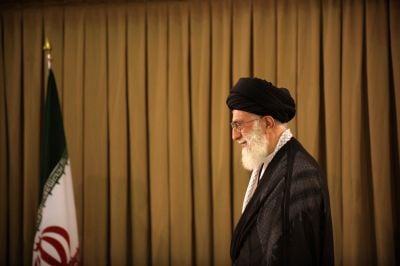
Washington invokes strategic prevention
U.S. representative Mike Waltz took responsibility for “Operation Epic Fury.”
“This is a moment in history that demands moral clarity,” he said, arguing that President Donald Trump “responded in the moment.”
He said the operation targeted “specific and strategic objectives”: dismantling ballistic capabilities that endanger allies, weakening naval assets that disrupt international sea lanes, and breaking networks arming regional militias.
“No responsible country can ignore persistent aggression,” he said, recalling successive Security Council resolutions since 2006 requiring the suspension of Iranian uranium enrichment. According to him, those texts represent “the world’s collective judgment” in the face of a growing threat.
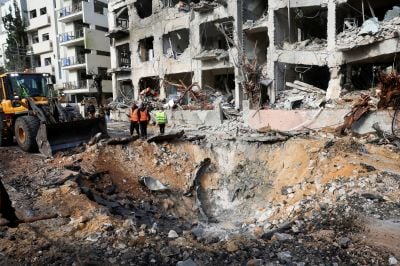
Israel cites 'existential threat'
Israeli Ambassador Danny Danon said the joint action was necessary to counter an “existential threat.” For 47 years, he said, the Iranian regime has chanted “death to Israel, death to America.”
“This is not the anger of a fringe radical. It is hatred sanctioned by the state,” he said.
While those slogans were echoed, he said, “uranium was being enriched, centrifuges were spinning, missiles were being built and facilities buried deep underground.” Israel, alongside the United States, acted to prevent the threat from becoming “irreversible.”
“We acted out of necessity,” he said, arguing that the Iranian regime left “no reasonable alternative.” According to him, Iran developed nuclear capabilities “in flagrant disregard of international law,” reinforced its ballistic arsenals and armed allied groups across the region.
“Diplomacy has been exhausted,” he said. “They were constructing the means to impose an irreversible reality with our backs against the wall. That is not a future Israel will accept.”
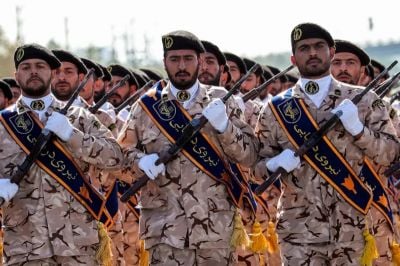
London, Paris, Moscow, Beijing: Open rift
Kariuki described “a fragile moment for the Middle East.” The United Kingdom, he said, played “no role” in the strikes but has “no illusions” about the Iranian regime.
French Ambassador Jerome Bonnafont called for immediate de-escalation, stressing the need to respect international law, protect civilians and ensure that Iran’s nuclear program remains exclusively peaceful.
By contrast, Russia denounced “armed aggression” and a “reckless step” that could lead to sharp escalation. China said Iran’s sovereignty and territorial integrity “must be respected” and called for an immediate halt to military actions.
Beyond the statements, the session highlighted a deep strategic divide: prevention versus violation of sovereignty, security versus legality, deterrence versus escalation.
The United States, a permanent member with veto power, is itself a party to the conflict. Any binding resolution in this context appears highly uncertain.

 Evening recap: Netanyahu announces West Bank offensive; 7 killed in Jordan church shooting; tents burned in south Lebanon
 US strike on Iran this weekend? ‘Absolutely,’ says Barrack; ‘I have no idea,’ says Trump