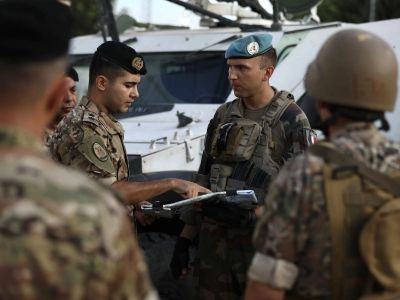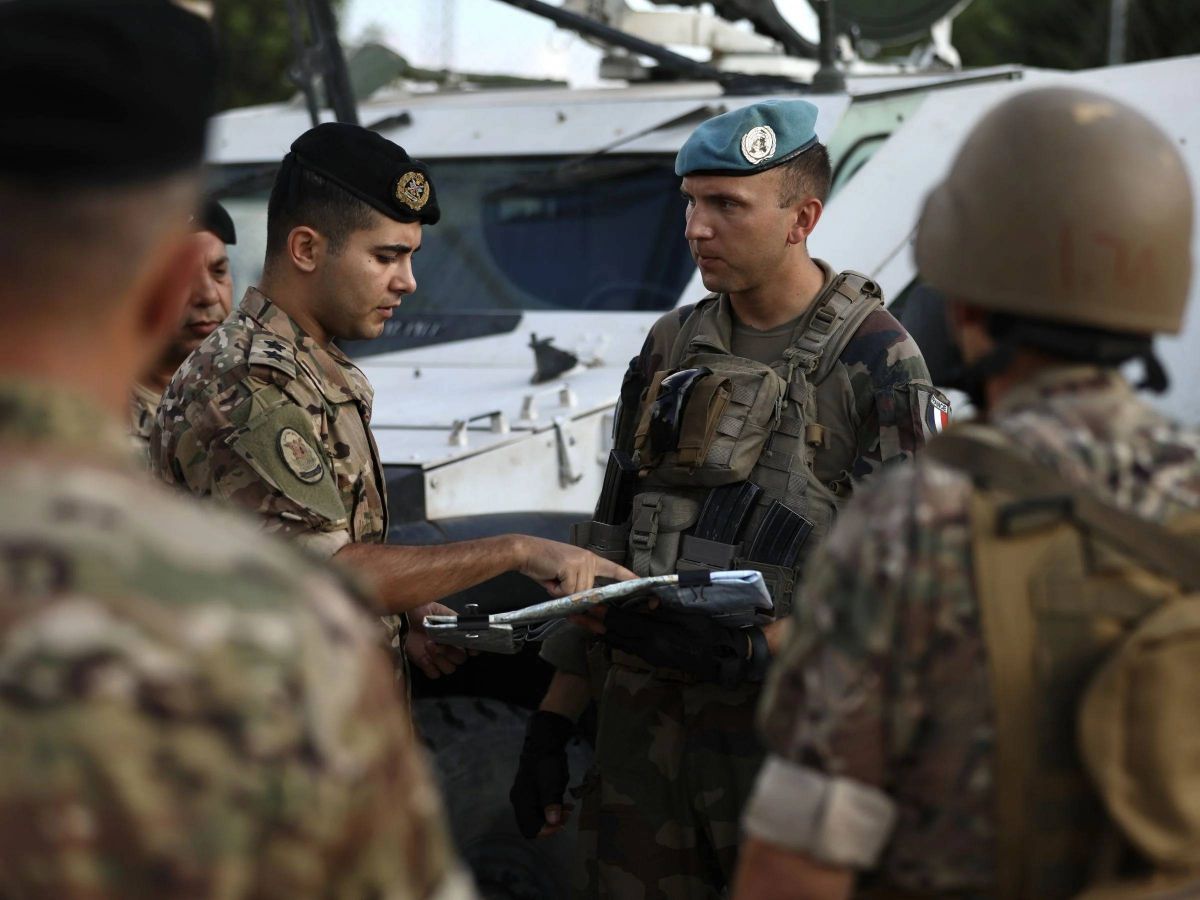
A French captain and a Lebanese officer study a map before going on patrol in search of weapons caches in Tyre, South Lebanon, on July 8, 2025. Archive photo Matthieu Karam/L'Orient-Le Jour






BEIRUT — On Thursday, the Lebanese Army fortified its position in Sarda, south of Khiam (Marjayoun district), in the eastern sector of the border with Lebanon.
This comes a day after Lebanese soldiers used barbed wired to surround an earth embankment erected on Lebanese territory, to obstruct Israeli army incursion, our correspondent reported. Earlier on Wednesday, and Israeli army troop and tank had advanced into Lebanese territory and later left the area.
On Tuesday, the Lebanese troops' position had come under Israeli fire. The Lebanese Army Command ordered troops to retaliate to the sources of fire in a rare standoff between the two armies along the border.
The Israeli army justified its reaction by stating that its "army observed Lebanese soldiers setting up a military post without previous coordination."
Despite the threats, the Lebanese Army refused to leave their position.
The reinforcement of this position on Thursday comes after the United Nations Interim Force in Lebanon (UNIFIL) stated Wednesday evening that the Lebanese Army has redeployed to 165 positions in the South since the November 2024 cease-fire, calling it an “important” step in allowing the state to exercise its authority over its entire territory.
The deployment of troops to border regions in southern Lebanon — which until the November 2024 cease-fire was under Hezbollah’s influence and was heavily ravaged by the last war between the party and Israel (October 2023–November 2024) — is part of the truce agreement’s provisions, along with the disarmament of the party.
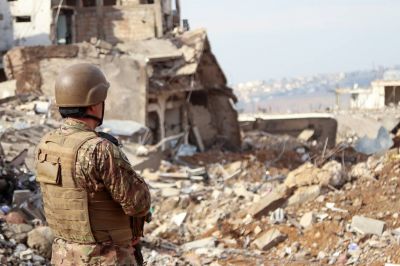
Since the agreement entered into force, the military institution has deployed in the South and dismantled, without opposition, Hezbollah’s infrastructure in this area. A military source told L'Orient-Le Jour that the 165 positions mentioned by UNIFIL correspond to those the Lebanese Army had left during the last war.
In a statement published Wednesday evening, the U.N. force said it continues to “support the Lebanese Army in its redeployment,” an action it considers “important for bolstering the authority of the state and improving the security of communities in the South.” “These gains are based on close coordination on the ground and ongoing efforts to create a more stable environment, in accordance with U.N. Security Council Resolution 1701,” UNIFIL added.
The statement was released a week ahead of a conference in support of the Lebanese Army and the Internal Security Forces (ISF), scheduled for March 5 in Paris, and just days after tensions between Lebanese troops and the Israeli army during the installation of a position near Khiam (in the eastern sector).
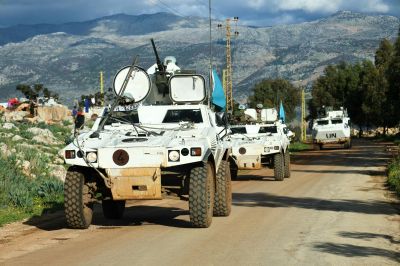
The army is at the center of attention both domestically and from the international community, due to the role it is expected to play in the disarmament of militias — a process that must now extend beyond the South, a move Hezbollah refuses.
Despite this categorical rejection by the party, on Feb. 16, army commander Rodolph Haykal presented to the Cabinet his vision for implementing the second phase of the disarmament plan. With the government’s approval, he granted himself a period of four to eight months to complete this phase, which covers the area between the Litani and Awali rivers.
Meanwhile, Israel continues its attacks on southern Lebanon despite the cease-fire. Around 2 a.m. Thursday, Israel targeted the locality of Aitaroun in the Bint Jbeil district with several artillery shells, our correspondent in the South reports.
Reporting contributed by our correspondent in southern Lebanon, Muntasser Abdallah