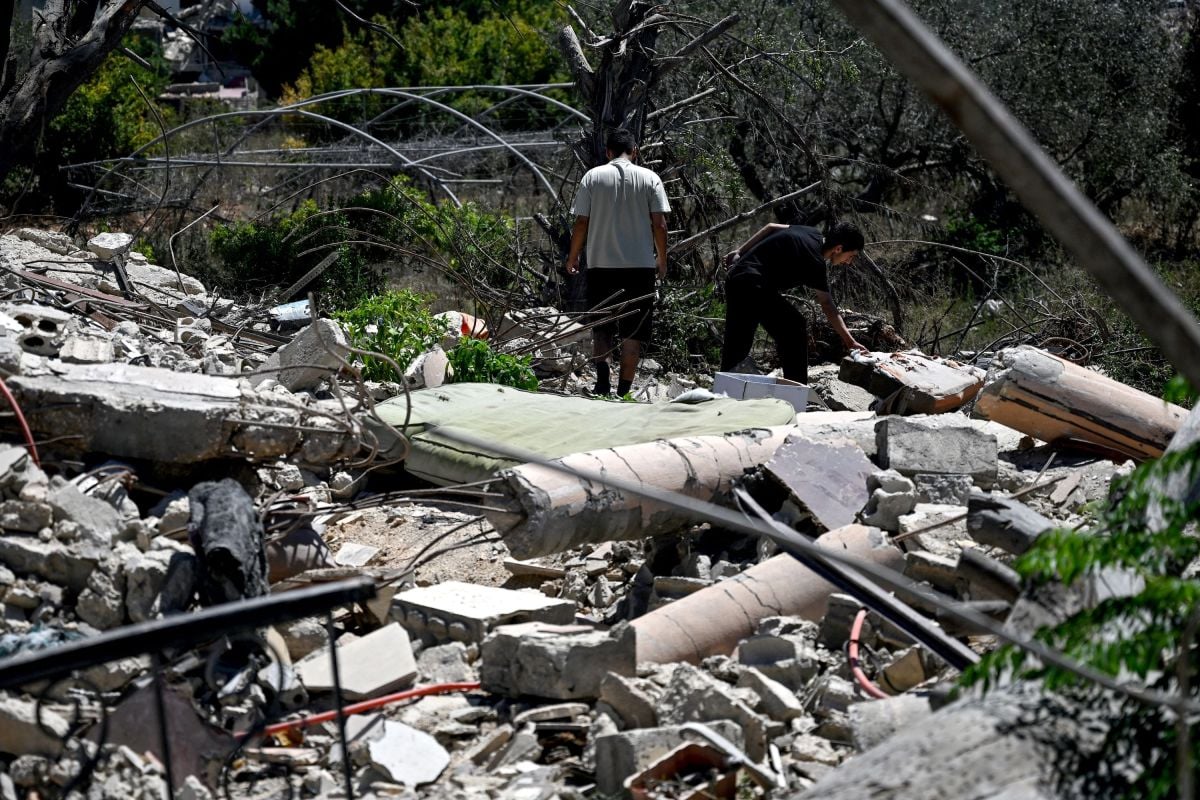
Residents inspect their destroyed home in Zawtar Gharbieh on July 28, 2026, after the deployment of the Lebanese Army in this southern Lebanese village. (Credit: Joseph Eid/AFP)






SOUTH LEBANON — Israel carried out massive demolitions as well as several artillery and drone strikes across southern Lebanon nearly on Thursday, a day after it hinted at the possibility of a new escalation.
The first demolition operation took place early in the afternoon in Kfar Tibnit (Nabatieh), where the Israeli army blew up several houses, according to our correspondent in southern Lebanon. During the night from Wednesday to Thursday, Israeli forces either blew up or set fire to several homes and various civilian infrastructures in Haddatha (Bint Jbeil), which was hit by five demolitions, as well as in Majdal Zoun (Sour) and Markaba (Marjayoun), our correspondent reported. Several artillery strikes and sweeping operations were also reported in the region.
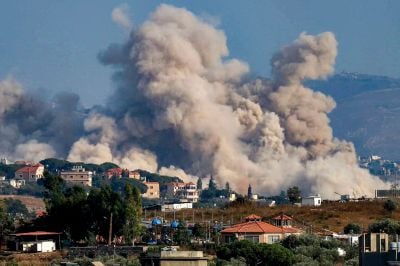
During the day on Thursday, Israeli artillery fire twice targeted the outskirts of the village of Shebaa (Hasbaya), from the Israeli base known as "the Radar." Two bulldozers and two Merkava tanks were seen on the edge of the village of Aita al-Jabal, near the occupied town of Haddatha, where an earth embankment was erected by Israeli troops.
Meanwhile, Israeli drones dropped stun grenades on Mansouri (Sour) and Yater (Bint Jbeil), while other artillery fire targeted the outskirts of Nabatieh Fawqa and automatic weapons fire was reported in Haris (Bint Jbeil).
Visiting his troops deployed in southern Lebanon, Israeli Chief of Staff General Eyal Zamir said his forces were "prepared for any development of the situation and ready to face a wide range of scenarios," according to a statement released in the hours following a suicide drone attack claimed by Hezbollah against an Israeli military vehicle, which caused no casualties.

In Lebanon, Army Commander-in-Chief Rodolph Haykal stated, ahead of the 81st anniversary of the force, that it was "ready to deploy in all occupied areas after the Israeli withdrawal," as Tel Aviv multiplied signals suggesting that the army did not plan to withdraw from additional areas, in the over 600 km² it occupies in Lebanon, in the short or medium term.
Parliament Speaker and Amal leader Nabih Berri reiterated his criticism of the "pilot zones" provided for in the U.S.-brokered framework agreement negotiated in June between Israel and Lebanon. The agreement stipulates that the Lebanese Army will disarm Hezbollah in designated regions where the Israeli army has pledged not to intervene, while maintaining discretionary decision-making authority in this area. Another round of direct negotiations is scheduled for Aug. 4, again in Rome.