


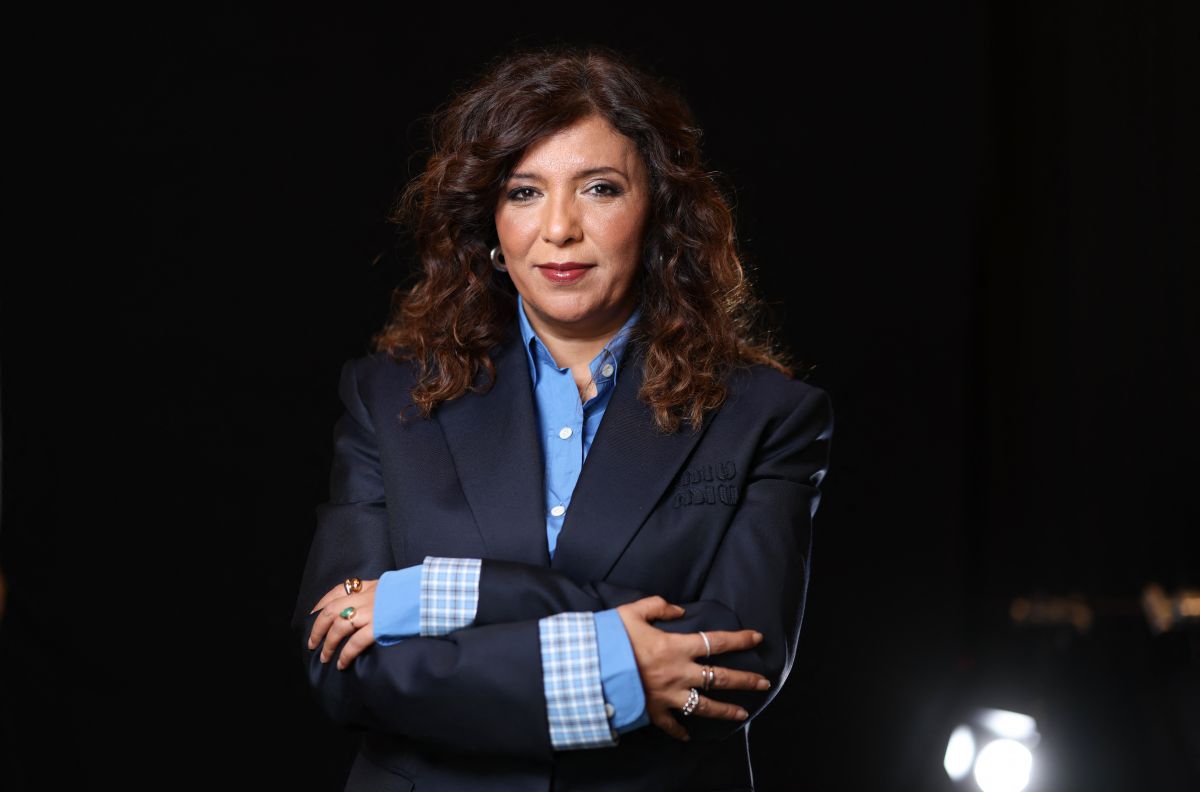
Kaouther Ben Hania, nominated for the Oscars for "The Voice of Hind Rajab," in Beverly Hills, on Feb. 10, 2026. (Credit: AFP)






On Monday evening, Tunisian director Kaouther Ben Hania was awarded for The Voice of Hind Rajab with the Most Valuable Film prize at the Cinema for Peace ceremony, held on the sidelines of the Berlinale.
Just minutes later, she decided not to take her award with her.
The gesture was far from insignificant. During the same evening, organizers also paid tribute to former Israeli General Noam Tibon, a central figure in the Canadian documentary "The Road Between Us," praised for "saving his family" during the Oct. 7, 2023, attack.
This juxtaposition was seen as an attempt to present balance, at a time when the "both sides" rhetoric continues to pervade international diplomatic and cultural discourse.
Before an audience of political and cultural figures – including former U.S. Secretary of State Hillary Clinton and actor Kevin Spacey – Ben Hania delivered a strikingly firm speech.
"I need to read, because the award for best film this year is heavier than I can carry ... Tonight, I feel more responsibility than gratitude. 'The Voice of Hind Rajab' is not just about one child. It is about the system that made her killing possible. What happened to Hind is not an exception. It is part of a genocide."
A docudrama close to a voice
This Tunisian-French docudrama blends cinéma vérité with filmic storytelling to reconstruct the real events of how the young girl in Gaza was killed.
Using authentic recordings of exchanges between Hind and Red Crescent volunteers trying to rescue her, the film transforms a child's voice, captured in a moment of emergency, into a narrative device of remarkable intensity.
The direction places this isolated voice at the center of a visual and auditory inquiry into responsibility, memory and erasure.
The film revisits the death of young Hind Rajab, whom the Israeli military killed along with family members and two rescuers trying to help her — a tragedy that the director attributes to Israel and presents as evidence of its systemic violence against Palestinians.
Presented in the official competition at the Venice Film Festival in September 2025, the feature won the Silver Lion Grand Jury Prize, standing out as one of the most debated films of the season.
It was later nominated for the 2026 Golden Globes in the Best Foreign Language Film category and made the shortlist for the Oscars' Best International Feature on behalf of Tunisia, confirming its worldwide impact.
International support and arab recognition
Along with increased festival visibility, the film also received notable backing from major international figures in film.
It was executive produced by Brad Pitt, Joaquin Phoenix, Rooney Mara and Alfonso Cuarón, alongside Dede Gardner and Jeremy Kleiner through Plan B Entertainment, with Film4 and MBC Studios also on board. Other executive producers include Jemima Khan, Frank Giustra and Sabine Getty.
Brought to the screen by Amer Hlehel, Clara Khoury, Motaz Malhees and Saja Kilani and filmed in Tunisia, the film was also awarded Best Arab Film by the Egyptian Film Critics Association (EFCA) at its annual awards for films released in 2025.
Born in Sidi Bouzid in 1977 and trained at La Fémis in Paris, Ben Hania has become one of the most distinctive voices in contemporary Arab cinema with "Le Challat de Tunis," "Beauty and the Dogs" and "The Man Who Sold His Skin," which was nominated for an Oscar in 2021.
Her cinema explores the fracture lines between fiction and reality, staging stories where the intimate violently collides with structures of power.
In Berlin, she concluded her remarks with these words: "I leave it here as a reminder. And when peace is pursued as a genuine commitment to accountability for genocide, then I will return to accept it with joy."
At the Berlinale, regularly marked by geopolitical tensions, her refusal shifted the evening's center of gravity.
The trophy remained on stage. But the message resonated far beyond.
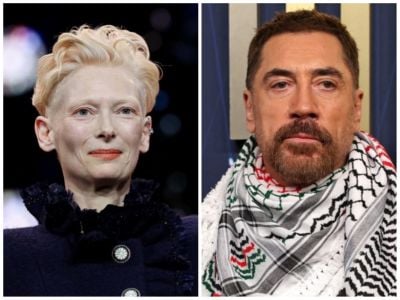
Recall that more than 80 actors and filmmakers, including Tilda Swinton and Javier Bardem, signed an open letter two days ago calling on the Berlinale to clearly condemn the genocide in Gaza, criticizing the festival's silence and Germany's position.
The controversy follows comments by jury president Wim Wenders, who said that cinema should stay out of politics, provoking strong reactions.
Indian Booker Prize-winning writer Arundhati Roy, 64, said she was "shocked and disgusted" by Wenders' remarks.
Invited to present a restored version of a film for which she wrote the screenplay, she canceled her attendance at the festival.
Palestinian actress Hiam Abbass also responded publicly, reminding that silence in the face of violence in Gaza cannot be an option.
Berlinale director Tricia Tuttle rejected accusations of pro-Israel censorship made by more than 80 artists, stating that the festival defends freedom of expression within German law and denouncing unproven "disinformation."
Supported by the German culture minister, she said the Berlinale is not meant to be a militant platform, while acknowledging the anger caused by the situation in Gaza.

 7 p.m. recap: Netanyahu seeks mastermind behind Flydubai incident; Washington sanctions 2 French nationals; Ben Gvir's 'I want to kill you' threat