


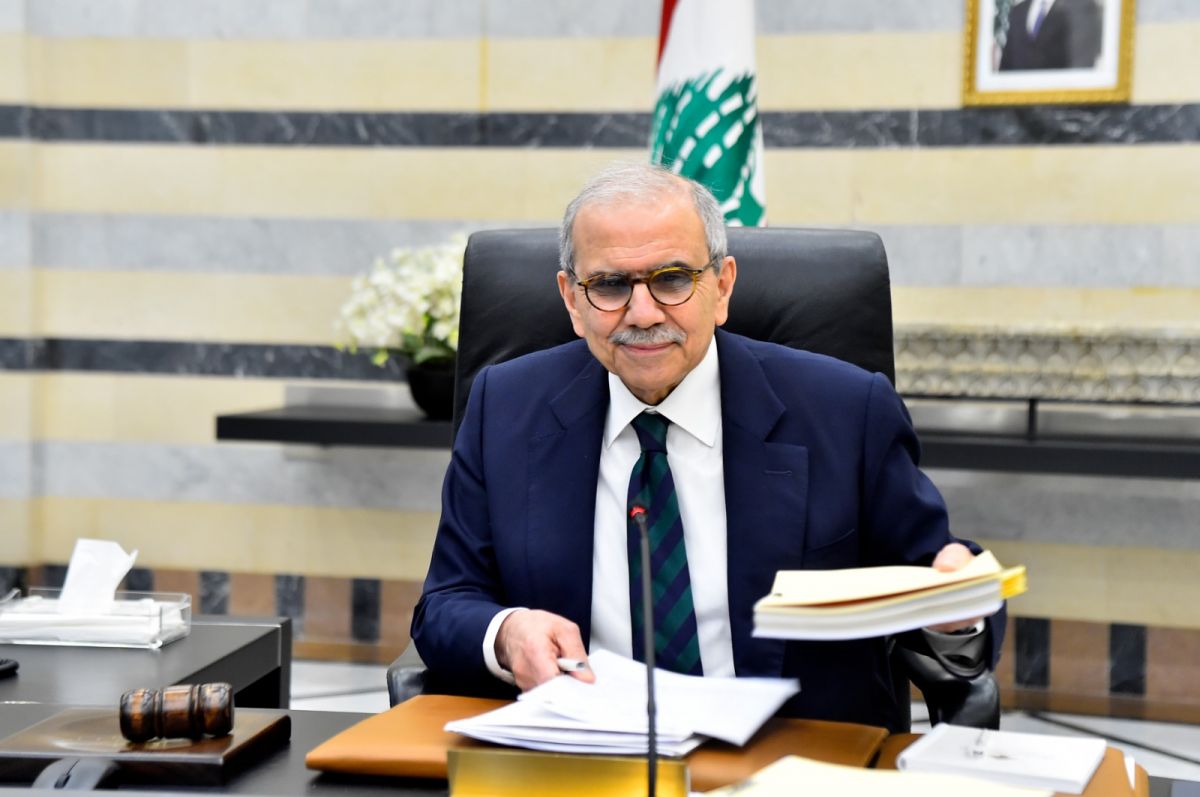
The Lebanese Prime Minister during a Cabinet meeting on February 6, 2025. Photo X/Grand Serail






The Lebanese government on Friday approved the Ministry of Public Works and Transport's request for the gradual reopening of Qleiaat Airport in North Lebanon for an initial four-year phase, Information Minister Paul Morcos announced following a Cabinet meeting.
“The Ministry of Public Works intends to restore this facility in the best possible conditions, with international safety standards and full operational capacity, through a contract with the International Finance Corporation [IFC, a member of the World Bank Group] to carry out the necessary studies,” Morcos said.
The conversion of the Qleiaat air base into a civilian transport hub has been under discussion for several years, primarily as a means of easing congestion at the airport of Beirut, the only civilian airport currently operating in the country. During the open war between Hezbollah and Israel that reached Beirut in September 2024, the effort to rehabilitate a second civilian airport at Qleiaat became more urgent, as the Israeli army targeted the Beirut Airport vicinity.
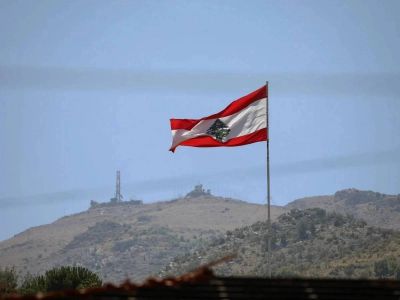
The minister also announced that after “the spraying of toxic substances in the South, it was established that they were pesticides.” “The Research Council will carry out an investigation in cooperation with the army and will present the results as soon as possible,” he added.
Beirut on Wednesday accused Israel of spraying glyphosate on the Lebanese side of the border, sparking U.N. concerns about long-term impacts on farmland and the population. After analysis of collected samples, the Agriculture and Environment ministries detected glyphosate concentrations “20 to 30 times higher than average” in the region, citing “damage to agricultural production” and “soil fertility.”
President Joseph Aoun denounced “a blatant violation of Lebanese sovereignty and an environmental and health crime,” while the Foreign Ministry announced its intention to refer the matter to the U.N. Security Council.
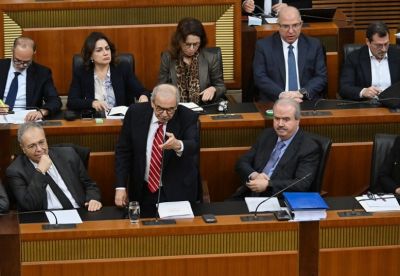
Finally, Morcos said the government would hold a session no later than Feb. 15 to address issues related to the public sector, particularly salaries.
Pay remains a particularly sensitive topic. At the end of January, as Parliament was surrounded by public sector workers — mainly retired military personnel demanding higher wages, salaries, and end-of-service compensation — the 2026 budget was approved by a majority, with 59 votes in favor, 34 opposed, and 11 abstentions.
The issue of salaries, which have not been adjusted to offset the loss in purchasing power caused by the depreciation of the Lebanese pound since 2019, has polarized debate between MPs who support an immediate partial pay raise and those who believe it should be preceded by public sector reform, which they consider oversized.

 1 p.m. recap: Salam in Nabatieh; up to 10,000 more US troops heading to Middle East