


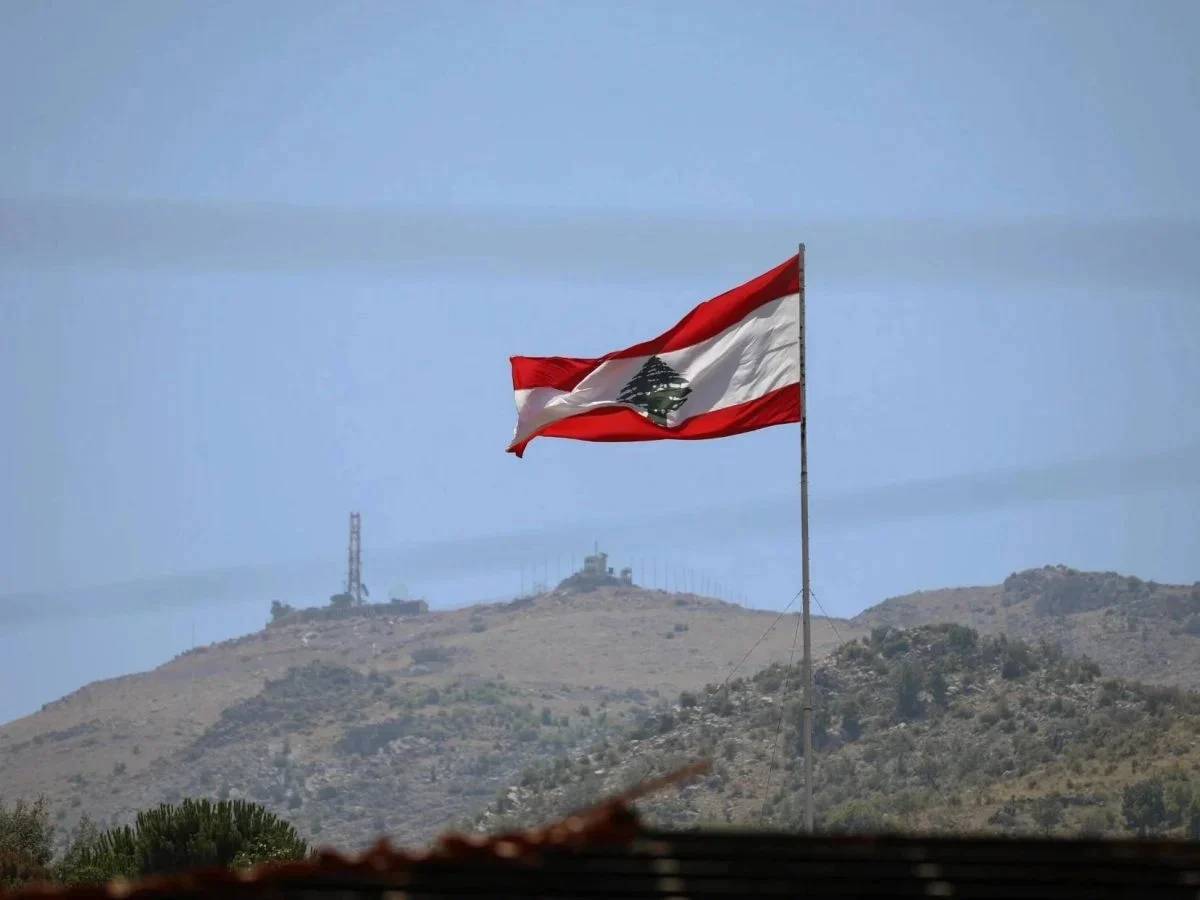
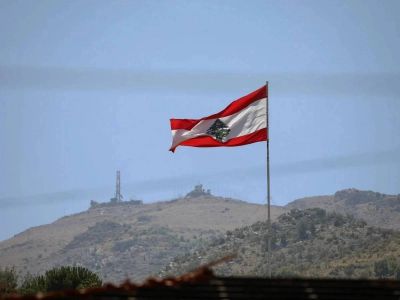
A Lebanese flag flying in the village of Shebaa, in southern Lebanon, facing the Israeli military outpost known as "Radar," near the Israeli-occupied Shebaa Farms, on July 23, 2025. (Credit: Matthieu Karam/L'Orient Today)






The Agriculture and Environment Ministries announced late Wednesday afternoon that the chemical substance Israeli planes sprayed over several southern border villages on Sunday was identified as a very high concentration of the herbicide glyphosate.
"The concentration in some samples ranges between twenty and thirty times the normally accepted levels," they specified in a statement. President Joseph Aoun had condemned earlier in the day the spraying by Israeli planes of "toxic substances," calling it "a flagrant violation of Lebanese sovereignty, as well as an environmental and health crime against the Lebanese people and their land."
Israeli planes sprayed this substance on several villages in the region, including Aita al-Shaab, Ramieh and Marwanieh (Bint Jbeil). The incident was documented by residents, who proceeded to alert local authorities.
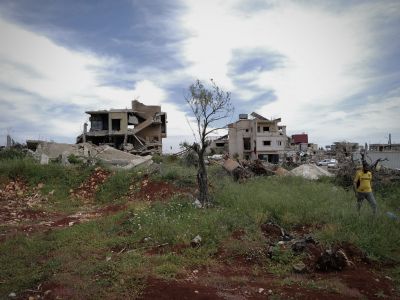
Environment Minister Tamara Elzein requested on Monday that the Lebanese Army collect samples for analysis. "Laboratory analysis results showed that the substance sprayed is the herbicide glyphosate, which could damage the vegetation cover in the targeted areas, with direct repercussions on agricultural production, soil fertility, and the ecological balance," highlighted the joint statement from the two ministries, following the collection of samples in the affected areas.
The ministries described this spraying as "a flagrant violation of national sovereignty, under the eyes of the international community," and as an "extremely dangerous hostile act that threatens food security, exposes natural resources to serious damage, and harms the livelihoods of farmers."
The statement also warned about "the potential health and environmental risks that could affect water, soil, and the food chain." Teams from the two ministries are continuing to assess the land in order to create a precise map of the affected areas, estimate pollution levels and consider preventive measures to protect populations and farmers.
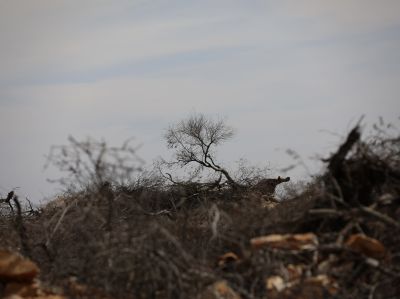
A report will be submitted to the prime minister to seek accountability from the international community, the ministries noted. "The Lebanese state will respond to this environmental and agricultural aggression with diplomatic and legal steps, to defend the right of the Lebanese to their land and to challenge the ecocide committed by the Israeli enemy," the statement concluded.
Official complaint
Aoun also stated that this "act of aggression ... is part of the ongoing repeated Israeli aggressions against Lebanon and its people," as Israeli attacks have continued almost daily in Lebanon despite the cease-fire that took effect in November 2024.
He stressed that "these dangerous practices, which target agricultural land, citizens' livelihoods, and threaten their health as well as the environment, require the international community and relevant U.N. organizations to take responsibility to put an end to these aggressions and to protect Lebanese sovereignty."
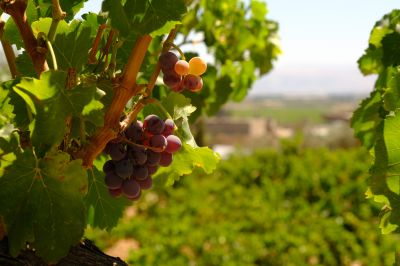
Aoun added that he had asked the Foreign Affairs Ministry "to prepare a documented file, in coordination with the Agriculture, Environment, and Health Ministries, in order to take all necessary legal and diplomatic measures to respond to this attack and to file complaints with the relevant international bodies."
After Aoun's remarks, the Foreign Ministry said in a statement that it had started "the necessary steps to document the Israeli aggressions consisting of the spraying of toxic substances and pesticides on agricultural land and orchards in several Lebanese villages."
The ministry also said it would coordinate its efforts with the Agriculture, Environment, and Health Ministries, as well as with specialized scientific and research institutions, "in order to assemble a comprehensive scientific and legal file documenting these serious violations," the statement said.
This file will include "identification of the nature of these substances and the assessment of their incompatibility with international law, by comparing them with lists of substances banned under relevant international conventions and treaties."
The ministry will also work with the relevant parties to "document the affected areas, assess the damages, and analyze the health, environmental, and agricultural consequences of the use of these substances, including their effects on the population, soil, vegetation, and water resources," the statement added.
Once finalized, the Foreign Ministry assured that it would submit an official complaint to the United Nations Security Council against Israel.
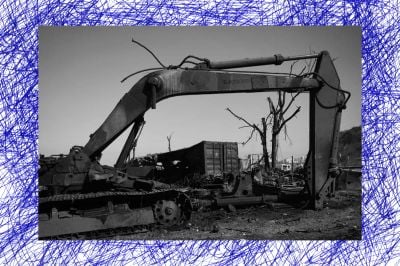
On Tuesday, the NGO Green Southerners, one of the most active in southern Lebanon, expressed concern over "the use of toxic substances in these border areas, which will add to the considerable environmental damage caused by the Israelis since October 2023, with the use of white phosphorus and other types of munitions that have altered the soil nature and biodiversity, particularly regarding insects and pollinators."
In a report published in April 2025, the United Nations Food and Agriculture Organization (FAO) estimated over $700 million in damage and losses to the Lebanese agricultural sector from the most recent war between Hezbollah and Israel, mainly in the South and the Beqaa valley.
These were "preliminary and partial" estimates done remotely, the report specified, adding that the actual figures are likely to be even higher.

 1 p.m. recap: Salam in Nabatieh; up to 10,000 more US troops heading to Middle East