






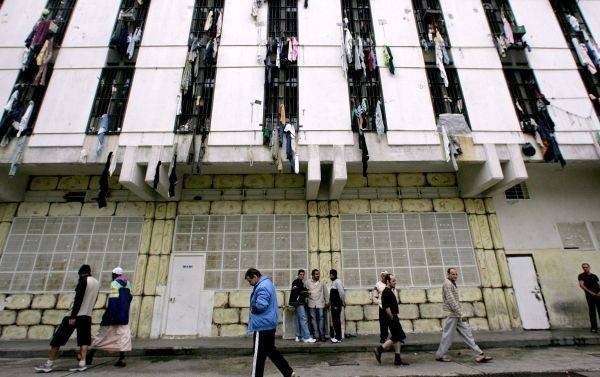
Roumieh prison courtyard. (Credit: Ramzi Haidar/AFP )






BEIRUT — Dozens of relatives of Lebanese prisoners staged a sit-in on Friday at Riad Solh Square in downtown Beirut, calling for a general amnesty and improved detention conditions amid chronic overcrowding.
The protest coincided with a Cabinet meeting scheduled for 3 p.m., where the first item on the agenda was the judicial agreement between Syria and Lebanon concerning the transfer of Syrian prisoners convicted in Lebanon back to their home country.
Prisoners in Lebanon face deplorable conditions due to chronic overcrowding, lack of basic necessities, and limited access to healthcare. Many remain behind bars for years awaiting trial. Demonstrators urged Prime Minister Nawaf Salam and Justice Minister Adel Nassar to take responsibility, demanding either a reduction in prison sentences from one year to six months or the enactment of a general amnesty, along with improvements to detention conditions. They also held lawmakers accountable for what they described as “injustice toward prisoners” due to legislative inaction, and called on voters to withhold their support for these deputies in future elections. The protest was reported by the state-run National News Agency (NNA).
On Sunday, a prisoner, joined by Salafist cleric Ahmad Assir — who had been involved in clashes with the army in Abra, Saida — and around 50 inmates from the Roumieh prison’s “B” building for Salafists, announced the start of an open hunger strike on Monday to protest the “tragic and inhumane” conditions in Lebanon’s prisons.
Recent months have seen multiple incidents in Lebanese prisons, including suicides, prompting the parliamentary Human Rights Committee to hold a meeting to examine the causes and circumstances of these deaths. The NGO AJEM (Association for Justice and Mercy) attended the session, calling the discussion “necessary and urgent.” AJEM director Father Nagib Baaklini highlighted cases of torture in detention centers and urged transparent investigations and detailed official reports on the causes of deaths, whether due to illness, medical neglect, sudden death, or chronic overcrowding. The organization also cited shortages of qualified staff, inadequate medical care, insufficient health equipment, and delays in treatment.
According to the Ministry of Justice’s Directorate of Prisons, Lebanon officially held 6,370 inmates as of Aug. 25, 2025, including about 2,575 Syrian nationals. Experts note that this figure does not account for detainees in roughly 229 provisional detention centers — including police stations, army barracks, and courthouses — estimated at 2,000–2,500 people, bringing the actual prison population to around 8,500. With a maximum capacity of 4,760, Lebanon’s prisons are operating at at least 180% capacity, with Roumieh prison nearing 300%.

 8 p.m. recap: Israel again threatens Beirut’s south suburbs; 2 ships hit near Hormuz; Riyadh football matches canceled