


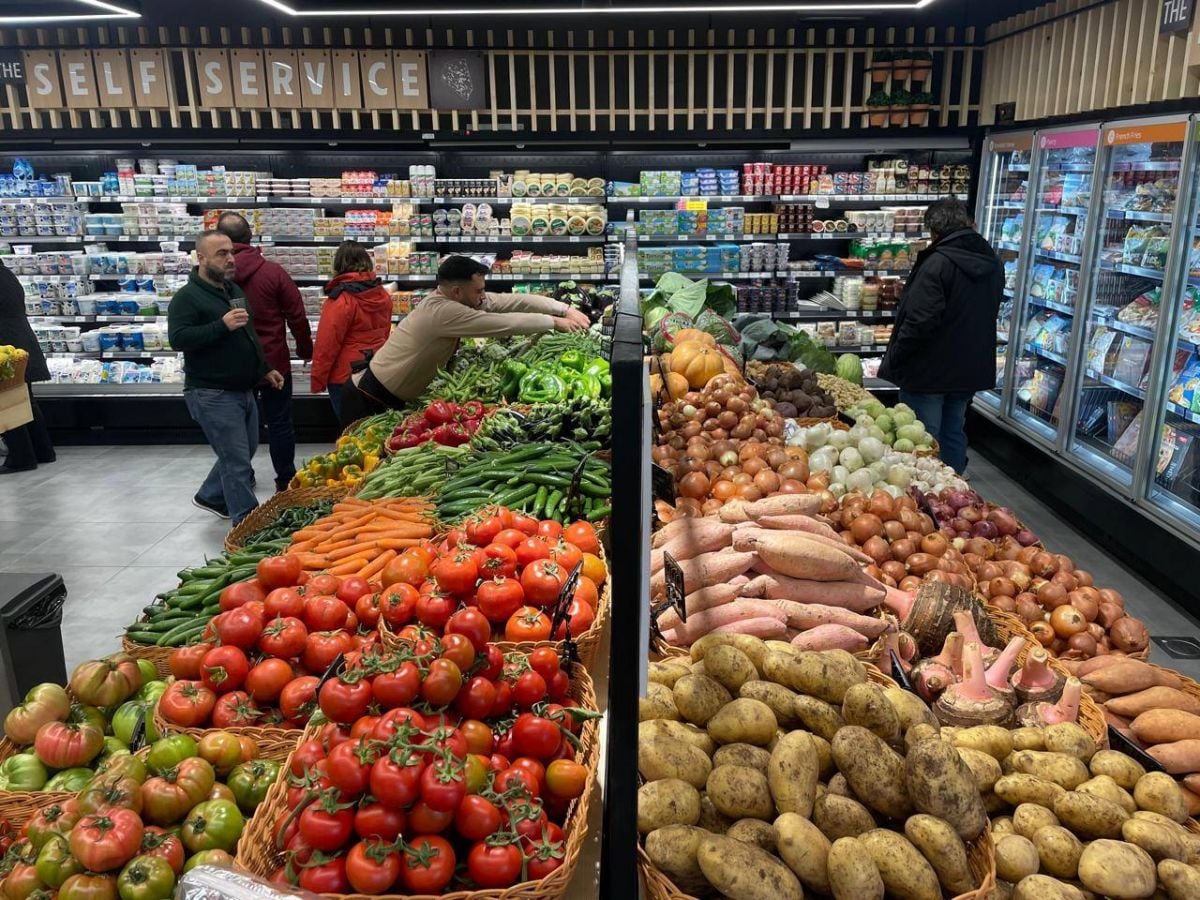
Fruits and vegetables in a supermarket in Broummana (Metn). (Credit: Philippe Hage Boutros/L’Orient-Le Jour)






For the second year in a row, inflation has decreased in Lebanon in 2025, reaching its lowest annual rate since the start of the economic crisis in 2019, equivalent to 14.8 percent in 2025, according to calculations by the Central Administration of Statistics (CAS), compared to 45.24 percent in 2024.
Initiated in 2024, this downward trend contrasts with the four consecutive significant increases in the consumer price index (CPI) recorded since the beginning of the crisis: 84.9 percent in 2020; 154.8 percent in 2021; 171.21 percent in 2022; and 221.3 percent in 2023.
This happened in a context where the Lebanese pound gradually collapsed, losing 98 percent of its value and propelling the CPI to such levels.
As a result, since the exchange rate was stabilized during 2023, and as the Lebanese economy was de facto dollarized, inflation is faring relatively better.
This trend is expected to continue in the short term. In its latest report on Lebanon published last October, the World Bank estimated that inflation would be around 15.2 percent in 2025, and would reach 8.7 percent in 2026, still thanks to the stabilization of the exchange rate.
However, this level remains “significantly higher than global inflation,” particularly “due to limited competition” and “oligopolistic market structures,” it said.
Slowing inflation
While the CAS has not yet published full details for all of 2025, it has released those for December. Available figures indicate a sharp slowdown in price increases during that month.
The monthly change was nearly zero in December (0.01 percent, compared to 0.82 percent in November), with the highest increases recorded in the miscellaneous goods and services sector (4.06 percent), alcoholic beverages and tobacco (1.15 percent), and leisure activities (0.57 percent). The largest declines were in clothing prices (-2.98 percent), transportation (-0.70 percent), and restaurants and hotels (-0.24 percent).
On an annual basis as well, price developments in December also showed a slowdown. The level reached was 12.23 percent, lower than the annual average of 14.8 percent.
Specifically, 10 of 12 subcategories saw price increases, with the highest increases in education (35.94 percent), leisure (31.56 percent), and miscellaneous goods and services (21.57 percent). Only the prices of furniture (-1.61 percent) and telecommunications (-0.70 percent) fell over the year as of December.
Finally, regarding price changes by Lebanese region, the CAS notes that on a monthly basis, the largest increase was recorded in southern Lebanon (1.62 percent), followed by Nabatieh (1.19 percent), Mount Lebanon (0.41 percent), Beirut (0.40 percent), Bekaa (0.29 percent), and finally northern Lebanon (0.26 percent).
 2 Israeli soldiers injured in 'operational accident,' as army continues attacks in the South