


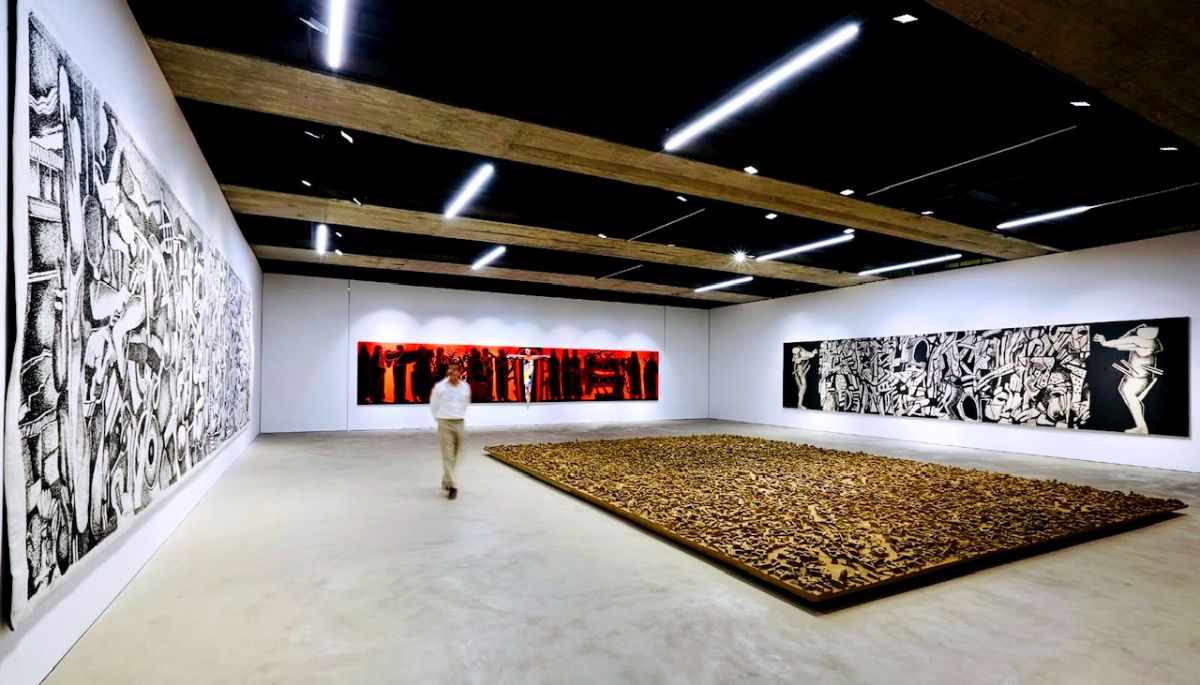
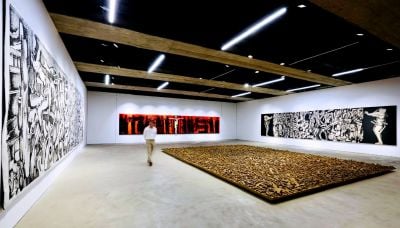
Saleh Barakat in his large eponymous gallery in Beirut, a space dedicated to major exhibitions such as that of Dia Azzawi in 2025. (Credit: Photo provided by the gallery owner)






Digitalization of platforms, transformation of practices, and a shift in the profile of collectors: the art gallery sector is facing major challenges worldwide.
This is particularly true in Europe and the United States, where the contemporary art market experienced a significant slowdown in 2024-2025, leading to numerous gallery closures. It is even rumored that 30 percent of New York gallerists closed their doors in the past two years. This claim circulates in the field, though it has not been confirmed by publications or audits.
In Lebanon, where gallerists face the same challenges as elsewhere — if not more so — giving up is not an option. Gallery owners are still unearthing, programming, and supporting local and regional artists, even as their activity is made more difficult by the fluctuations of an unstable economic and security situation to which the country remains subject.
Resilient! Even if this term is overused to the point of being almost unbearable, it seems the most appropriate to describe the state of Beirut’s galleries. With the exception of a few discreet closures of art spaces — opened somewhat hastily in the wake of economic and banking crises — galleries in the capital say they have, overall, managed to get by in the past year.
The year 2025 was a lukewarm and somewhat sluggish year, despite gallerists’ efforts to draw the attention of collectors by diversifying their stable of artists and exhibition strategies, including more off-site collaborations and event-style openings.
Disruptive element?
Despite a difficult environment, it is mainly the well-established galleries that have shown adaptability. Rather than passively undergoing transformation in the sector and competition from proliferating "unregulated" display spaces — bars, pop-ups, restaurants, hotel lobbies, private interiors — they have leaned into a more collaborative cultural life, as shown by the second edition of the Beirut Art Days event initiated by "L’Agenda culturel" and held in July.
Last year was also marked by the high-profile arrival on the Beirut scene of Basel Dalloul. One of the most important collectors in the Arab world, with undeniable clout, he launched the Dalloul Art Collective (DAC) a few months ago.
This collaborative space, he claims, aims to change the established rules by reducing the percentage — up to 50 percent — taken by Lebanese gallerists on artwork sales.
He believes this rate is "disproportionate to the services provided to their artists," as he stated on social media. He also insists that "the DAC isn’t really a gallery, since its exhibitions are managed directly by a group of artist friends, and its functioning includes artist agent services — archiving, website building, catalogue raisonnés, copyright, or contacts with fairs — which traditional galleries don’t, or no longer, provide," he told L’Orient-Le Jour.
Disruptive force or regulator? "Time will tell," respond most of the gallerists we spoke to, cautiously, while assuring that they do not feel personally targeted by the new entrant’s "accusations."
A contrasting year
"Keep working rather than arguing" seems to be the motto of the city’s gallery owners, six of whom shared with L’Orient-Le Jour their take on the past year and outlook for 2026.
Starting with Saleh Barakat, who heads two spaces in Beirut and for whom 2025 was "a mixed year. Artistically, we presented some wonderful exhibitions. Some were huge successes, like those dedicated to Dia al-Azzawi, Samir Sayegh, Hala Choucair, and Afaf Zreik, of whom I’m very proud...
Others unfortunately suffered from the twists and turns of the security situation, especially those in the last months of the year, with the return of war threats," he notes. "But from a purely commercial perspective, we managed to get by, especially thanks to expatriates coming for the holidays."
Hybrid events and the event trend
For this leading gallerist in the capital, times of uncertainty make collectors more hesitant. "During war, people buy art because they feel they have nothing left to lose and want to enjoy themselves. In peacetime, they buy. But in-between, they prefer to keep their money," he theorizes, while stating he never changes his programming except in cases of force majeure.
Although he slightly reduced the frequency of exhibitions at Agial, his small Hamra gallery, he compensated by showcasing some of his artists outside his galleries, initiating collaborations with festivals (such as Beiteddine) and even furniture spaces (Shawki Youssef at the Teatro).
He has also embraced the event trend from abroad, as with Ribal Molaeb, a painter and violist who gave a classical concert with pianist Evelyne Berezovsky at Barakat Gallery, surrounded by his own canvases.
More determined than ever to "fight for the Lebanese art scene to continue to stand up to the best in the Emirates, despite our financial and security disadvantages," Barakat is already announcing "a number of exceptional exhibitions for 2026, starting with Bassam Kahwaji’s, which opened January 8."
Sales to museums
In Beirut, where she has two gallery spaces — one "human-scale," the other more "institutional"—Andrée Sfeir-Semler celebrated, last August, the fortieth anniversary of her eponymous Hamburg (Germany) gallery and twenty years of her first Beirut venue, with two flagship exhibitions: a group show bringing together significant names from her stable — Etel Adnan, Walid Raad, Marwan Rechmaoui, Rayane Tabet, Wael Shawky, Mounira al-Solh, among others — and a solo exhibition by renowned Palestinian-American painter Samia Halaby.
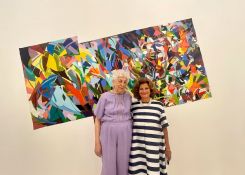
Still, "commercially, 2025 was no different for us in Lebanon, where we hardly sell anything," she says. "This is because our prices are higher than other local galleries, as our artists are in international museums and our clientele is not primarily local," she explains, frankly. The presence in Lebanon, she notes, is "essentially symbolic."
"Our Quarantine district gallery, for example, operates more as a foundation. We fund it ourselves, to the tune of $80,000–$100,000 per exhibition. So it’s not here that we do business, but internationally — where, even though private collectors slowed their purchases this year, we sold several works to museums who are among our clients."
Expatriates and regional collectors
Similar sentiment from Naila Kettaneh-Kunigk, who, after founding her first Tanit gallery in 1972 in Munich (specializing in photography and contemporary art), opened an outpost in Beirut in 2007.
While her German gallery’s activity has been affected by the international art market slowdown—"despite showing high-caliber artists like Pistoletto," she notes — her Lebanese year nearly turned "dramatic," she insists.
She explains: "We suffered the consequences of the 2024 war. What saved us and kept the year from being negative were a few sales to regional and international collectors. Locally, apart from Zena Assi, now a solid bet, the exhibitions by photographer Joumana Jamhouri and visual artist Abdel Kadiri went very well, unlike that of Iraqi-Finnish artist Adel Abidin, whose prices were over $20,000. That seems to be the ceiling, above which contemporary pieces become very hard to sell in Beirut," Kettaneh-Kunigk tells L’Orient-le Jour.
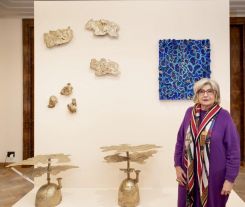
"The job is becoming very difficult in Lebanon, especially due to the sheer number of parallel players speculating in various forms," laments the gallery owner, who, nevertheless, is not giving up. In 2026, along with her Beirut and Munich show schedules, she is bringing her Lebanese and Middle Eastern artists to several fairs: Abu Dhabi (relaunched by Frieze), Basel Qatar, and Art Paris, to name a few.
Exhibitions that spark curiosity
It’s the same for Nadine Begdache, head of Janine Rubeiz Gallery in Beirut since the early 1990s. This gallerist, who played a key role in promoting now internationally recognized Lebanese artists such as Etel Adnan and Huguette Caland, continues, against all odds, to discover and promote young talent while encouraging established names in her stable to keep innovating.
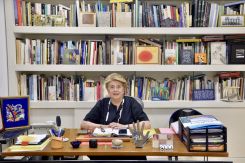
"In 2025, I worked hard to move off the beaten path, offer new works, and design different exhibition formats likely to intrigue art lovers. Like Julie Bou Farah’s show, or exhibitions of artist duos, such as François Sargologo and his wife, who create charming small sculptures, or Hannibal Srouji and his wife, a watercolorist and designer.
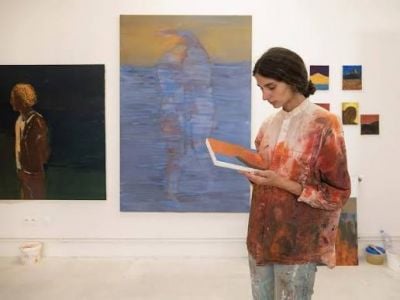
Still, it wasn’t the small exhibitions of recent months that kept us afloat but parallel sales of modern works owned by the gallery," reveals the gallerist, who does not expect a better year in 2026. "But we’ll keep pursuing our mission…"
A Culture Minister “finally attentive” to the sector
As for Noha Moharram, who runs Art on 56th in Gemmayzeh, a gallery she opened 13 years ago, 2025 was not a great year commercially either.
"Yet we had scheduled quality exhibitions, like ‘Landscapes Conversations,’ a group show featuring six of our talented in-house artists: Wissam Beydoun, Layla Dagher, Mansour al-Habre, Imad Fakhry, Ghada Jamal, Edgard Mazigi."
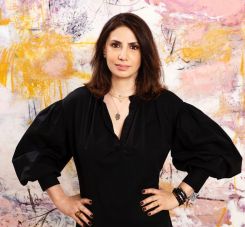
For this gallerist, the only positive point of 2025 was, "along with constant support from collector friends [many of them expatriates]," the interest shown by Culture Minister Ghassan Salameh in the sector.
"He gathered several gallerists from the city to thank them for holding on through these especially difficult years and to assure them of his support… admittedly mainly moral. But it’s the first time a Culture Minister has addressed us and taken our role on the Lebanese art and cultural scene into account, and I am especially grateful for that," says Noha Moharram, her voice charged with hope…
In contrast to her peers' overall statements, Joumana Asseily, owner of Marfa’ Gallery near the Beirut port, expresses satisfaction. "After truly difficult years, 2025 was a good one. We took our artists abroad a lot — to fairs like Frieze London, Basel in Basel and Paris, and to galleries in Europe..." notes this gallerist, who from the start established an exchange system between Beirut and abroad that seems to have paid off.
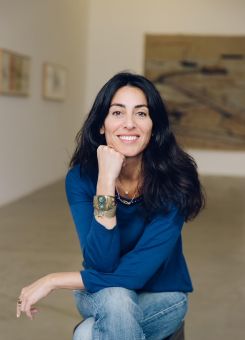
"Moreover, since it was our 10th anniversary year, we marked the occasion by inviting the 20 or so foreign galleries we work with to exhibit with us in Beirut. This led to much more traffic in the gallery [which until now was mostly visited by a select few], and increased local public interest in our activities," she notes.
For 2026, she is announcing a fairly rich program, including participation in major international fairs — "Basel in Basel, in Paris, and in Qatar — as well as exhibitions and even retrospectives by our artists, especially Tamara al-Samerraie and Caline Aoun, in museums abroad, among other wonderful things I can’t announce yet," concludes the youngest of Beirut’s top gallery owners on a positive note.

 7 p.m. recap: Netanyahu seeks mastermind behind Flydubai incident; Washington sanctions 2 French nationals; Ben Gvir's 'I want to kill you' threat