








The saga of "Abu Omar and his 40 victims" is not over yet, but one thing is clear: It primarily affects the Sunni community in Lebanon.
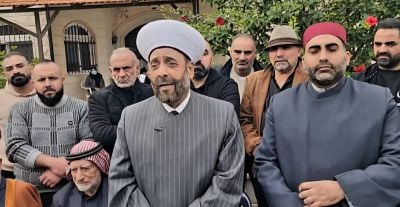
This is especially true given that his alleged sponsor, Sheikh Khaldoun Oraymet, is highly influential at Dar al-Fatwa. The personalities who reportedly made the most use of the fake prince's services also belong to this community. Notably, the suspect posed as a prince close to the Saudi royal family.
At first glance, it may seem natural that the Sunni community is the primary victim of Abu Omar's actions. But a deeper look at this unprecedented episode shows there is much more to it.
According to Sunni figures in the North, Abu Omar and his sponsor could not have succeeded if Lebanon’s Sunni community as a whole were not in a state of disintegration, having lost its bearings, leaders, and direction.
But, most importantly, this community — traditionally oriented toward Riyadh — has felt orphaned after Saudi Arabia refused to get involved in the Lebanese scene.
According to available information, the entire Abu Omar affair began with Oraymet's attempt to consolidate his power within Dar al-Fatwa.
In other words, the first maneuvers by Abu Omar and his sponsor began within this religious environment, with what was termed a “Saudi wish” to extend a particular sheikh’s mandate or to appoint someone else to the post, all in line with Oraymet’s desires and interests.
But according to some Sunni figures, this method could not have worked without the vacuum left by Saudi Arabia within the Sunni scene.
Some observers say that since 2019, in the wake of the popular protest movement, the Saudis have officially declared their intention to distance themselves from Lebanon.
Yet, since then, there have been repeated reports in the media of a supposed Saudi willingness to lift, at least partially, the ban on investment in Lebanon.
There have been some concrete steps, notably the recent visit of a Saudi investors' delegation to Lebanon, preceded by Prince Yazid bin Farhan, deputy to the Saudi foreign minister, taking charge of the Lebanese dossier, with support from the Saudi ambassador to Beirut, Walid Bukhari.
But so far, these initiatives have had limited effect, and much of Lebanon’s political class strives to get closer to the Saudis.
However, what remains most surprising is the Saudi position itself, which has never been stated, despite queries from Lebanese media.
Could Prince Yazid and even the embassy have been unaware of Abu Omar’s schemes? Did they not know about decisions made in their name, both politically and within Dar al-Fatwa?
Is another party that has entered the scene quietly pulling the strings and using Abu Omar to replace Saudi influence gradually?
In certain Sunni political circles, there is talk of a possible role played by the United Arab Emirates, which has never had direct influence over the Sunni religious community or its politicians.
Abu Omar and his sponsor could thus have been used. For now, there is no confirmation, but the Lebanese judicial investigation is reportedly leaving no stone unturned.
What is certain at this stage is that, over the past six years, since the official withdrawal of former prime minister and prominent Sunni leader, Saad Hariri, from politics, the community has not recovered or found its bearings.
It is torn between many currents: Turkey, Syria, Egypt, and the Gulf states.
This tug-of-war is felt from Tripoli to Saida and from Akkar to Kfar Shuba.
The Abu Omar affair is, in reality, only a reflection of these divisions that paralyze a community, precisely at a time when Lebanon is experiencing a challenging period and needs all of its components.
This article was translated from L'Orient-Le Jour.

 7 p.m. recap: Houthis strike Riyadh airport again; Yemeni forces claim Bab al-Mandeb gains; Abbas postpones Palestinian polls