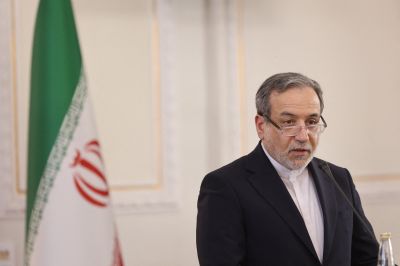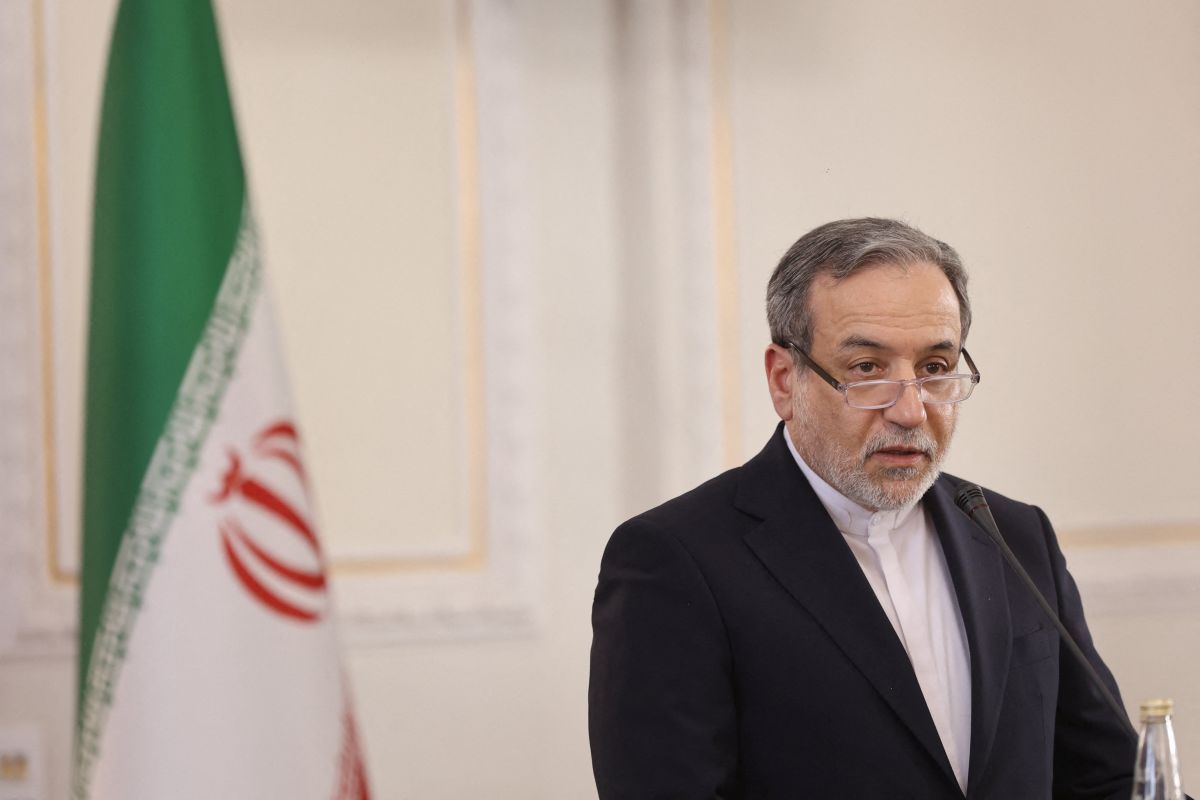
Iranian Foreign Minister Abbas Araghchi at a press conference with his Turkish counterpart, Hakan Fidan, in Tehran. (Photo: Reuters)






If not in Tehran, then in Beirut. Iranian Foreign Minister Abbas Araghchi on Thursday night accepted the invitation of his Lebanese counterpart, Joe Rajji, to come to the Lebanese capital to open a "new chapter" in relations between the two countries.
Araghchi's message, published on his X account, marks yet another episode in the exchange between the two men, as Beirut accuses Tehran of interfering in its internal affairs through its positions regarding Hezbollah's disarmament, something Iranian officials deny.
"I am grateful to Joe Rajji for his kind invitation," the Iranian minister wrote, while calling his counterpart's refusal to accept his invitation to Tehran "bewildering."
On Dec. 4, Araghchi officially invited Rajji to Tehran to discuss the "development of bilateral relations." On Wednesday, the Lebanese minister apologized, reaffirming that he remained open to meeting in a neutral third country, and concluded his official letter by stating that the Iranian would "always be welcome in Lebanon."
Rajji's 'precise principles'
"Foreign ministers of countries with fraternal and fully diplomatic relations do not need a 'neutral' location to meet," Araghchi added in his message on X. He nonetheless said he "fully understands" Rajji's position, given that Lebanon is "under Israeli occupation and the flagrant violations of the 'cease-fire'."
"So I am happy to accept his invitation to come to Beirut. We, too, hope for a 'new stage' in bilateral relations, based on the precise principles the minister Rajji has set out," he added.
In his letter, Rajji expressed his desire to foster "constructive" relations between Lebanon and Iran, based on the "absolute mutual respect for the independence and sovereignty of each country and on non-interference in their internal affairs in any form or under any pretext."
He underlined that "building any strong state can only be achieved if the state alone, through its national army, holds the exclusive right to bear arms, and if it has exclusive authority over decisions of war and peace."
On Dec. 6, Rajji declared that handing over Hezbollah's weapons to the Lebanese authorities depends on Iran, expressing regret that the Iranian-backed party "is not convinced about handing over its weapons to the state."
Tehran reaffirmed the next day that it does not interfere in Lebanon's internal affairs and that Hezbollah is free to make its own decisions.
The Lebanese Foreign Ministry summoned Iranian Ambassador Mojtaba Amani in April after he said that calls for Hezbollah's disarmament are a "blatant conspiracy against nations."
In August, a decision by Araghchi to support any Hezbollah response to the disarmament plan also led to a series of complaints, although the ambassador was not summoned.