







Lebanese President Joseph Aoun receives a delegation from the U.N. Security Council in Baabda, on Dec. 5, 2025. (Photo: X / @LBPresidency)






A delegation of 15 representatives from U.N. Security Council member countries met with Lebanese officials on Friday and welcomed the inclusion of civilian members to the cease-fire oversight committee, following the appointment of Ambassador Simon Karam to the Mechanism committee. They were joined by U.S. envoy Morgan Ortagus, representing the United States in the U.N. delegation.
Commenting on this Lebanese decision, Ortagus said that the meeting of the mechanism in Naqoura was "better" than previous ones thanks to the participation of Lebanese and Israeli civilians. The Speaker of the House, Nabih Berri, an ally of Hezbollah, said that it was "unacceptable to negotiate under fire" with Israel, which targeted southern Lebanon more than four times on Thursday.
During its stop at the Presidential Palace in Baabda on the first day of its visit to Lebanon, the U.N. delegation, accompanied by the commander of the U.N. Interim Force in Lebanon (UNIFIL), Diodato Abagnara, expressed its "support for stability in Lebanon through the implementation of international resolutions" and affirmed the "willingness of member countries to help strengthen the Lebanese Army so that it can complete its deployment and enforce the monopoly on weapons."
Ambassador Samuel Žbogar, current President of the Security Council, said that the visit was "further confirmation" of the United Nations' commitment to Beirut and that it was taking place at an opportune moment, given the situation in the country and the region. In this context, he expressed his support for "diplomatic efforts" to resolve the conflict with Israel and welcomed the inclusion of "civil Lebanon" in the Mechanism's discussions.
Aoun's thanks to Ortagus
For his part, President Joseph Aoun informed the delegation that the decision to engage in "negotiations" with Israel was made to avoid "a new wave of violence," not to "satisfy the international community."
This decision "is primarily in Lebanon's interest," he insisted, affirming that there would be no turning back. Praising Ortagus' support for this approach, he stressed that the negotiations aim to "end Israeli attacks on Lebanese territory, secure the release of prisoners in Israel, organize the withdrawal from occupied positions, and address contentious issues along the Blue Line." The success of these discussions "depends fundamentally on Israel's position," he added.
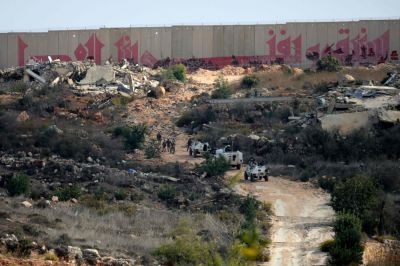
The president added that the Lebanese Army is continuing its missions in the south and throughout the country, but that Israel's occupation of at least five positions on Lebanese territory is preventing it from continuing its deployment.
"However, this has not prevented it from continuing its missions and implementing Resolution 1701 in vast geographical areas that are difficult to access, which requires considerable time and effort," he added.
Security Council Resolution 1701 ended the July 2006 war between Hezbollah and Israel. It also formed the basis for the November 2024 cease-fire agreement, after 13 months of war between the two sides. Through this agreement and Resolution 1701, Beirut committed in August to regaining a monopoly on the use of force, and since September the Lebanese Army has been conducting operations to dismantle Hezbollah's military infrastructure south of the Litani River, without opposition from the main party concerned. Hezbollah, however, refuses to hand over its arsenal to the army in the rest of Lebanon until Israel has fulfilled its part of the truce agreement.
Support for the army is necessary to avoid a 'return to chaos'
Aoun further emphasized that the army's missions require "increased support" to avoid a "return to chaos." "We do not want to relive the war," he said, insisting that "the army will protect citizens in all regions, especially in the south." He went on to say that the army and the people of the south have a "deep relationship" based on trust, and that the monopoly on weapons is a "fundamental" and inevitable goal, "even if it takes time."
The Lebanese president also said he welcomed any initiative by any country wishing to maintain all or part of its troops in the south after the withdrawal of UNIFIL, scheduled for the end of 2026.
After this meeting in Baabda, the delegation was received in Ain al-Tineh by Speaker of the House Nabih Berri, who said that "it is not permissible and unacceptable to negotiate under fire."
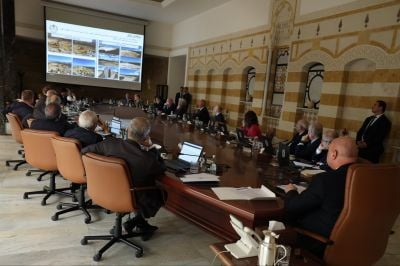
He warned that continued Israeli attacks risk "rekindling the war." "Stability in the south requires Israel to comply with Resolution 1701 and the cease-fire agreement, ending its daily violations and withdrawing" from Lebanese territory, he said.
A U.N. force under U.N. auspices after UNIFIL’s withdrawal?
The U.N. delegation was also hosted for lunch at the Grand Serail by the Prime Minister, who again stressed the need to put pressure on Israel to honor its commitments under the cease-fire agreement, according to a statement on X from Prime Minister Nawaf Salam who further emphasized Lebanon’s commitment to extending the authority of the state over its entire territory, with “its own forces.”
Salam also stated that Lebanon needs to have a “United Nations support force, after the expiration of UNIFIL’s mandate, in order to fill any potential vacuum and help strengthen stability in the South.” He suggested that this force could operate under the auspices of UNTSO, the U.N. body responsible for monitoring the truce, or be made up of a peacekeeping force similar in its mandate and border control to UNDOF, deployed on the Golan Heights.
Foreign Minister Joe Rajji expressed his gratitude for the U.N. and Security Council’s ongoing support for Lebanon, as well as for the sacrifices made by UNIFIL and its personnel over the past years.
He added that “discussions are underway to define the future of the U.N. mission in the country.”
The minister also stressed the need for Israel to end its aggressions against Lebanon and to “withdraw immediately and unconditionally from the occupied territories.”
He emphasized that the Lebanese government remains “determined to exercise its authority over the entire national territory and is solely responsible for the country’s defense.”
Regarding Hezbollah’s weapons, Rajji clarified that the government’s decision to maintain a monopoly on arms “is not intended to satisfy an external actor but serves the national interest,” aiming to build the state and allow it to fully control its territory. He underscored the importance of prioritizing diplomatic solutions, noting that military options have shown their limits in defending Lebanon and deterring Israeli attack
Karam 'made a good impression'
After the meeting, Ortagus, who had not spoken since Baabda, said that Karam, appointed Wednesday by Aoun, was "impressive" and had "made a good impression." "The Mechanism meeting was better thanks to the inclusion of civilians," she said.
In addition to scheduled meetings with Lebanese officials, the delegation is to conduct a field visit to UNIFIL headquarters in Naqoura and a series of meetings with U.N. agencies. Lebanon's permanent representative to the U.N., Ahmad Arafa, told L'Orient-Le Jour a week ago that this was a mission "crucial for the future of peacekeeping in Lebanon." The delegation traveled to Syria on Thursday, where it pledged the international community's support for the country ravaged by several years of war.
Commenting on the Lebanese issue at a conference in Abu Dhabi, in remarks reported by SkyNews Arabia, the U.S. envoy to Syria, Tom Barrack, expressed his "deep concern" on Friday about the risk of a resumption of war in Lebanon and said it was "impossible" to disarm Hezbollah "by force."
Barrack has been distanced from the Lebanese issue in recent months after several controversial statements and following the appointment of a new U.S. ambassador to Beirut.

