



The main mission of the FSE at USJ is to provide training for managers who are capable of integrating effectively and advantageously into the various sectors of economic activity. (Photo: FSE)






"It has always been claimed that studies in economic sciences are very theoretical and not suited to real market conditions. These ideas are completely mistaken," asserts Professor Jean-François Verne, dean of the Faculty of Economic Sciences (FSE) at USJ.
"Today, the economist's profession has changed greatly with the continual emergence of new careers resulting from important technological advances." In a data-driven world where information travels fast, most business consulting firms are seeking people capable of using digital tools and conducting data analysis — the backbone of strategic business planning. Mastery of software like Microsoft Excel and other digital tools remains central to this skill set.
"A few years ago, our students were criticized for not mastering these skills," continues Professor Verne. "We understood that integrating these innovative digital technologies into the training of our students became a priority, as it allows us to enhance their skill level while meeting business requirements."
Since the economic crisis, and notably since 2023, the FSE decided to remove some courses considered too theoretical and to integrate concepts of artificial intelligence as well as e-learning market tools into students' training, starting from their first year of undergrad.
This includes software such as Excel, Python, and R, which allow for structured data storage and organization, enabling rapid and efficient development of data analysis programs. "Familiarizing students with these digital tools, which are crucial to their professional success, will prepare them effectively to meet any professional challenge," notes Jean-François Verne.
"At the same time, we invite top specialists, such as the director of the Orleans Economics Laboratory, to deliver seminars on AI tools to all our master's and PhD students, focusing specifically on using machine learning to analyze economic and financial data."
"Today, by the end of their studies, our students are able to handle at least three software applications with ease, giving them a better foothold in the professional world," the FSE dean emphasizes. "It must be said that we are supported by a Strategic Advisory Council that guides us on faculty management and on what steps to take to meet the needs of the local market, but also on what leading universities are doing in France, particularly in the direction of studies in economic sciences.
This council is made up of professionals from the field and leading institutions, such as Paris Dauphine University, the School of Economics at the Sorbonne (Paris-Sorbonne University), Paris-Est Créteil University, Orléans University and also Aix-Marseille University."
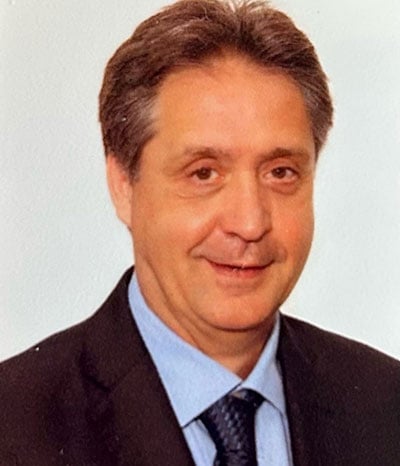
Training students to face professional challenges
"Thanks to the many internships implemented by the faculty starting in the second year of undergrad, our students have direct contact with numerous companies and are highly familiar with the constraints and demands of the working world," continues Professor Jean-François Verne.
"Very often, it is these major companies that advise us on the programs and concepts our students should acquire during their studies, enabling them to better meet the evolving expectations of the professional world awaiting them. Students graduating from our university quickly become operational in the market upon completing their studies."
To prepare them for the business world, several competitions are organized by major companies, such as the Obegi Group, which holds entrepreneurship competitions for all FSE students, and BlomInvest, which annually runs a competition at all economics and management faculties in Lebanon where students simulate managing (a virtual) one million dollars and generating profits.
"FSE students very often rank among the top three," the dean proudly notes. Still aiming to motivate students to continue their studies in Lebanon, since February 2025, the faculty has organized a research competition titled "Young Economists in Action," with the theme for the first edition being "online consumption."
"More than 250 secondary school students from around 45 schools answered the call. This is an initiative that has generated genuine enthusiasm and will be held again in 2026 on the theme 'AI and the job market'," says the dean, before adding: "More and more Lebanese students, who started their studies abroad, particularly in France, are returning to pursue their master's or doctorate in Lebanon due to the excessive cost of studies and housing abroad, as well as the climate, isolation and loneliness of big cities.
Most choose our faculty, one of the few in Lebanon to offer a doctorate in pure economics. Moreover, our joint doctoral programs with foreign universities such as Aix-Marseille University, Paris-Est Créteil University, Grenoble-Alpes University, Marie and Louis Pasteur University, and Poznan University in Poland encourage students from other universities to pursue their PhDs with us, provided they have a master's in economic sciences."
Today, the FSE's main mission is to train executives who can effectively and advantageously enter the various sectors of economic activity by equipping them with all the tools needed for professional integration. Its goal is also to encourage students to continue their studies in Lebanon and to prevent brain drain abroad.


 1 p.m. recap: Salam in Nabatieh; up to 10,000 more US troops heading to Middle East