


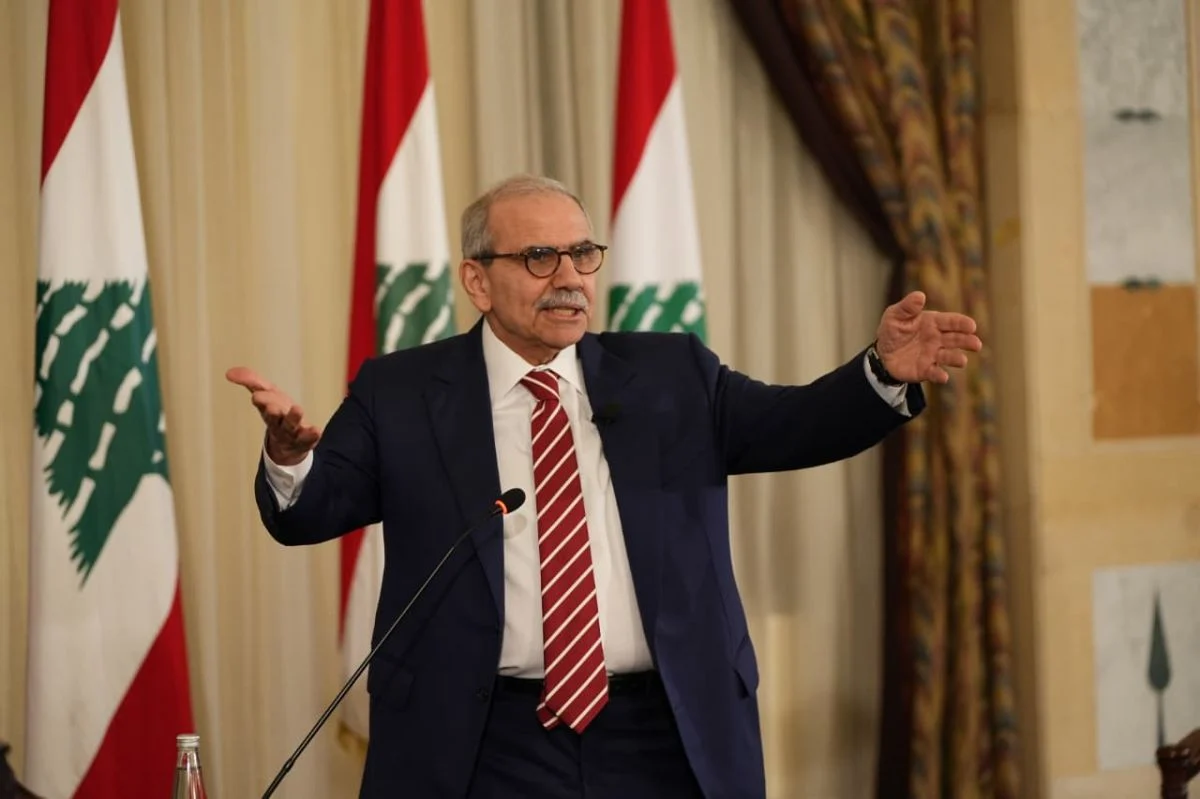
Prime Minister Nawaf Salam at the Grand Serail, Sept. 14, 2025. (Credit: Archive photo Mohammad Yassin/L’Orient Today)






BEIRUT — Prime Minister Nawaf Salam on Wednesday rebuked Israeli Prime Minister Benjamin Netanyahu for “going too far” in portraying Lebanon’s latest move in appointing a civilian representative as part of the cease-fire monitoring committee as a step toward normalization — a characterization Beirut insists is unfounded.
In an interview with Al-Jazeera, Salam said Netanyahu had misrepresented Lebanon’s decision to appoint former ambassador Simon Karam to its delegation in the committee, known as the “Mechanism,” which oversees the fragile truce between Hezbollah and Israel in place since Nov. 27, 2024. “We are not conducting peace negotiations with Israel, and normalization is linked to the peace process,” Salam said, adding that Lebanon was prepared only for “supra-military negotiations.”
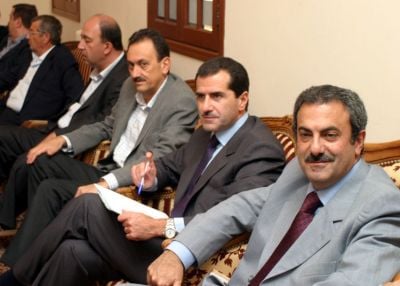
The Israeli head of government had responded to the morning announcement by the Lebanese presidency by calling it "a first attempt to establish a basis for relations and economic cooperation between Israel and Lebanon."
Earlier, Netanyahu called Karam’s appointment “the first attempt to establish a foundation for relations and economic cooperation between Israel and Lebanon,” after the Lebanese presidency announced the decision in the early morning hours.
The Mechanism was created alongside the truce that halted the latest round of fighting between Israel and Hezbollah, which began on Oct. 8, 2023. Until Wednesday’s session, the body included only military representatives from Lebanon, Israel, the United States, France and the U.N. Interim Force in Lebanon (UNIFIL). The latest meeting, which included U.S. envoy Morgan Ortagus, brought the first civilian participants, including Karam and an Israeli-appointed civilian representative.
Hezbollah, however, has pushed back against any interpretation that the committee signals a political opening. The party continues to reject government demands that it surrender its weapons, despite decisions adopted last summer aimed at restoring the state’s monopoly on arms. Israel, meanwhile, has persisted with daily strikes on Lebanese territory, undermining the truce, and has threatened a major new offensive if Beirut fails to disarm Hezbollah.
“We have received Israeli messages suggesting a possible escalation, but without specific timelines,” Salam said. “Envoys who visited Beirut believe the situation is dangerous and could worsen.”
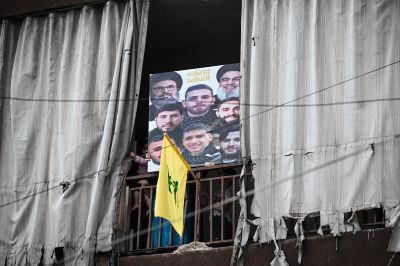
He reiterated that Hezbollah “must hand over its weapons; this is one of the essential elements for its participation in the state-building project.” He also argued that the party’s arsenal “has not deterred Israel and has not protected Lebanon,” and that the government has “regained the decision over war and peace.” He added: “We will not allow adventures that drag us into another war. We must learn from the experience of supporting Gaza.”
At a forum at the Holy Spirit University of Kaslik (USEK), Justice Minister Adel Nassar said Hezbollah should not view disarmament as a “concession,” but as a “recognition of the state’s role as guarantor and protector.” His comments contrasted with those of Hezbollah Secretary-General Naim Qassem, who argued last week that the Lebanese state had proven incapable of defending the south.
Reactions to Karam's nomination
The appointment of Simon Karam to the "mechanism" has prompted reactions in Lebanon, as Hezbollah spokesperson Youssef Zein told L’Orient-Le Jour Wednesday that the party might announce its official position during the day.
Karam’s appointment triggered swift political reactions. Hezbollah spokesperson Youssef Zein told L’Orient-Le Jour the party might announce an official position later in the day.
Druze leader Walid Joumblatt, drawing a parallel with Pope Leo XIV’s visit to Lebanon, which ended Tuesday, wrote on X that the pontiff had “reaffirmed the foundations of dialogue, love and peace, far from the messengers of doom, rhetoric and war coming from all sides.”
MP Marc Daou called the appointment “a step that affirms Lebanon’s sovereignty and the political leadership’s ability to manage security, political and diplomatic affairs,” according to the state-run National News Agency (NNA). Beirut MP Fouad Makhzoumi thanked President Joseph Aoun for the move, calling it “a positive step in the right direction” that strengthens state sovereignty and authority. Kataeb Party leader Samy Gemayel also praised the decision to “draw on Simon Karam’s expertise,” expressing hope it would lead to “extending state sovereignty, limiting weapons and protecting Lebanon from aggression.”
Gemayel said the move could become “a real entry point to address the issue of weapons outside state institutions,” insisting Lebanon would “only regain its standing through a state that alone holds the decision over war and peace.”
Former Justice Minister Salim Jreissati of the Free Patriotic Movement was among the first to publicly affirm Karam’s qualifications for the role, according to the NNA.

 1 p.m. recap: Salam in Nabatieh; up to 10,000 more US troops heading to Middle East