


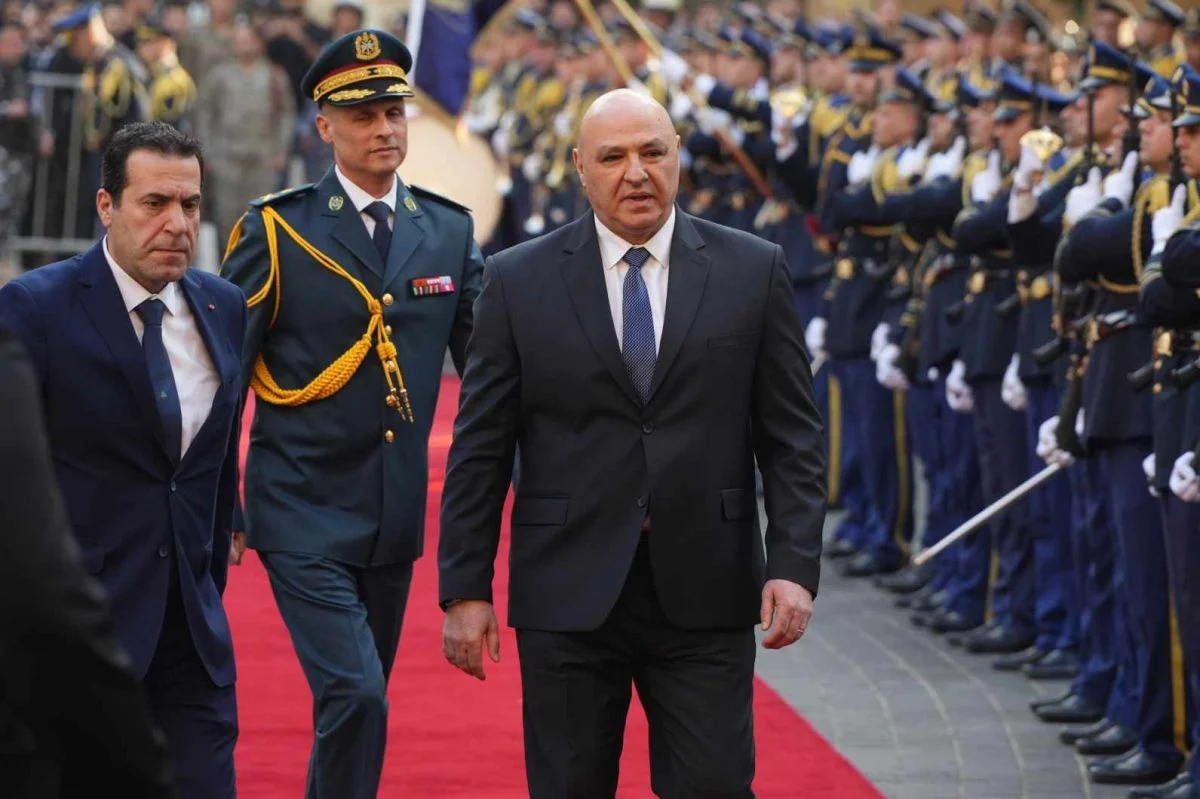
President Joseph Aoun on Jan. 9, 2025. (Archive photo/Presidency)






BEIRUT — Civilian representatives from Lebanon and Israel took part in Wednesday's cease-fire monitoring committee meeting in southern Lebanon, marking the first direct talks in over 40 years between the two countries, which remain technically at war, meaning contact with Israel is punishable by law in Lebanon.
In 1983, following the Israeli invasion, the two countries held direct talks that led to the signing of an agreement meant to lead to formal ties, but it was never ratified.
On Wednesday morning, presidential spokesperson Najat Charafeddine announced live on Télé Liban that lawyer and former Lebanese ambassador to Washington in the early 1990s, Simon Karam, would be attending the committee's afternoon meeting, which was held in Naqoura, attended also by U.S. envoy Morgan Ortagus.
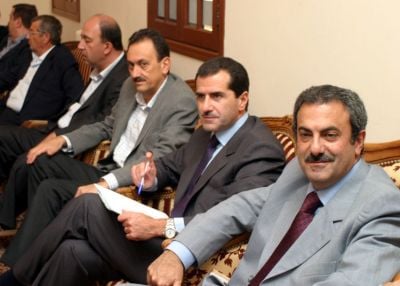
According to Charafeddine, President Joseph Aoun made his decision "in accordance with his constitutional oath and his prerogatives, with the goal of defending Lebanon's sovereignty, the integrity of its territory and its supreme interests."
The statement also refers to an appointment "in response to the appreciated efforts of the United States government, which chairs the 'military technical committee for Lebanon,' created under the cease-fire of Nov. 27, 2024, and after being informed by the American side of the Israeli side's agreement to add a non-military member to its delegation to said committee."
The appointment was made following consultation among the president, prime minister and Parliament speaker, the statement added. Israel, at the same time, announced that academic Uri Resnick, who holds a Ph.D. in international relations from the Hebrew University of Jerusalem, is the civilian appointed to represent it on the same mechanism.
US welcomes new civilian members of cease-fire monitoring committee
The U.S. embassy in Lebanon released a statement providing the first official American reaction to Karam's and Resnick's appointments, saying their inclusion "reflects the Mechanism’s commitment to facilitating political and military discussions with the aim of achieving security, stability, and a durable peace for all communities affected by the conflict," the statement reads.
According to the embassy, all parties of the meeting welcomed Karam and Resnick as civilian participants on the committee, "as an important step toward ensuring that the work of the Pentalateral is anchored in lasting civilian, as well as, military dialogue." Until now, the committee was only composed of military representatives from Lebanon, Israel, the United States, France and the United Nations Interim Force in Lebanon (UNIFIL).
"The Committee looks forward to working closely with Ambassador Karam and Dr. Resnick in future sessions, and to integrating their recommendations as the Mechanism continues to promote lasting peace along the border," the statement concluded.
The monitoring committee was established as part of the cease-fire agreement in order to address complaints and truce violations, and yet Israeli violations have topped 12,000 since the truce came into effect a little over a year ago, including the killing of more than 350 people.
The expansion of the mechanism to include civilians was a suggestion made by Ortagus. It received a general agreement in principle from the various power centers in Lebanon. Hezbollah opposed the idea of including civilians in the committee, which it regularly criticizes for its lack of response to daily Israeli violations of the truce.

 1 p.m. recap: Salam in Nabatieh; up to 10,000 more US troops heading to Middle East