



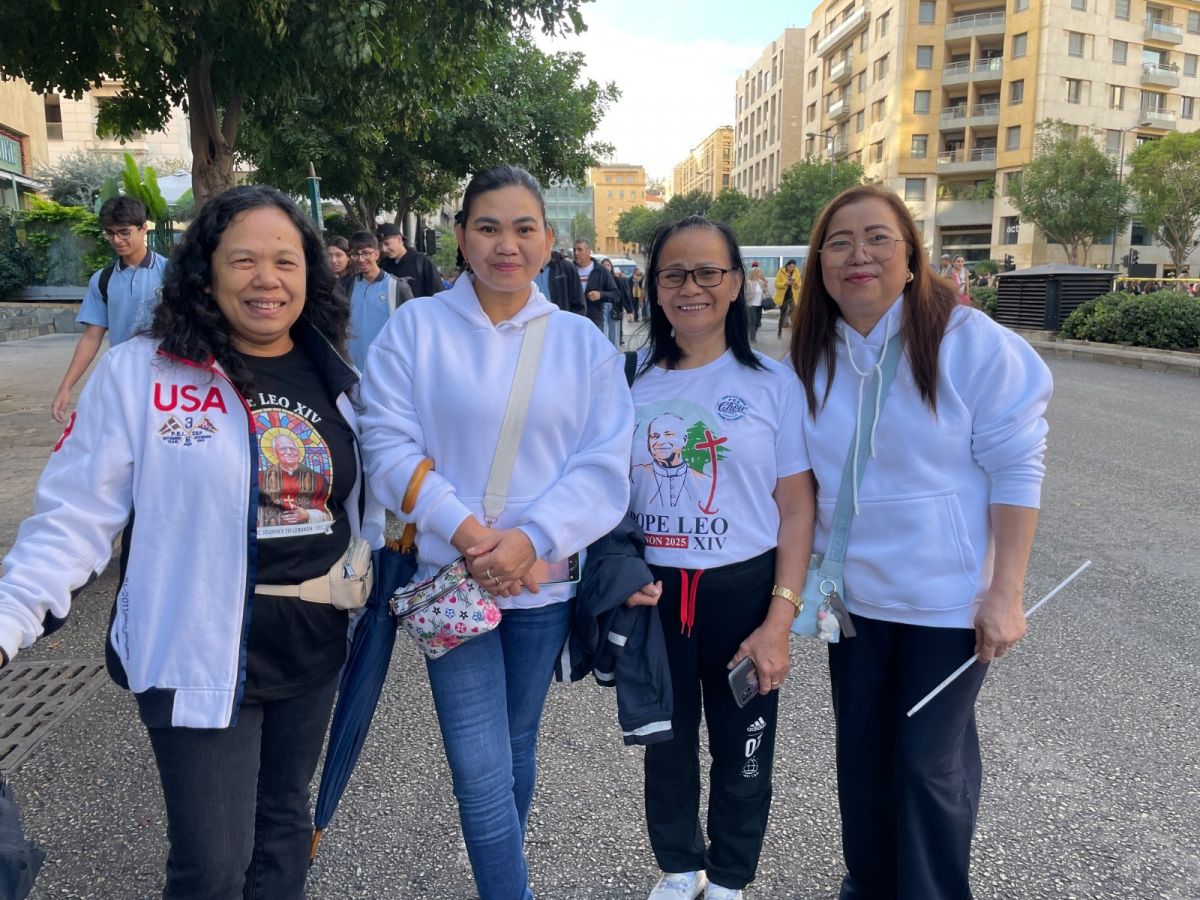






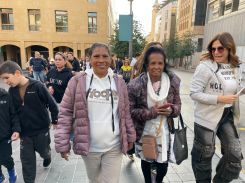
"I am so lucky to be here. I am fully enjoying the happiness of attending the papal mass, in a Lebanon finally at peace," says Luigina, an Ethiopian domestic worker, beaming. "We are going to pray for our country," she says, moving forward alongside her compatriots Hannah and Martha amongst the crowd of worshipers heading towards the site set up for the public mass at Beirut’s seafront.
All three obtained permission from their employers to come and pray with the pope on his official visit to Lebanon. Like them, hundreds of migrant workers walk — sometimes run — smiling, hoping to catch a glimpse of Leo XIV, among friends, with their parish or employers.
"You cannot imagine how important it is for us to be blessed by the pope. I will ask him for peace in Lebanon and in the world, but also for the courage to continue working to support our families," says Elsa, 55, who has spent twenty years with the same employer in Tripoli (North Lebanon), and who came to attend the mass with four Filipino compatriots.
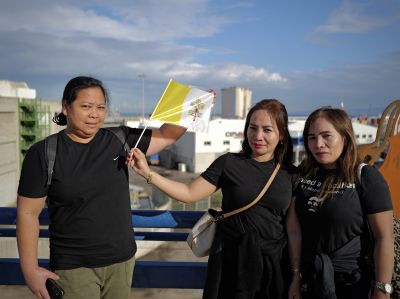
Edna, too, is ready to do anything to see the pope. Standing on the northern highway leading to the entrance of Beirut, facing the port, the Filipino worker and her friends prefer to stay away from the crowd, waiting for the man "to celebrate peace in the country and in the world."
She left at dawn from the Muslim household where she has worked since 2021, in the Ghobeiry district in the southern suburbs of Beirut, to attend the event. On the other side of the world, in the Philippines, friends and family follow the event remotely thanks to photos and videos she sends them live. "Over there, everybody loves him," she says.
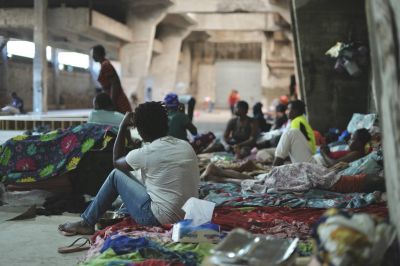
While there is a lack of precise figures, estimates point to around 250,000 migrant workers in Lebanon, mainly women from Ethiopia, the Philippines, Sri Lanka, Madagascar or other African and Asian countries, many living and working in precarity.
Their work conditions are largely controlled by the Kafala (sponsorship) system, which functions outside of Lebanese labor laws, and gives employers full power over their working and living conditions. This situation allows for all kinds of abuse to take place, including the confiscation of passports or restrictions on mobility and free time, and prevents victims of ill-treatment from freely changing employers.
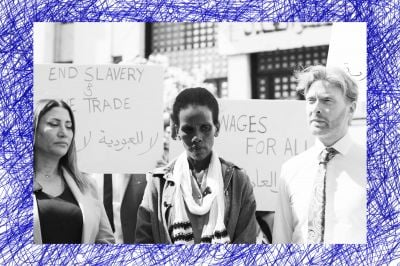
This reality was denounced on Monday by Lauren Cabobres, a Filipino worker-turned-activist, who addressed Leo XIV at the Basilica of Our Lady of Lebanon in Harissa about the abuses of the kafala system.
Not upsetting your employer
"Were we allowed to come? Our employers recommended it. It's an important day for Christianity," say Malagasy workers. The same goes for Mali, a 65-year-old Sri Lankan housekeeper: "Lebanon has become my second country. I feel so good here. I came to ask the pope for health and protection for Lebanon and Sri Lanka, which are both suffering," she says, referring to the Israeli strikes in Lebanon and recent floods in Sri Lanka.
"My employers support me at all times," she insists. The testimonies reveal a love of Lebanon, the painful separation from families, hard daily work, but also the fear of upsetting employers. "I’d rather not be photographed. It could upset my employer," whispers a Malagasy worker.
In the lines, nannies hold back impatient toddlers. Others keep watchful eyes on their employers, careful not to get lost in the crowd. Less talkative as a result, they immediately get to the point when approached. "I’m here for the pope’s blessing," says Lynn, a Filipino worker. "We're going to see the pope and fully enjoy the mass," notes Julie, a young Kenyan trailing her employer. In front of the site displaying a giant portrait of the pontiff, families with children and nannies pose for photos.
A Filipino woman with local residency walks two dogs. Hopeful, she says: "As soon as I finish, my Muslim employers allowed me to attend mass."
Many got their ticket from their parish. "We obtained 200 tickets for domestic workers who are members of our parish and organized their transportation. We had to write to their employers," explains seminarian Michael Pietro S.J., chaplain of Monnot's St. Joseph Church’s English-speaking parish. Saying he was happy to have "had no refusals," he regrets that some community members "didn't even try to ask their employer for permission to go out, certain they would not be allowed."
According to Meriam Prado Duval, co-founder of the Migrant Domestic Workers’ Alliance, "none of the association’s members could participate" in the event. "We live in our employers’ homes, and our daily duties make any outing impossible, even for the pope’s mass," she laments.
This article originally appeared in French on L'Orient-Le Jour.
 Israeli army carries out demolition at Jabal Amel School in Houla as strikes continue