



Religious figures during the meeting with Pope Leo XIV in Harissa, Dec. 1, 2025. (Credit: Reuters)






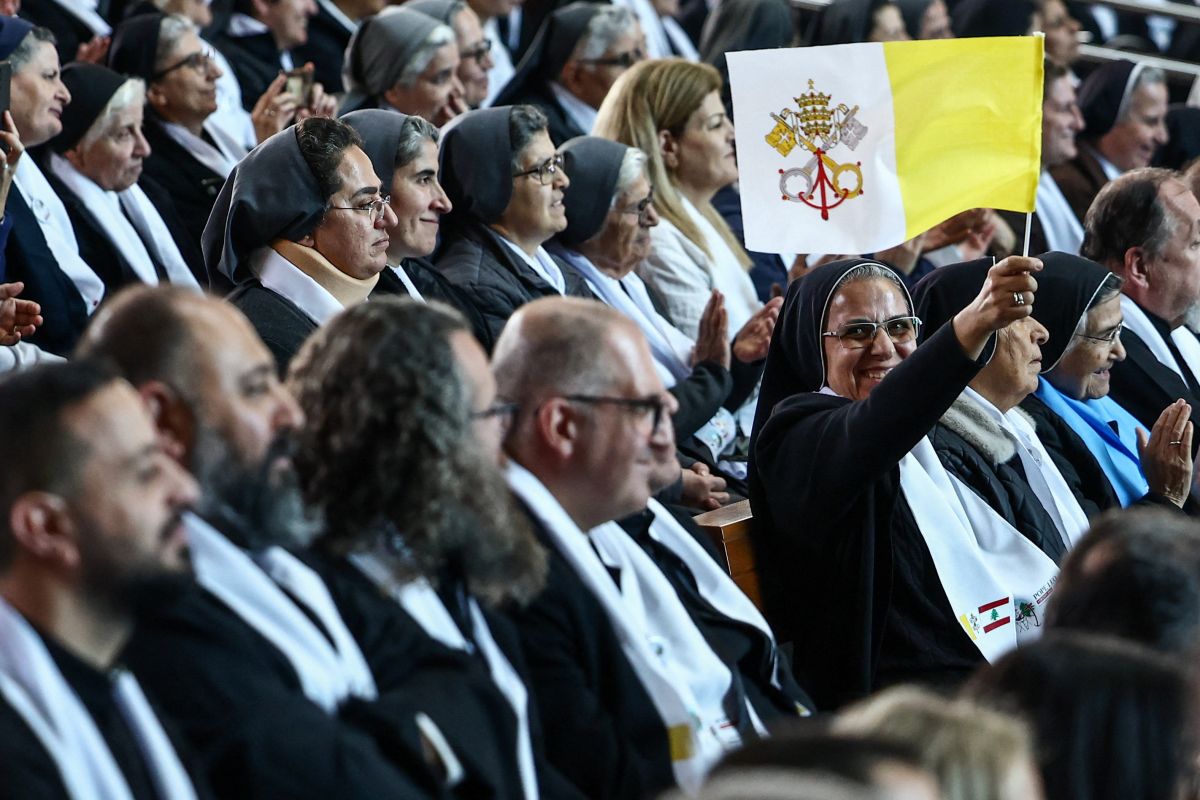
HARISSA — During the second day of his three-day visit to Lebanon, Pope Leo XIV visited the Basilica of Our Lady of Lebanon in Harissa, where he met with various members of Lebanon's Christian community and heard their testimonies of working in prisons, under bombs, and in the country's notorious kafala system.
Leo XIV's second stop on Monday followed morning prayers at Saint Charbel's tomb in Jbeil district's Annaya village. He arrived early afternoon at the sanctuary in Harissa, where Lebanon's iconic statue of the Virgin Mary is located, to the cheers of hundreds of of people waiting to receive him in the shadow of the massive church.
President Joseph Aoun and his wife Neemat, as well as Maronite Patriarch Bechara Rai and several dignitaries had also joined him in Harissa, having also been with him in Annaya.
Faith in the face of poverty and persecution
During the meetings with the pope, Youhanna Fouad Fahd, a priest in the Diocese of Tripoli, spoke of Dbabieh, a town in northern Lebanon near Syria, and the poverty, fear, and faith experienced in this town during the Syrian conflict and even after the fall of the Assad regime.
Due to its proximity to the Syrian border, this village has often been a refuge for Syrian's fleeing violence in their homeland.
"I met families who had fled persecution and others who had sold everything," he told the pope. "In their eyes, I saw a fragile faith, but incredibly vibrant. A faith that needs to be supported."
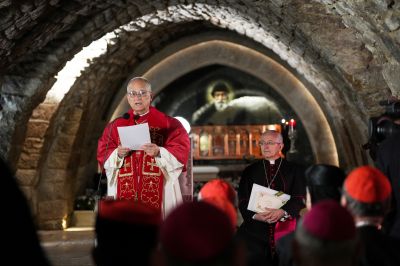
A nun from the Sacred Hearts convent in Baalbeck told the pope that she stayed in the heavily bombed area during last year's war between Israel and Hezbollah because of her faith.
“When the war broke out last fall, everything could have stopped, but I decided to stay because I had already given my life to the Lord.”
“Together with the bishopric, we welcomed Christian and Muslim families” fleeing Israeli aggression, she explained, giving them shelter at the convent. “We shared bread, fear, and hope.”
“When militias came to smash the convent’s security cameras,” she said, she found refuge “in prayer, in silence.”
“With the NGOs that remained in Baalbeck, we continued to serve there. I recognized the breath of the risen Christ who teaches us to love even in fear. In the heart of the war, I discovered the peace of Christ.”
Survivors of kafala system find refuge in the Church
Lauren, a Philippina migrant domestic worker who was also invited to speak during the meetings with the pope, said she had found purpose in her life in Lebanon, by volunteering at her parish of Saint Joseph in Tabaris.
“Our church has become a refuge; I’m proud to serve here," she told him. "I’ve met people who have lost everything,” she added, sharing the story of James and Leila, migrant workers, a couple, who were abandoned by their Lebanese employers when the war broke out last year.
“They were left alone, trapped, with nowhere to go. When their daughter was born, they walked for three days to get to the parish,” in order to receive some support.
“We migrants are never alone. We contribute to this country," Lauren says. "We are workers, builders. We bring our culture, open our hearts, care for children, cook. I’ve witnessed things, small acts of love that open hearts.”
Father Tony Fayad, who works as a chaplain in Lebanon's prisons told the pope that he sees God in the prisoners he encounters behind bars.
“Each encounter is an encounter with the living Christ," he said. "We see reflected the tenderness of the Father who never tires of forgiving.”
“The context in Lebanon makes our mission particularly difficult, with poverty, prison overcrowding, the slowness of the justice system, and personal wounds,” he added. “In Lebanon’s prisons, mercy comes alive when a prisoner realizes he is not alone.”
“One day, a prisoner told me: ‘You came all the way here, so God hasn’t forgotten me.’”
Responsibility toward the youth
“It is with great joy that I meet you on this journey,” Pope Leo said in turn, thanking those who had shared their testimonies. “Our prayer gives us the strength to continue hoping and working, even when the sound of gunfire rumbles all around,” he added.
He once again praised the Lebanese for their faith despite so many difficulties. “I am thinking of the responsibility we all have in this regard, particularly towards young people,” he emphasized, echoing the testimonies of the religious and the migrant worker and commending everyone’s commitment.
“The spirit in which we strive to live each day is love,” Leo XIV added, before presenting the Harissa shrine with a Golden Rose, an ornament blessed by the pope and intended to honor Catholic sovereigns or shrines.
Leo XIV also highlighted the "responsibility" the Church has toward young people, to whom it must offer "real opportunities and ‘concrete and viable prospects for growth.’"
In reflecting on the testimonies shared with him, the pope especially requested that migrants "never feel rejected" by the Church, and called for "recognition of the dignity of every person, even in places marked by suffering and failure" in reference to prisons and the chaplain's testimony.
