

Search
Search
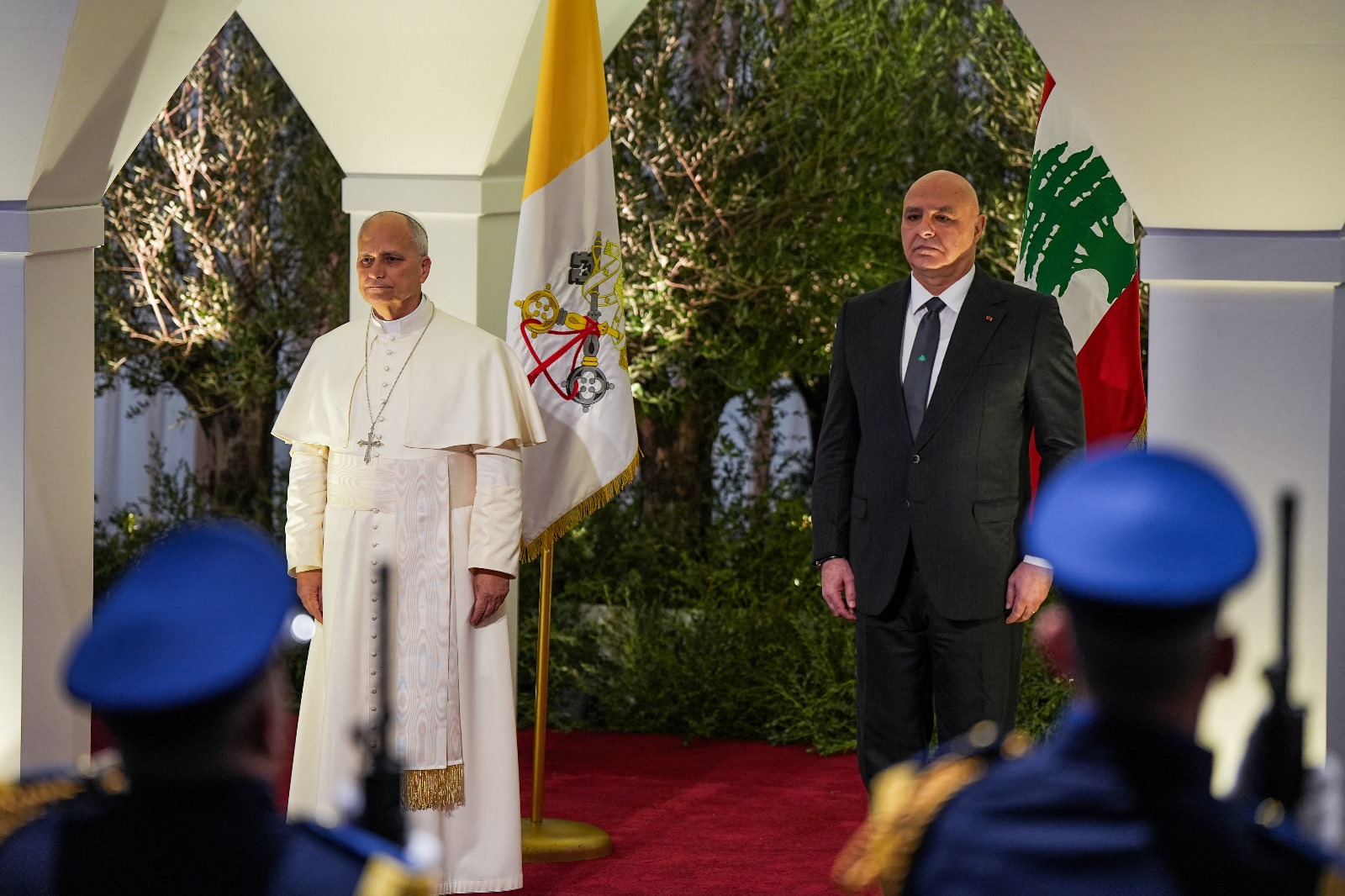
Upon his arrival from Turkey — his first trip abroad as pope — Leo XIV was welcomed by the President of the Republic Joseph Aoun along with a host of political and religious leaders before delivering his first address at the Baabda Presidential Palace. (Credit: Mohammad Yassine/L’Orient-Le Jour)
Upon his arrival from Turkey — his first trip abroad as pope — Leo XIV was welcomed by the President of the Republic Joseph Aoun along with a host of political and religious leaders before delivering his first address at the Baabda Presidential Palace. (Credit: Mohammad Yassine/L’Orient-Le Jour)

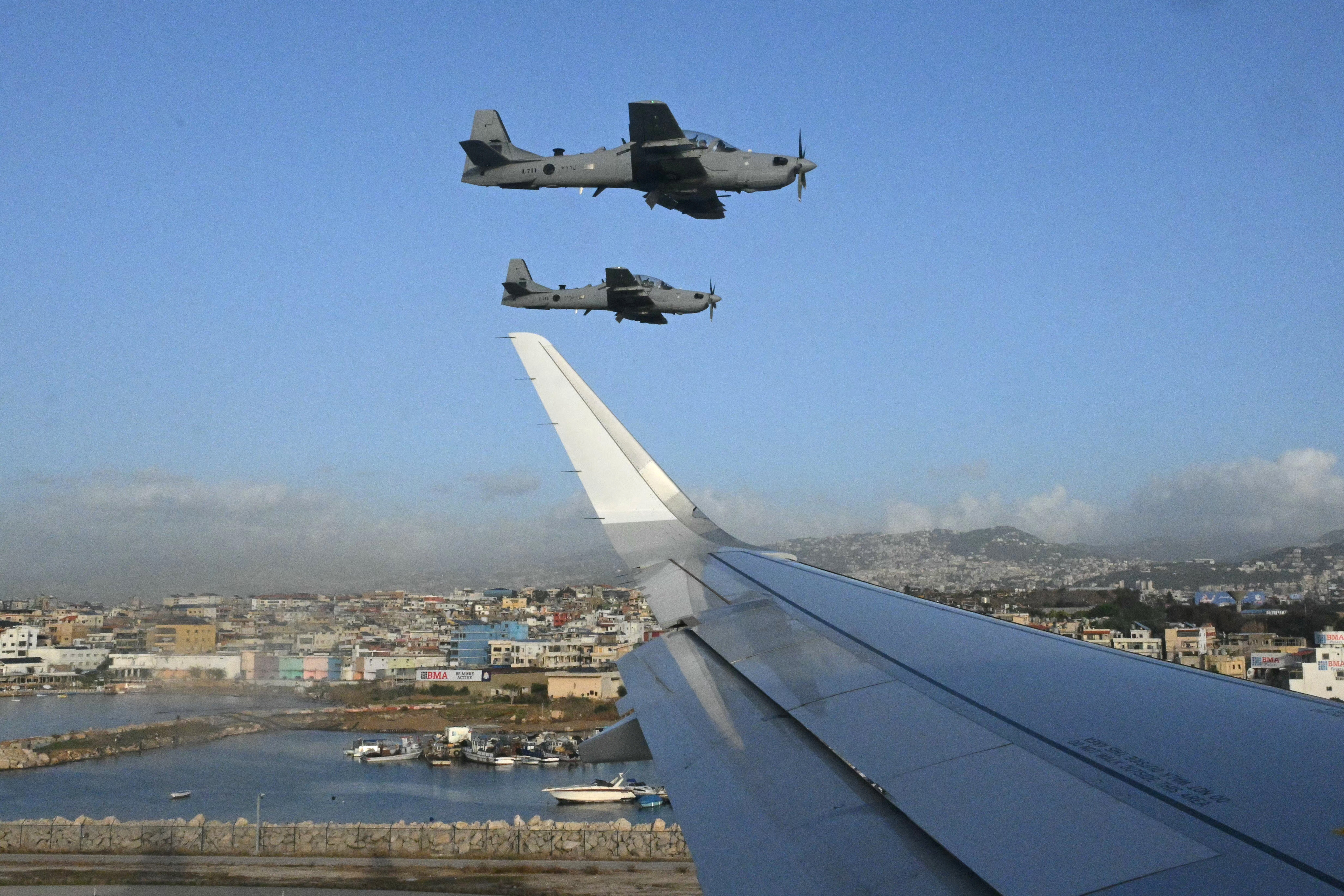
Marking the start of the 4th visit by a sovereign pontiff to Lebanon, Lebanese Air Force aircraft escorted the papal plane as it approached Beirut Rafic Hariri Airport on the afternoon of Nov. 30. (Credit: Andreas Solaro/AFP)
Marking the start of the 4th visit by a sovereign pontiff to Lebanon, Lebanese Air Force aircraft escorted the papal plane as it approached Beirut Rafic Hariri Airport on the afternoon of Nov. 30. (Credit: Andreas Solaro/AFP)

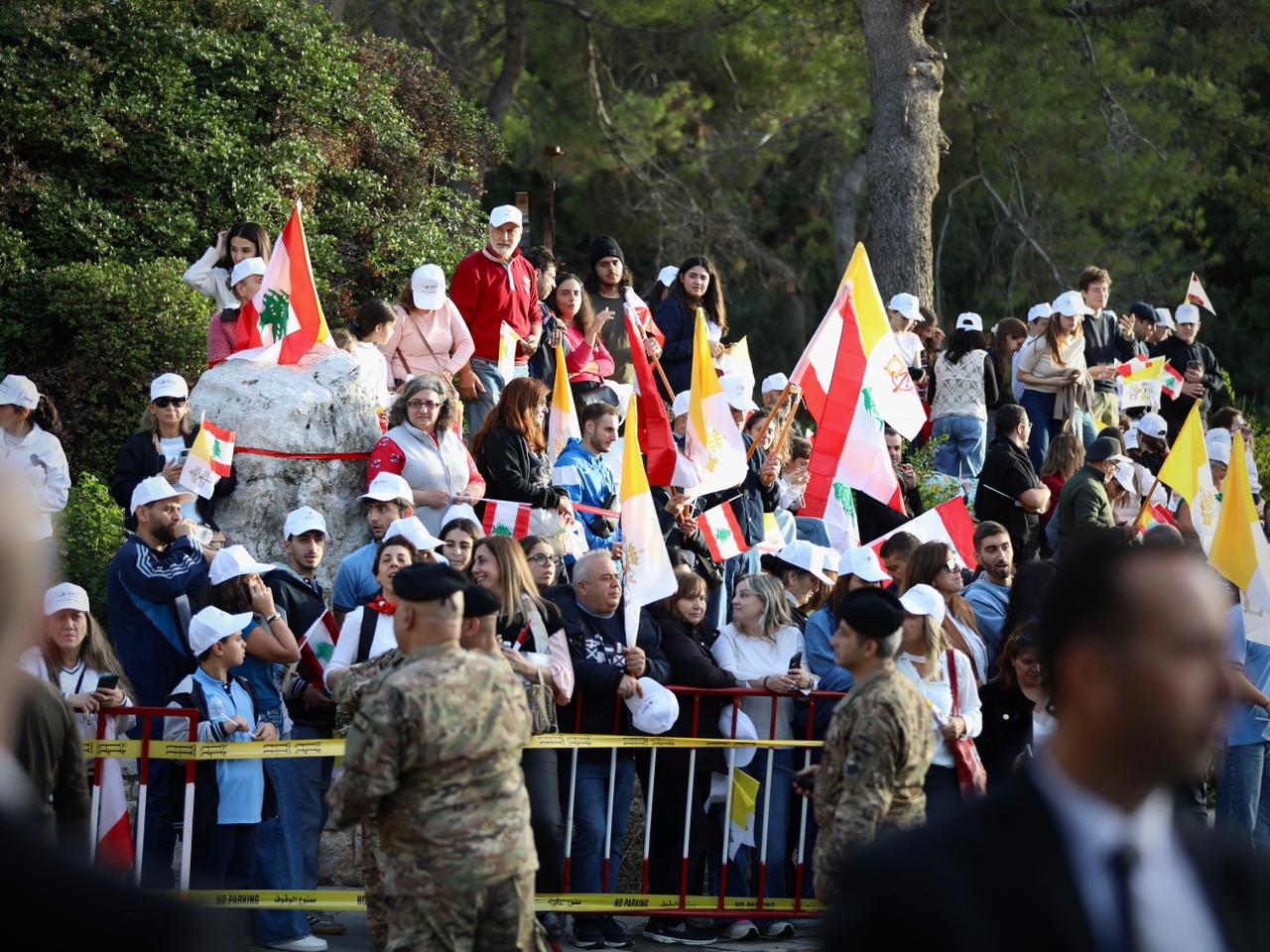
Throughout his trip, large crowds waving Lebanese and Vatican flags gathered along roads closed to traffic to let his heavily secured convoy pass. 
(Credit: Matthieu Karam/L’Orient-Le Jour)

Throughout his trip, large crowds waving Lebanese and Vatican flags gathered along roads closed to traffic to let his heavily secured convoy pass. (Credit: Matthieu Karam/L’Orient-Le Jour)
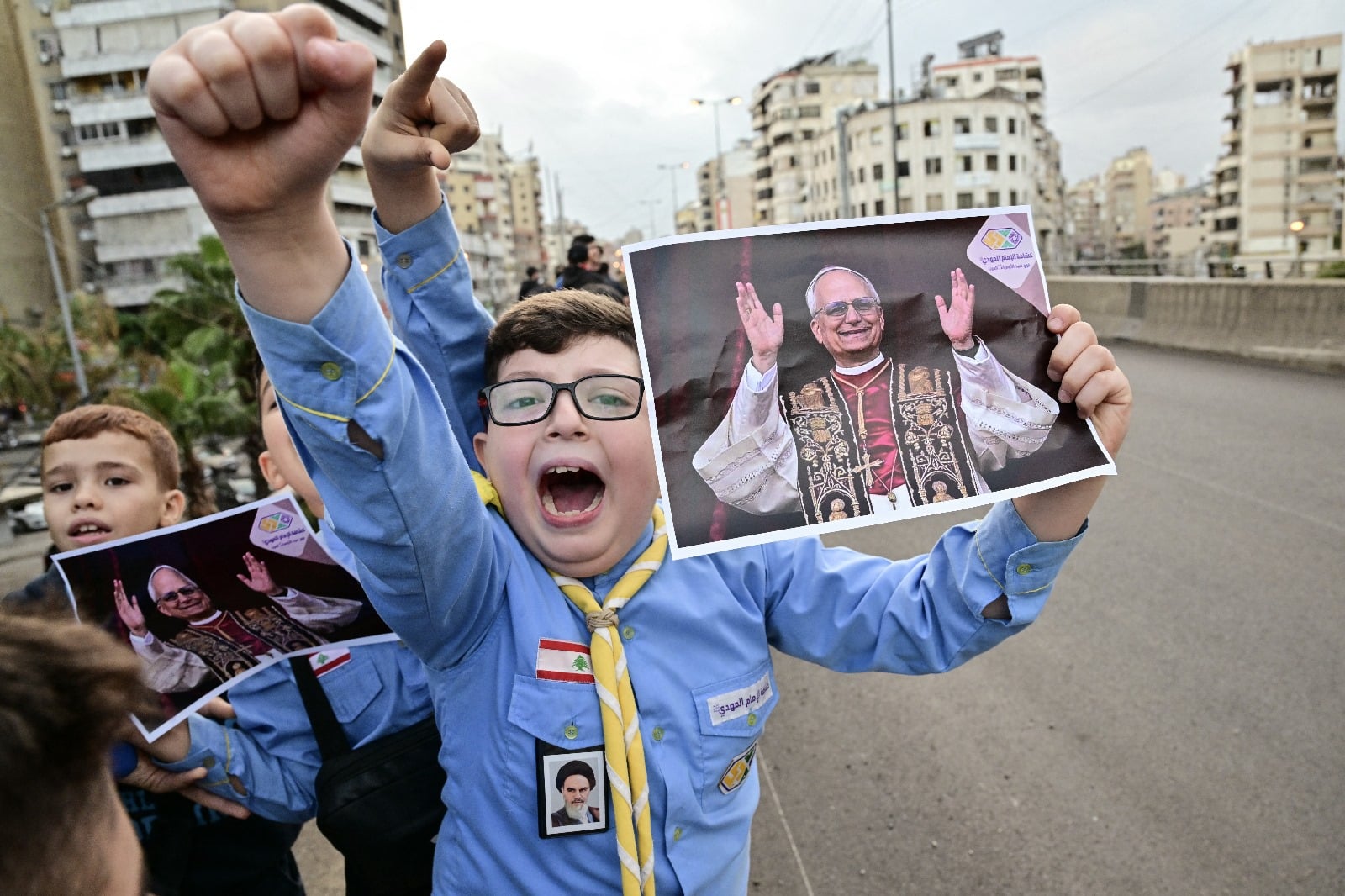
The crowds were mainly composed of Christians, but many others from all religions also joined. Shortly after his arrival, the Pope traveled through Beirut’s southern suburbs — targeted by Israeli strikes only days earlier — where al-Mahdi scouts, affiliated with Hezbollah, organized a marching band to welcome him. (Credit: Giuseppe Cacace/AFP)
The crowds were mainly composed of Christians, but many others from all religions also joined. Shortly after his arrival, the Pope traveled through Beirut’s southern suburbs — targeted by Israeli strikes only days earlier — where al-Mahdi scouts, affiliated with Hezbollah, organized a marching band to welcome him. (Credit: Giuseppe Cacace/AFP)

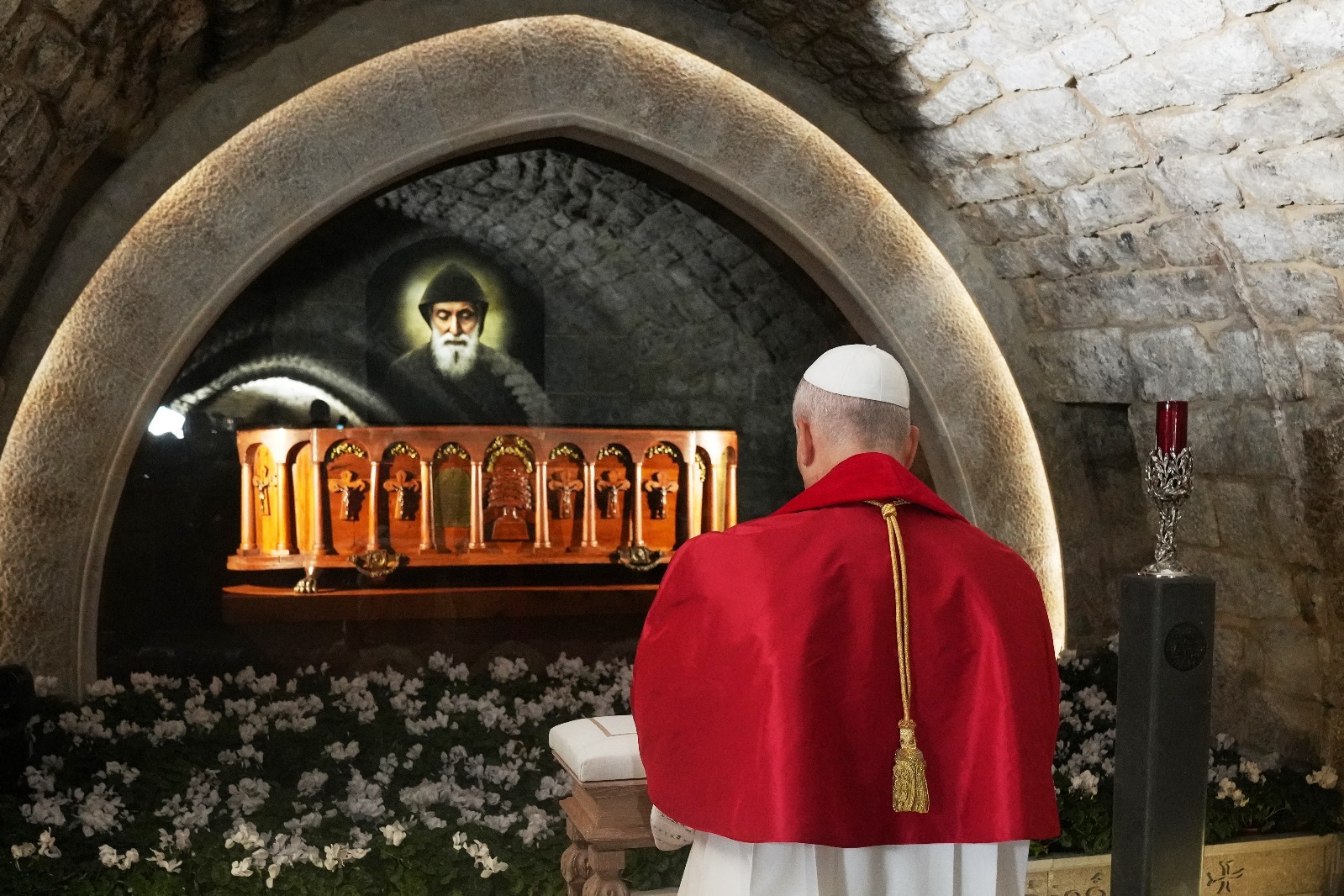
“Today we entrust to Saint Charbel's intercession the needs of the Church, Lebanon and the world.” During his tour of Lebanon’s emblematic Christian sites, the Pope prayed at the tomb of Saint Charbel in the Saint Maron Monastery in Annaya, in the mountains overlooking Byblos. (Credit: Domenico Stinellis/AFP)
“Today we entrust to Saint Charbel's intercession the needs of the Church, Lebanon and the world.” During his tour of Lebanon’s emblematic Christian sites, the Pope prayed at the tomb of Saint Charbel in the Saint Maron Monastery in Annaya, in the mountains overlooking Byblos. (Credit: Domenico Stinellis/AFP)

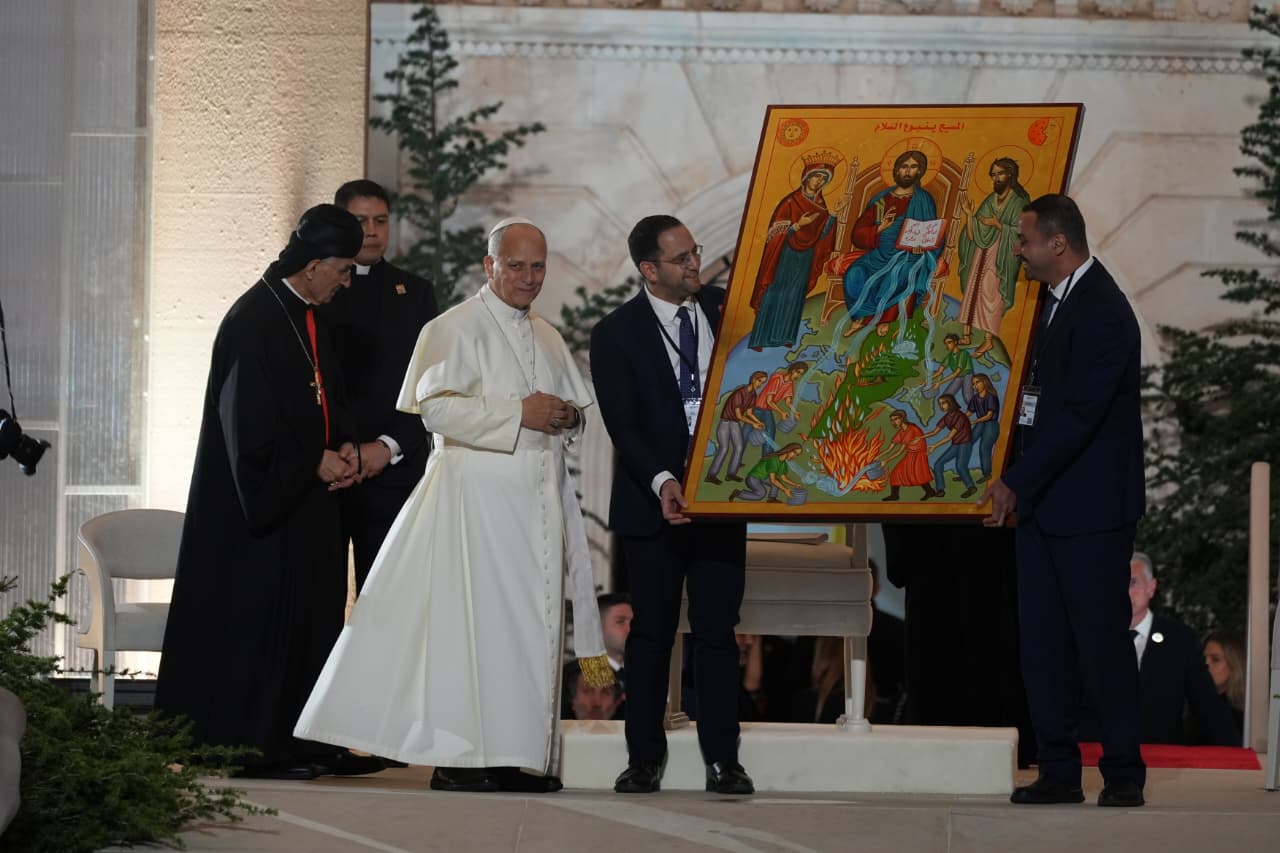
He also visited the seat of the Maronite Patriarchate in Bkirki to meet with Patriarch Bechara al-Rai and with groups of young Lebanese. “Grow strong like the Cedars,” he told them, while urging Lebanon’s leaders to do everything possible to keep young people from being driven toward emigration.  (Credit: Mohammad Yassine/L’Orient-Le Jour)

He also visited the seat of the Maronite Patriarchate in Bkirki to meet with Patriarch Bechara al-Rai and with groups of young Lebanese. “Grow strong like the Cedars,” he told them, while urging Lebanon’s leaders to do everything possible to keep young people from being driven toward emigration. (Credit: Mohammad Yassine/L’Orient-Le Jour)
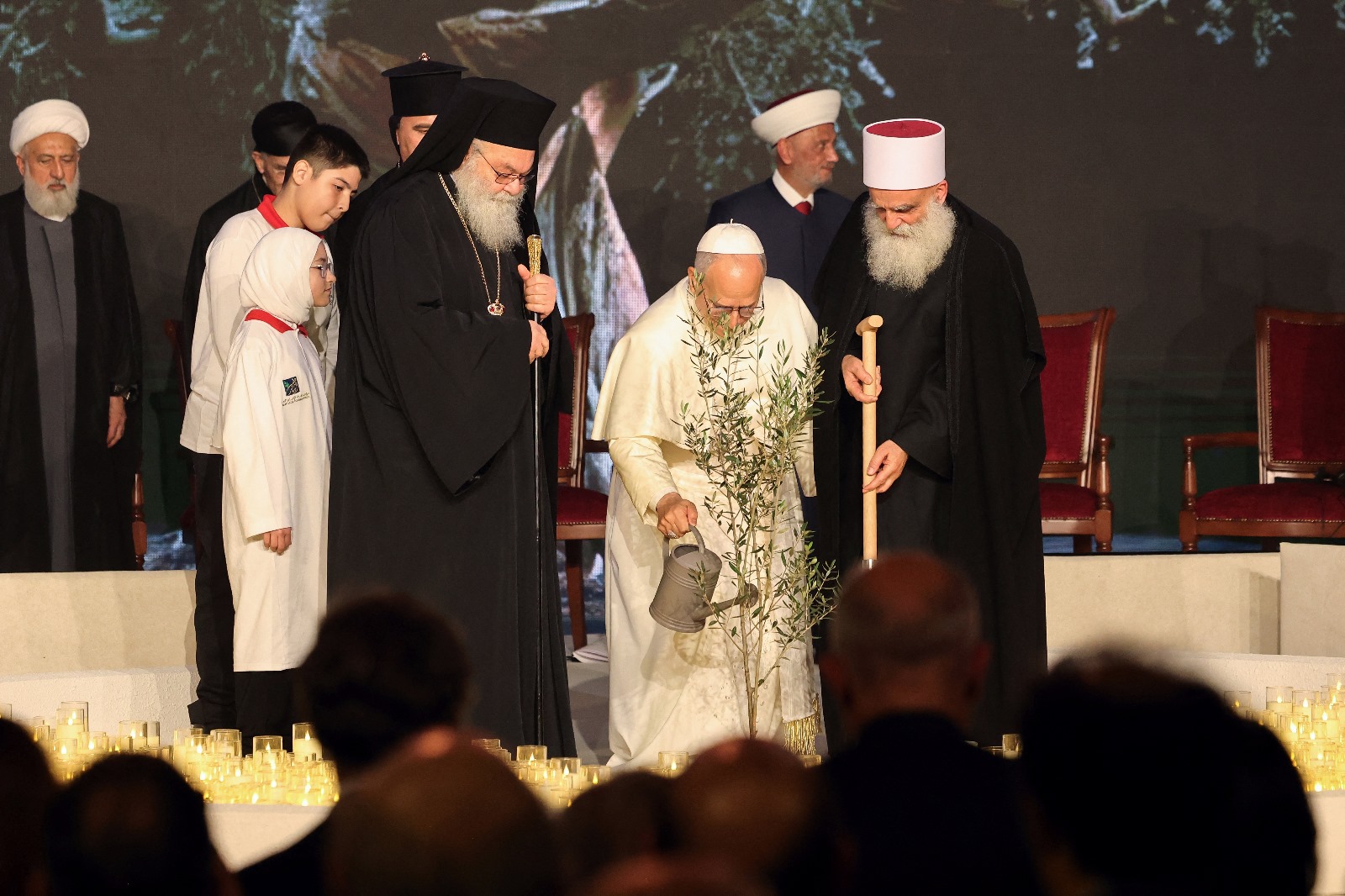
“The Lebanese people remind us powerfully that fear, mistrust and prejudice do not have the final word,” the Pope added during an ecumenical gathering that brought together representatives of Christian churches in the region as well as leaders from Lebanon’s various Muslim communities, held at Martyrs’ Square in Downtown Beirut. There, the Holy Father planted an olive tree, symbolizing his message of “peace” and “coexistence.” “Lebanon is famed for its majestic cedars, but the olive tree is also a pillar of its heritage,” he noted. (Credit: Anwar Amro/AFP)
“The Lebanese people remind us powerfully that fear, mistrust and prejudice do not have the final word,” the Pope added during an ecumenical gathering that brought together representatives of Christian churches in the region as well as leaders from Lebanon’s various Muslim communities, held at Martyrs’ Square in Downtown Beirut. There, the Holy Father planted an olive tree, symbolizing his message of “peace” and “coexistence.” “Lebanon is famed for its majestic cedars, but the olive tree is also a pillar of its heritage,” he noted. (Credit: Anwar Amro/AFP)

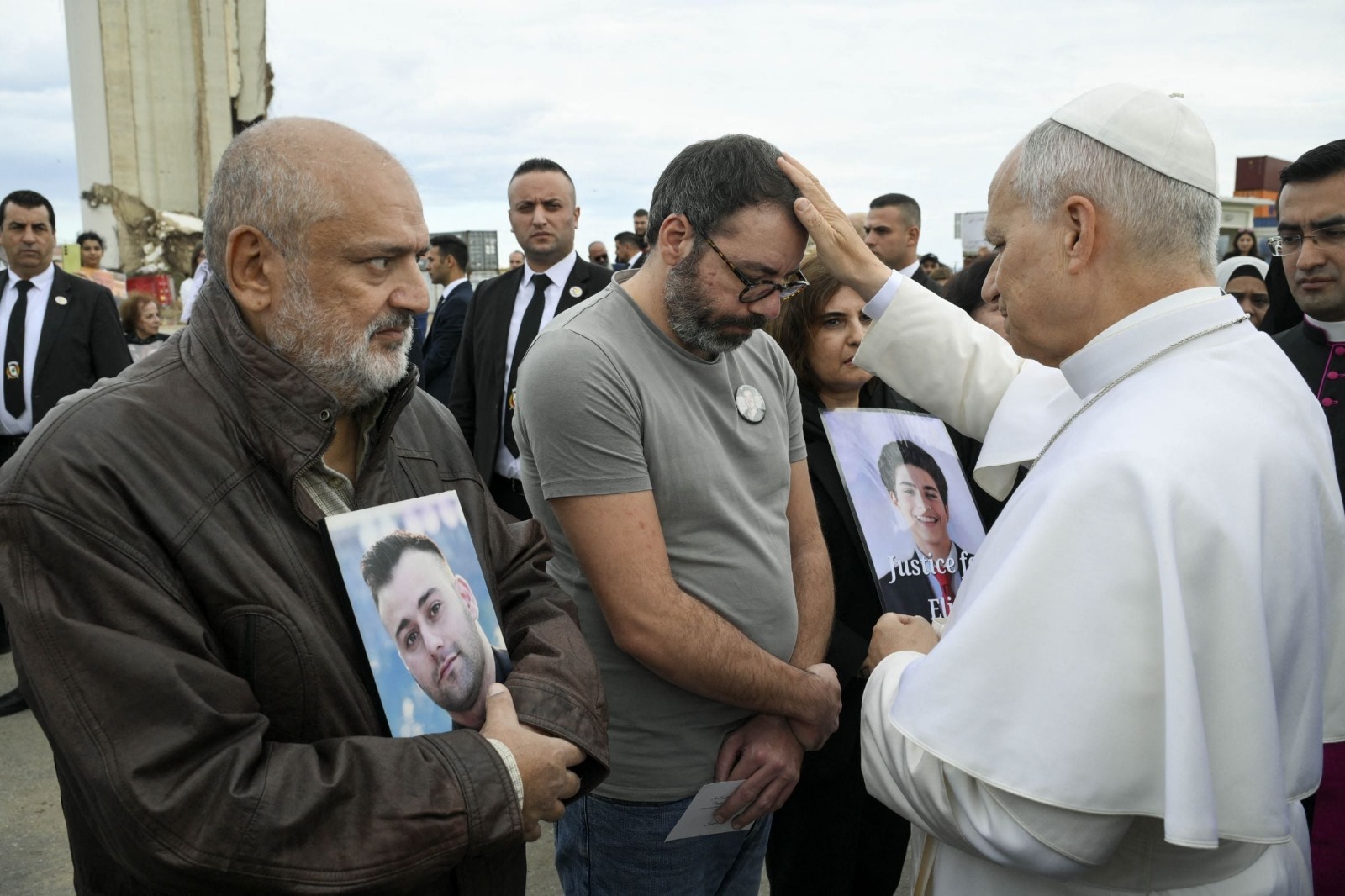
On his third and last day, Leo XIV held a silent prayer before the memorial honoring the victims of the Aug. 4, 2020 Beirut port double explosion, where he blessed relatives of the victims.

“I was deeply moved by my brief visit to the Beirut port… I prayed for all the victims, and I share the sorrow and the thirst for truth and justice felt by so many families, and by the entire country,” he later wrote on X. 
(Credit: AFP/Vatican Media)

On his third and last day, Leo XIV held a silent prayer before the memorial honoring the victims of the Aug. 4, 2020 Beirut port double explosion, where he blessed relatives of the victims. “I was deeply moved by my brief visit to the Beirut port… I prayed for all the victims, and I share the sorrow and the thirst for truth and justice felt by so many families, and by the entire country,” he later wrote on X. (Credit: AFP/Vatican Media)
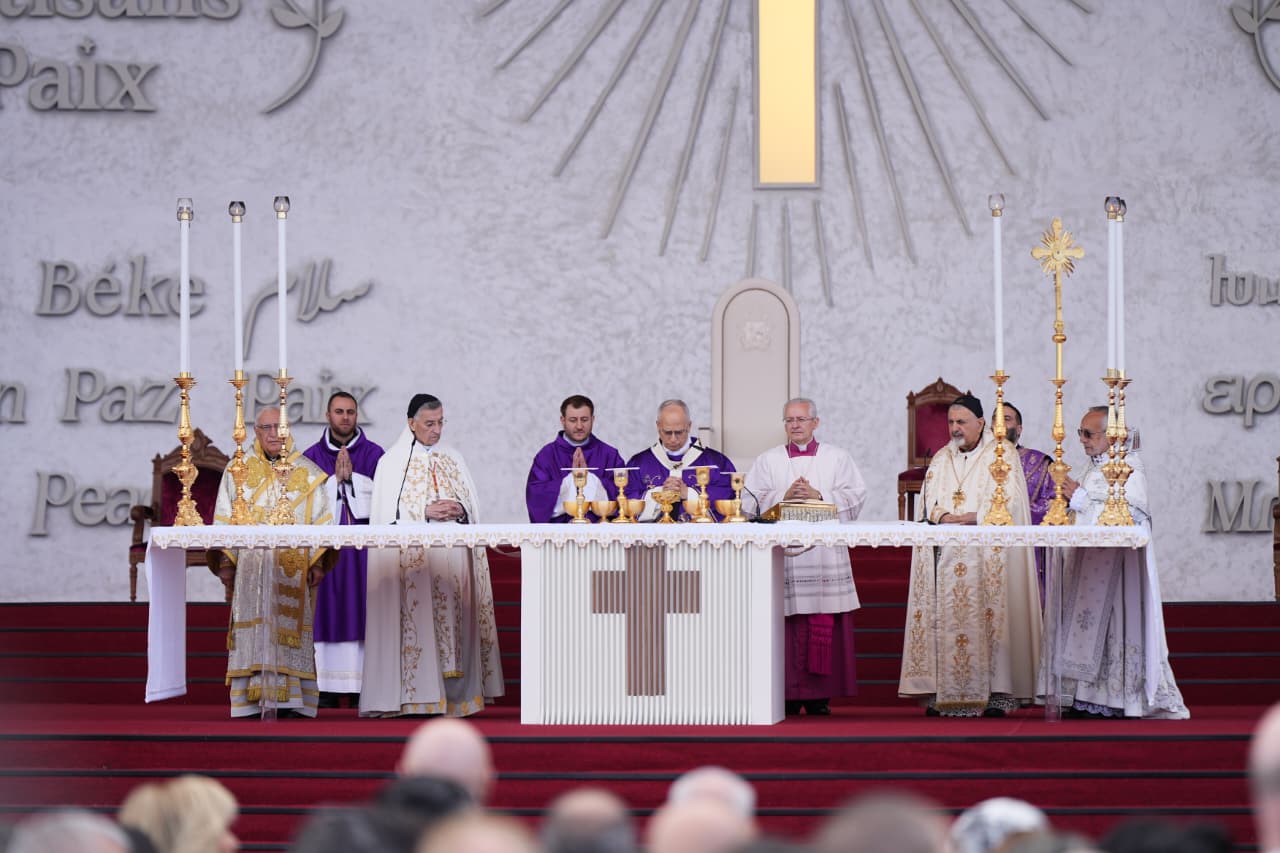
As his predecessors did, Leo XIV concluded his visit with a grand Mass celebrated in French at the Beirut waterfront, attended by nearly 150,000 people.

He called for an end to “attacks and hostilities” against Lebanon, after stating to the press before landing in Beirut that the creation of a Palestinian state was “the only solution” to achieving peace between Israelis and Palestinians. 
(Credit: Mohammad Yassine/L’Orient-Le Jour)

As his predecessors did, Leo XIV concluded his visit with a grand Mass celebrated in French at the Beirut waterfront, attended by nearly 150,000 people. He called for an end to “attacks and hostilities” against Lebanon, after stating to the press before landing in Beirut that the creation of a Palestinian state was “the only solution” to achieving peace between Israelis and Palestinians. (Credit: Mohammad Yassine/L’Orient-Le Jour)
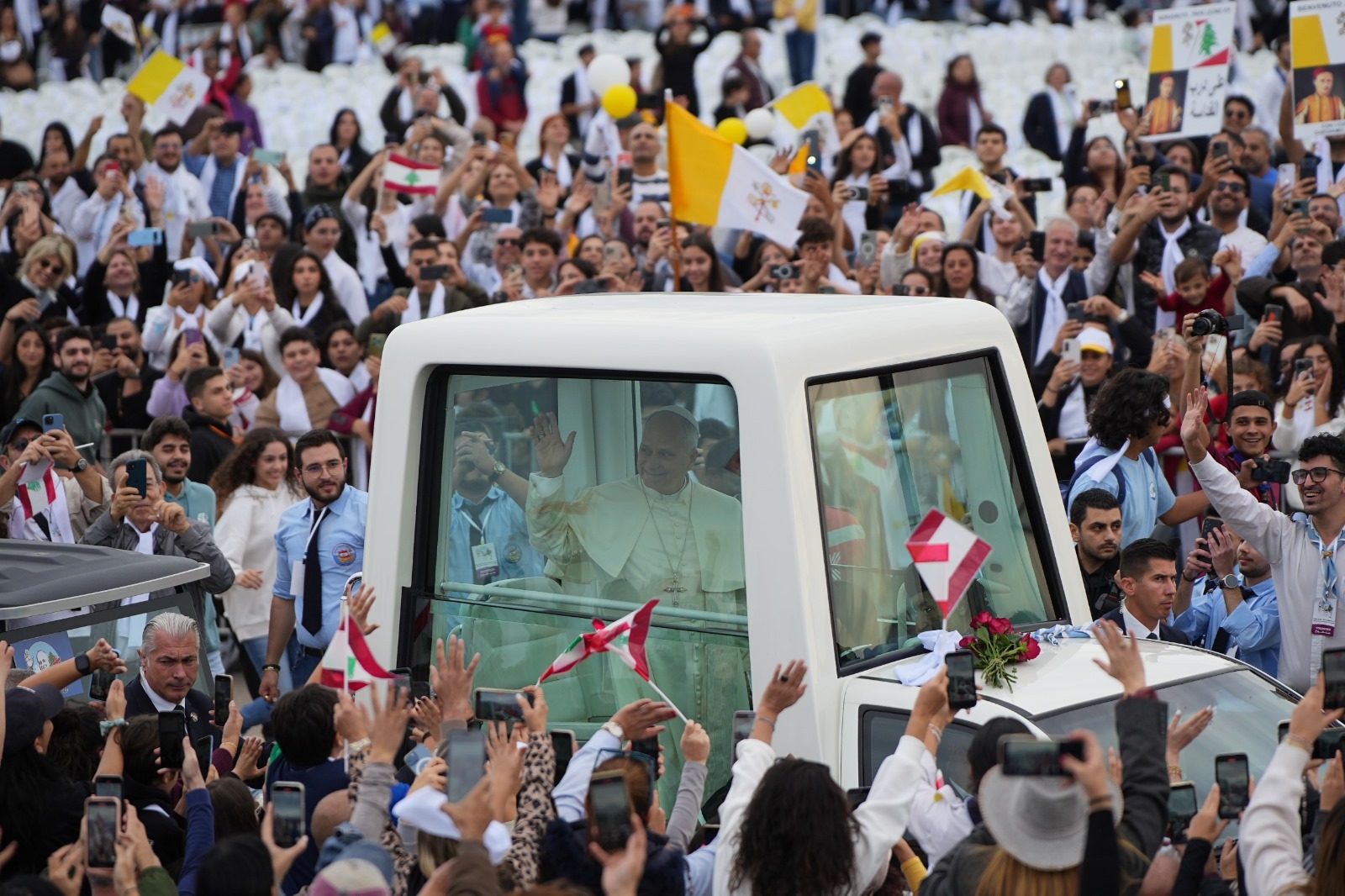
In his homily, the Holy Father also spoke of Lebanon’s “fragile political context,” its “dramatic economic crisis,” and the “conflicts” overshadowing the country’s beauty.

“Let us disarm our hearts,” he urged the Lebanese and the peoples of the region, before offering one final crowd greeting aboard the popemobile. 

(Credit: Mohammad Yassine/L’Orient-Le Jour)

In his homily, the Holy Father also spoke of Lebanon’s “fragile political context,” its “dramatic economic crisis,” and the “conflicts” overshadowing the country’s beauty. “Let us disarm our hearts,” he urged the Lebanese and the peoples of the region, before offering one final crowd greeting aboard the popemobile. (Credit: Mohammad Yassine/L’Orient-Le Jour)
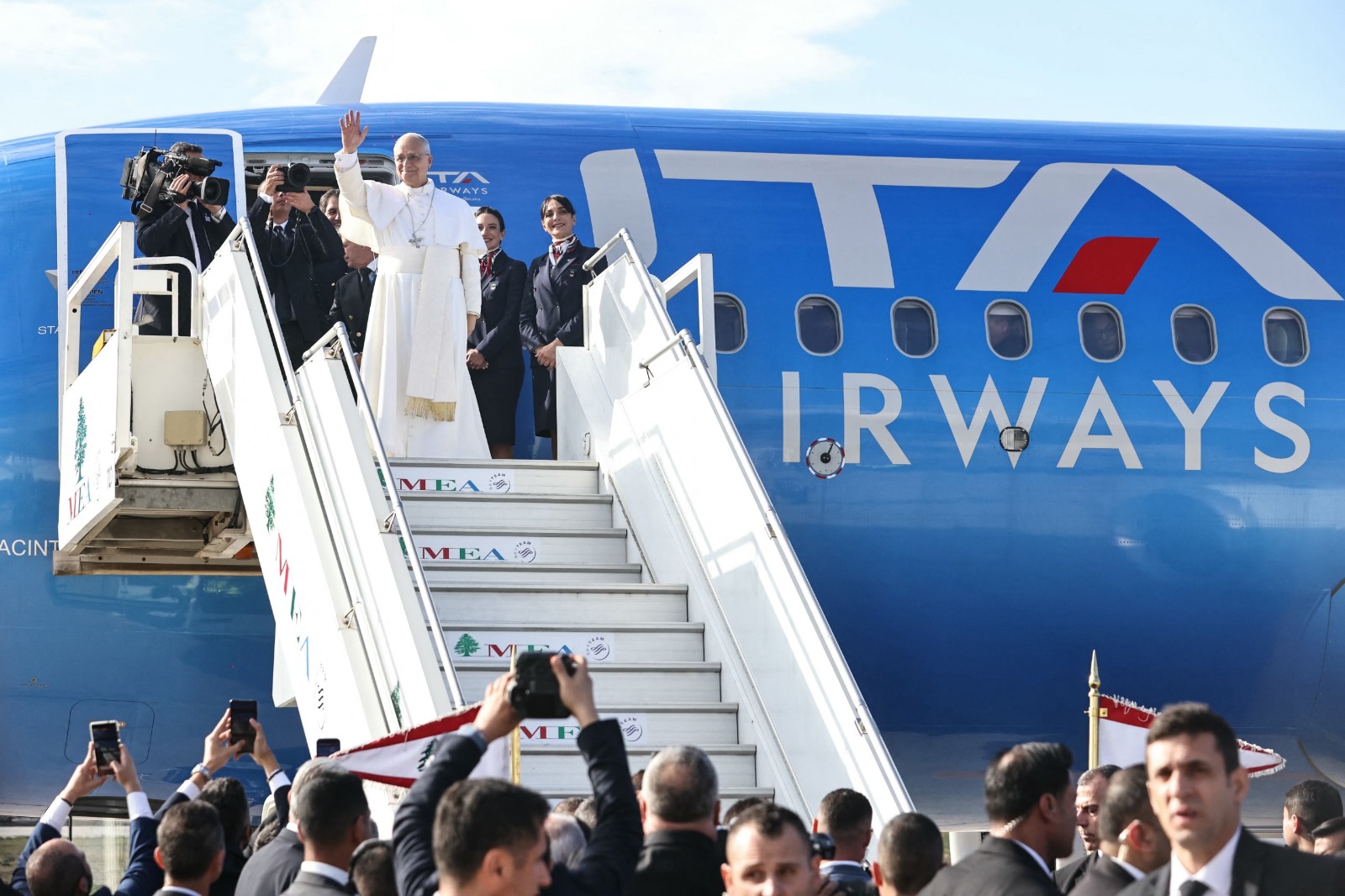
“I express my gratitude to the Lord for these few days spent among you, and I carry your sufferings and your hopes in my heart. Let us work together for the future and hope that the entire Middle East may unite in this spirit of fraternity and commitment to peace,” he said in a final farewell on the tarmac of Beirut Rafic Hariri Airport on Tuesday afternoon. 

(Credit: Ibrahim Amro/AFP)

“I express my gratitude to the Lord for these few days spent among you, and I carry your sufferings and your hopes in my heart. Let us work together for the future and hope that the entire Middle East may unite in this spirit of fraternity and commitment to peace,” he said in a final farewell on the tarmac of Beirut Rafic Hariri Airport on Tuesday afternoon. (Credit: Ibrahim Amro/AFP)