



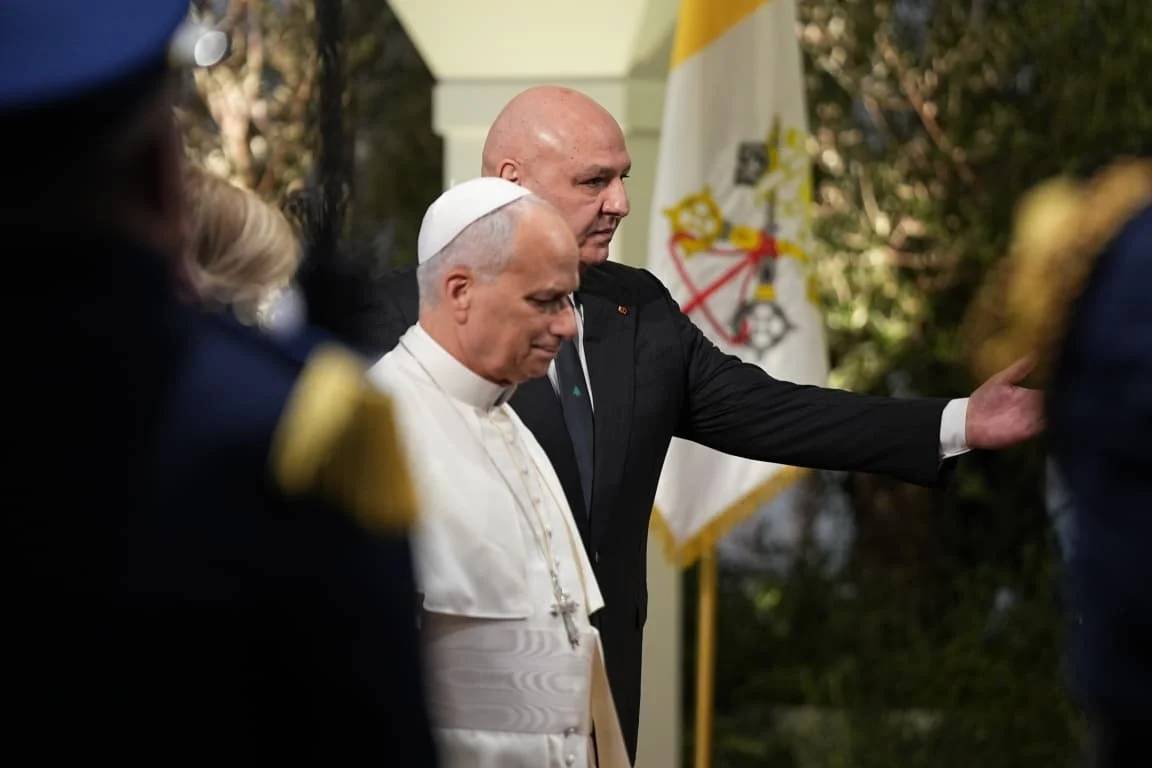
Pope Leo XIV with President Joseph Aoun, Nov. 30, 2025. (Credit: Mohammad Yassin/L'Orient Today)






As Pope Leo XIV concludes his historic visit to Lebanon, the Internal Security Forces (ISF) announced the closure of numerous roads on Tuesday, Dec. 2, to ensure the security of his itinerary.
Residents and commuters should prepare for temporary disruptions on major thoroughfares, from the winding roads of Harissa to the bustling streets of Beirut, as the country welcomes the head of the Catholic Church.
Here are the expected road closure times for Tuesday:
Tuesday morning:
From 8:10 a.m. to 8:30 a.m., the road connecting the Apostolic Nunciature in Harissa to the Hospital of the Cross – Bkennaya will be closed on the following route:
Harissa road descent – Jounieh highway – Zekrit intersection – Nahr el-Kalb – Le Royal Bridge in Dbayé – Jal el-Dib intersection (Glace Bachir) – Lebanese University intersection – Ascent to Byakout – Holy Cross Hospital.
From 9:15 a.m. to 10:30 a.m., the road connecting the Hospital of the Cross – Bkennaya to the port of Beirut and the seafront will be closed on the following route:
Descent from the Hospital of the Cross – Jal el-Dib – La Quarantaine (eastbound lane) – Fire station intersection towards the port of Beirut – Port road – Seafront.
From 12:45 p.m. to 1:15 p.m., the road connecting the seafront to Beirut airport will be closed on the following route:
Seafront road – Salim Salam Bridge – Ziad Rahbani Avenue – Airport.
The eastbound lane between the Port of Beirut and the Fouad Chehab Complex will also be closed from 7:30 a.m. to 9:30 a.m., with a partial reopening between Jal al-Dib and the Fouad Chehab Complex from 9 a.m., the ISF said.
For the Tuesday afternoon mass
The most anticipated event will be the grand mass to be held Tuesday on Beirut’s waterfront, with hundreds of thousands expected to attend. Businesses and roadways in downtown will be closed, as will main routes into the capital, for several hours. Shuttles are being organized from certain strategic locations to transport the people from multiple regions. These details were also provided Tuesday during the press conference.
You can find everything you need to know to participate in the mass by clicking here.
Emergency numbers
A series of numbers to call in the event of problems have been made available to the Lebanese public for all three days of the visit, in addition to the traditional emergency numbers for the Lebanese Red Cross (tel.: 140), the Internal Security Forces (tel.: 112), and Civil Defense (tel.: 125).
You can find them here, in our article dedicated to security measures planned for the visit.
To ease communication at different high-traffic points during the visit, such as in Annaya, Bkirki, and especially in downtown Beirut for Tuesday’s mass, the country’s main mobile operators, Touch and Alpha, have announced a set of measures to ensure optimal connectivity.
