


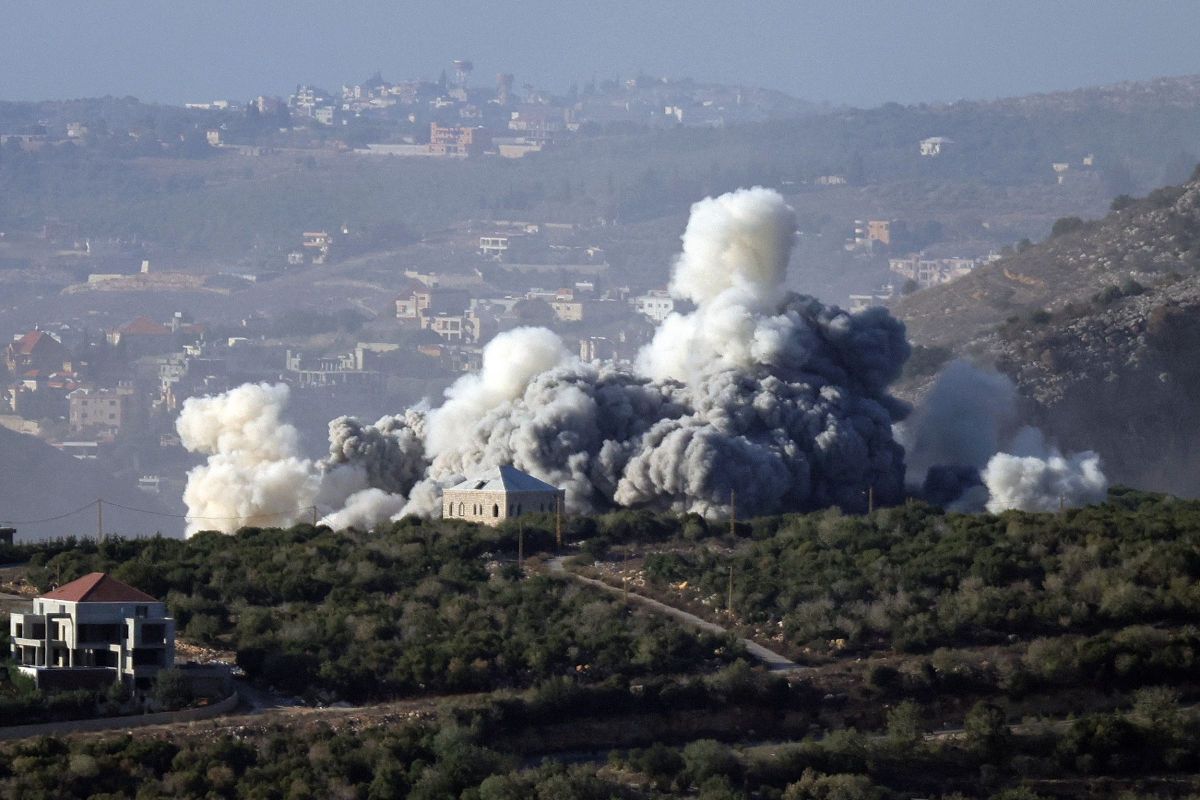
Smoke rises from the site of an Israeli airstrike that targeted the Lebanese village of Mahmoudieh, in the Jezzine district of South Lebanon, on Nov. 27, 2025. (Credit: AFP)






BEIRUT — The arrival of Pope Leo XIV in Beirut on Sunday afternoon did little to halt Israeli military attacks on Lebanon’s south.
As the pontiff’s plane touched down, drone and artillery strikes struck multiple areas and vehicles near the border, according to our regional correspondent.
While welcoming ceremonies unfolded at Beirut airport, artillery fire and flares targeted the outskirts of Beit Lif in the Sour, causing no casualties. Gunfire was also reported near the border village of Dhaira in the Sour district.
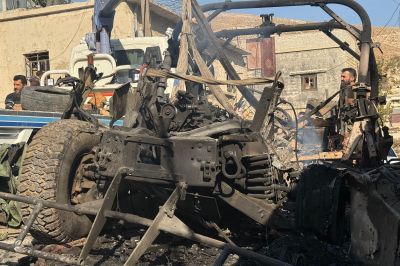
Earlier, an Israeli drone targeted a bulldozer in the village of Shebaa, (Hasbaya) on Sunday morning, causing material damage. Another drone fired three stun grenades on Naqoura (Sour), one of them targeting the town's fishing port, and another in Maroun al-Ras in the Bint Jbeil district. The Israeli air force also conducted intense flights over Beirut and its suburbs in the late afternoon.
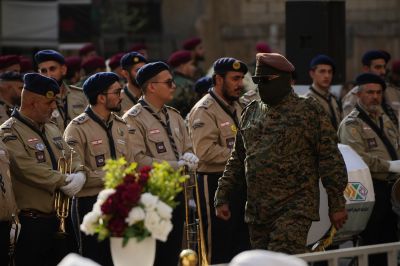
Hezbollah and Amal officials condemned the strikes in separate statements. Hezbollah MP Ali Fayad said the attacks “are aimed at forcing Lebanon to fully comply with Israeli conditions or to push the state into a confrontation with the resistance by demanding its disarmament, by force if necessary.” Speaking at a ceremony honoring fighters killed in Mais al-Jabal (Marjsyoun) at the Imam al-Mujtaba compound in Beirut’s southern suburbs, Fayad added that Lebanon “will not give in to any of these demands” and there would be no clash between Hezbollah and the Lebanese Army.
Amal MP Kassem Hashem described the strikes as “the continuation of Israel’s barbaric practices throughout the South,” targeting efforts to remove the remnants of previous aggression. He warned that the attacks revealed “malicious intentions in this region, especially the border localities from Shebaa [Hasbaya] and Arkub [Hasbaya] to Naqoura [Sour].”
Since a ceasefire between Hezbollah and Israel took effect on Nov. 27, 2024, the Israeli military has reportedly violated the agreement more than 12,000 times, including through incursions, airstrikes, artillery fire, destruction of buildings, shootings at civilians, kidnappings, booby-trapped structures and attacks on military posts. Israel says the strikes target reconstruction efforts and attempts to transfer weapons to Hezbollah, which, under the cease-fire, should be fully disarmed.
 The 7 p.m. recap: Houthis advance, government announces counteroffensive; Iran raises stakes; Israeli shells hit close to journalists in south Lebanon
 2 Israeli soldiers injured in 'operational accident,' as army continues attacks in the South