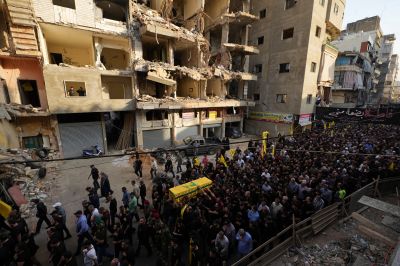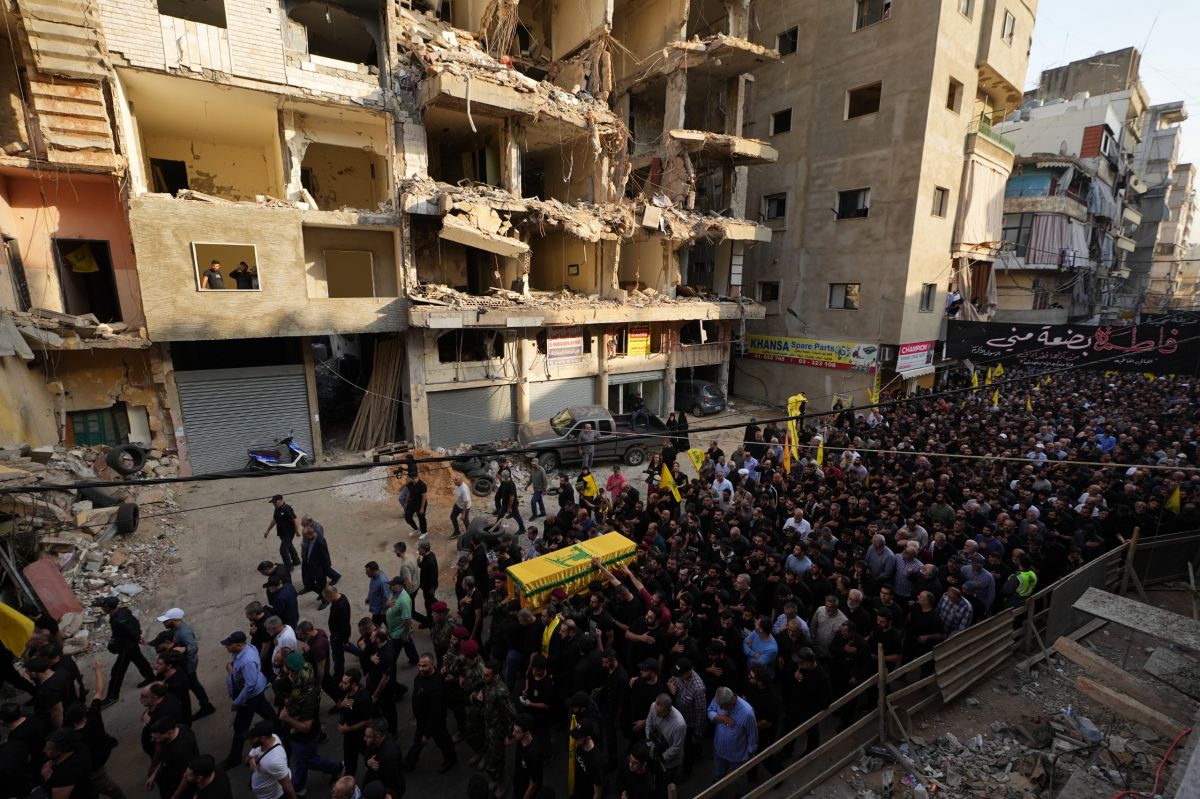
Thousands of people gathered in Ghobeiri for Haytham Ali Tabataba’i's funeral on Nov. 24, 2025. (Credit: Mohammad Yassine/L'Orient-Le Jour)






BEIRUT — Haytham Ali Tabataba’i, the Hezbollah military leader killed Sunday in an Israeli strike, oversaw the reconstruction of the group’s forces, particularly in south Lebanon, according to Arab and Israeli officials cited Monday by the Wall Street Journal.
The conservative New York daily described him as “one of the highest-ranking Hezbollah leaders left after Israel wiped out the group’s senior cadre.”
Officials cited said Tabataba’i directed Hezbollah fighters “ to operate in small cells to better survive a future conflict with Israel” and “helped largely replace the more than 2,500 fighters the group lost during the war.”
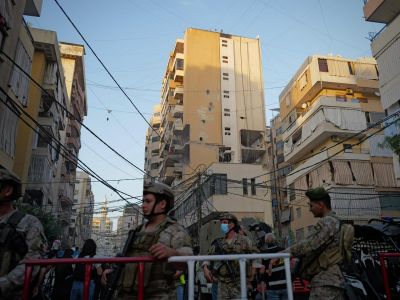
At the time of his death, they said, he had been working to establish a system in which unit commanders would train their potential replacements so that units would not be paralyzed if leaders were killed, according to the WSJ.
His killing is “a message to all the commanders of Hezbollah and the government of Lebanon,” said Yaakov Amidror, a former Israeli national security adviser.
“[The Lebanese government] promised to disarm Hezbollah, and they didn’t. They have to understand that if they don’t do it, Israel will,” said Amidror, now a researcher at the Jewish Institute for National Security of America in Washington.
Israel and the United States accuse the Lebanese state of stalling on disarming Hezbollah. Last week, the U.S. administration canceled Lebanese Army Commander Rodolph Haykal's scheduled meetings in Washington in a show of disapproval.
Missiles fired from an F-15
Tabataba’i was “the head of the whole attempt” to rebuild Hezbollah’s stockpiles of rockets, anti-tank missiles and artillery, according to Amidror. Hezbollah “tried to smuggle from Syria, tried to rebuild facilities in Lebanon and train new recruits. All of that was under his command and control.”
Tabataba’i survived an Israeli strike in Syria’s Quneitra province in January 2015, as Syrian media recalled Sunday. Israeli outlets also reported he survived two assassination attempts during last year's war.
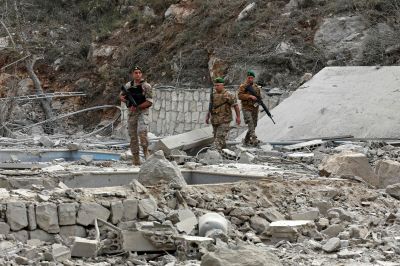
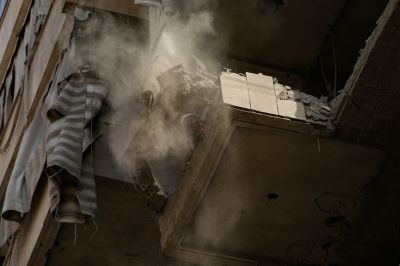
Sunday’s fatal strike was carried out with missiles launched from an F-15 fighter jet, an Israeli military official told the WSJ. At the scene in Haret Hreik, a military official told L'Orient Today's reporters shortly after the blast that it was a hit from a fighter jet.
The next day, a Hezbollah source told L'Orient Today that a drone dropped the bombs. “There were several drones in the air, but we do not know how many took part,” the source said, adding that U.S.-made guided GBU bombs were used in six strikes.
‘Reconsider the strategy of patience’
Former commander-in-chief of the Iranian Revolutionary Guard Corps (IRGC) Mohsen Rezaei urged Hezbollah to reconsider its policy of “strategic patience,” saying the assassination of “resistance leaders will not affect the frontline, but will create a new wave of fighters,” noting the group has carried out only one attack since the cease-fire with Israel came into effect on Nov. 27, 2024.
Since then, daily Israeli strikes continue in Lebanon, and Hezbollah says it is deferring to the Lebanese state while insisting it will not abandon its arsenal north of the Litani River, despite the Cabinet’s Aug. 5 decision to disarm all militias.
Hezbollah Secretary-General Naim Qassem is expected to speak on Friday at 6 p.m. about Tabataba’i’s killing. The party’s statement Sunday night confirming Tabataba’i’s death did not contain threats of retaliation.