


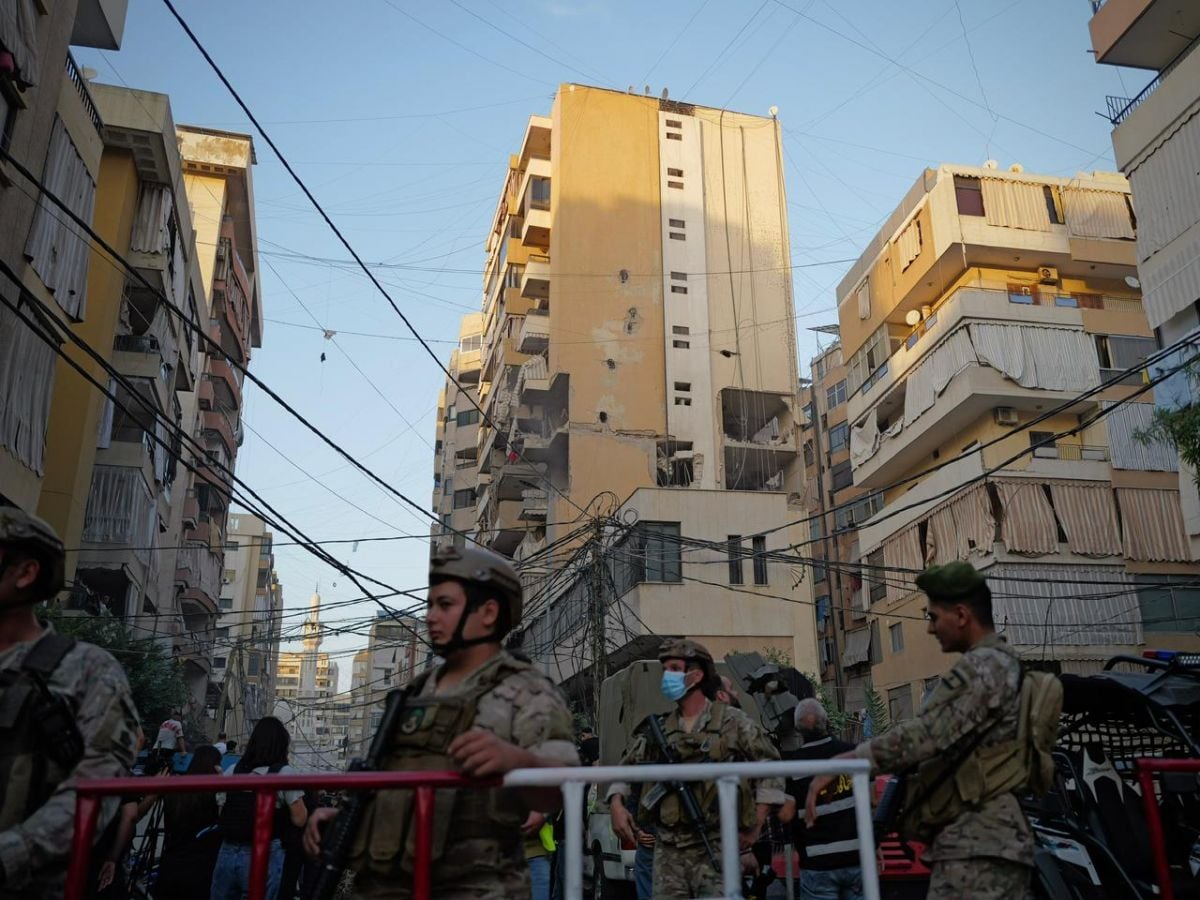
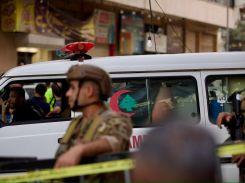
Soldiers of the Lebanese Army are blocking the perimeter near the targeted building in the southern suburbs of Beirut, Sunday, Nov. 23, 2025. (Credit: Matthieu Karam/L'Orient-Le Jour)






The intensification of Israeli strikes on Lebanon reached a new level Sunday, when an Israeli strike hit a building in the heart of Beirut’s southern suburbs — a first since June 6, 2025.
“I shook with fear when I heard the strike,” said Lea, an 18-year-old who had just left her apartment, speaking to L'Orient Today's on-site reporter near the targeted neighborhood. “We heard gunfire right after. We saw many ambulances. Apparently, there are many wounded and martyrs.”
The strike hit a residential area of Haret Hreik, killing at least five people and injuring 28, according to an early-evening toll from the Health Ministry. By later in the evening, the death toll had risen to six, according to L'Orient Today's correspondent.
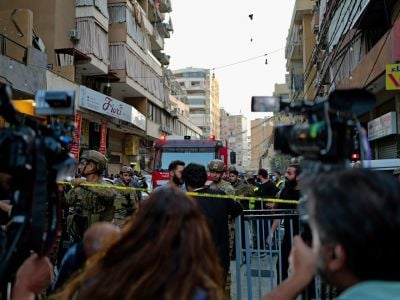
Victims were taken to several hospitals in the southern suburbs, including Rassoul al-Aazam Hospital, Bahman Hospital and Sahel Hospital.
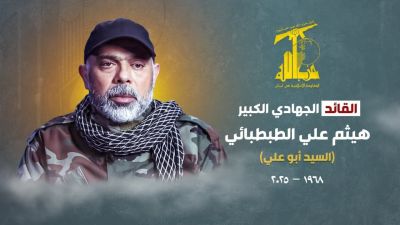
The Israeli army quickly claimed responsibility, claiming to have targeted Haytham Ali Tabataba'i, a commander in Hezbollah’s elite al-Radwan force and a leading figure in the group’s hardline wing. Hezbollah confirmed his death hours later in a statement.
“Israel will continue to act against those who threaten it,” Israeli Defense Minister Israel Katz said shortly after the strike. Later in the evening, Prime Minister Benjamin Netanyahu echoed the message, calling Tabataba'i “one of Hezbollah’s most dangerous strategists.” He urged the Lebanese government to “honor its commitment to disarm Hezbollah,” saying it was the only path to “a better Lebanon” and “secure, neighborly relations between Israel and Lebanon.”
Without detailing the strike, the Israeli army published a biography of Tabataba'i, saying he had served as Hezbollah chief of staff since the end of the last war with Israel, which formally concluded with a cease-fire in late November 2024. He “oversaw the group’s reconstruction efforts, supervised most of its units and worked on their rehabilitation ahead of a confrontation with Israel,” according to Adraee.
On-site, scenes familiar to residents of the southern suburbs unfolded. The Lebanese Army set up a security perimeter, while dozens of Hezbollah personnel gathered under the damaged building.
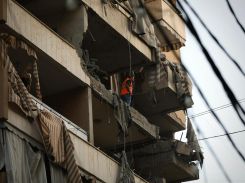
Reporters’ cameras focused on the building’s facade, pocked with missile impacts. Three of its 10 floors were struck.
It was unclear whether the attack was carried out by a drone or a fighter jet — sources on the ground differed — though an army official said an unexploded missile remained.
‘There’s a risk of war’
“Look, there it is,” a man in the crowd said, pointing to an Israeli drone flying low overhead. In a nearby building lobby, resident Ali Kobeissi, 62, recounted hearing aircraft before the strike. “I was watching TV. We jumped out of our chairs,” he said.
His wife and three-year-old grandson, who were inside at the time, later left. “I’ll stay here, but I want to see what happens before my wife comes home.”
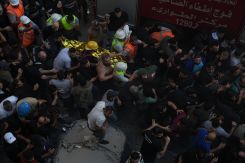
Ambulances stood by as an excavator began clearing debris. Soldiers tried to keep onlookers outside the perimeter. “Let us work!” one soldier shouted at a young man.
Not far away, Fatima* had no news of her aunt, who lives across from the targeted building. She vented her anger at the Lebanese state, which she accused of being “incapable of protecting us.”
“Let the state remove the [Israeli] drone from the sky and the Israeli army from the South before demanding Hezbollah’s disarmament,” said Fatima, whose brother was killed by an Israeli drone two months earlier.
Hours before the Israeli military confirmed Tabataba'i’s killing, many residents doubted the claim. “It’s just talk,” said a young man watching the scene.
“I don’t believe it,” said another resident who had just returned. His family had already left the southern suburbs.
Moments later, rescuers carried out a body as bystanders gathered around.
On the road, a young man on a scooter said the “situation has calmed down,” before adding, “But there’s a risk of war.”
Outside Bahman Hospital, Mahdi*, his head and foot bandaged, sat on the curb with friends. He had been drinking coffee and smoking on his balcony when the strike hit his neighborhood.
“I didn’t hear anything before the strike,” the 25-year-old said. “I felt the first hit, then the second... At first you feel nothing, and then suddenly you’re in total chaos.” He got his brother and sister out of the building before being brought to the hospital. “We expected a strike... We’re still living the war. It never ended.”
*Names have been changed at the request of those interviewed.
Reporting by Lyana Alameddine.