







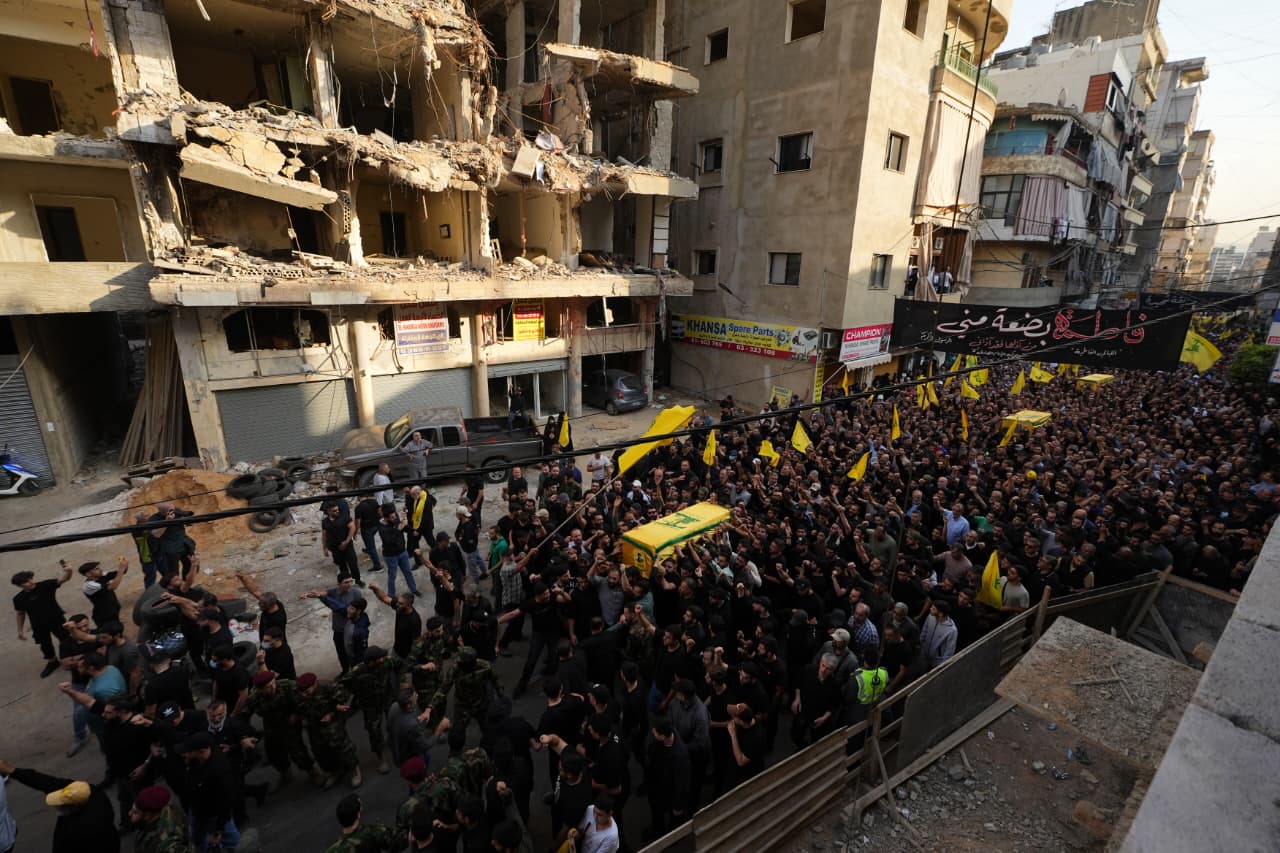
The funeral procession, seen from the balcony of an apartment in the southern suburbs of Beirut on Nov. 24, 2025. (Credit: Mohammad Yassine/L'Orient-Le Jour)






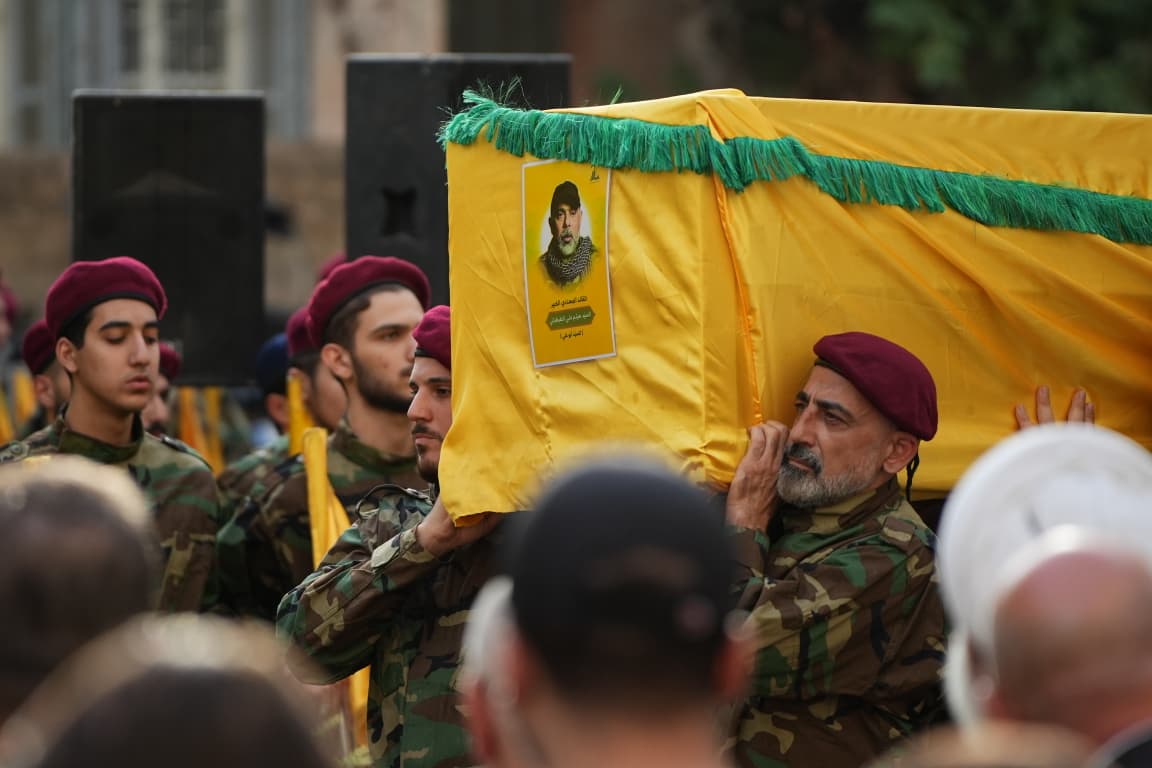
BEIRUT — The funeral organized by Hezbollah for its former chief of staff, Haytham Ali Tabataba'i, killed Sunday by an Israeli strike in Beirut’s southern suburbs, began around 2 p.m., according to our reporter on the ground.
Announced on Sunday, when the party confirmed the death of its number two, the funeral is being held in the Ghobeiri district and has brought together several hundred people.
Two other people killed in Sunday's Israeli strikes are being buried at the same time, our reporter adds.
Tabataba'i, until now largely unknown to the general public in Lebanon, is the highest-ranking Hezbollah official killed since the end, a year ago, of the deadly war between Hezbollah and Israel.
His assassination comes as Israel has recently intensified its strikes on Lebanese territory despite the cease-fire, saying it is targeting Hezbollah members or infrastructure it accuses of rearming, something the movement denies.
The Lebanese government is under heavy U.S. pressure to force Hezbollah to disarm in accordance with the cease-fire agreement, something the Islamist movement has so far refused to do.
After Tabataba'i's assassination, Israeli Prime Minister Benjamin Netanyahu said Israel "will not allow Hezbollah to rebuild its strength" and called on the Lebanese government to "honor its commitment to disarm Hezbollah."
Hezbollah’s options now appear limited: the movement has emerged greatly weakened from the war and has lost its supply route through Syria since the fall of Bashar al-Assad last December.
Alongside the question of disarmament, Washington is also pushing Beirut to cut off Iranian funding. Tehran, Hezbollah’s main ally, on Monday condemned the "cowardly assassination."
The cease-fire concluded on Nov. 27, 2024, between Hezbollah and Israel is violated almost daily by Israeli strikes on Lebanese territory. Tel Aviv claims these attacks are in response to violations by Hezbollah, which has not disarmed.
At the request of the government, the army has submitted a plan to the government in which it commits to accomplishing the enormous task of disarmament by year’s end, before proceeding step by step in other areas of Lebanon.
Hezbollah is firmly opposed to this. The army maintains that the process is underway, but the United States and Israel accuse the Lebanese authorities of procrastinating.
According to the Health Ministry, more than 330 people have been killed in Lebanon and 945 injured since the cease-fire came into effect.

