One of the winners, Joelle al-Haber. Photo sent by OIF.






Seven Lebanese awardees were selected through the #CapInnovation call for projects, part of a solidarity plan for Lebanon led by the secretary-general of La Francophonie. The initiative is under the international Cap Innovation – Creation, Accompaniment, Propulsion program.
The call focused on four themes: education and skills for tomorrow; ecological transition; culture and digital tools; and engagement and social transformation. It was launched by the Organisation internationale de la francophonie (OIF) across all French-speaking countries, reaching the 49 member states and governments of the organization, including Lebanon.
“In collaboration with the Lebanese Ministry of Environment, the OIF is working with civil society to help it benefit from skills development in the fields covered by Cap Innovation,” said Nathalie Méjean Heineman, OIF representative for the Middle East and project coordinator for Cooperation, Media and Civil Society.
Whether products or services, the seven Lebanese winners’ projects offer ecological solutions responding to different community needs. “Lebanese youth have many projects that serve their local communities. Numerous proposals were approved, especially those related to empowering women and supporting income-generating activities. Across the Francophone world, there is a strong need for companies working on environmental and ecological issues,” she added.
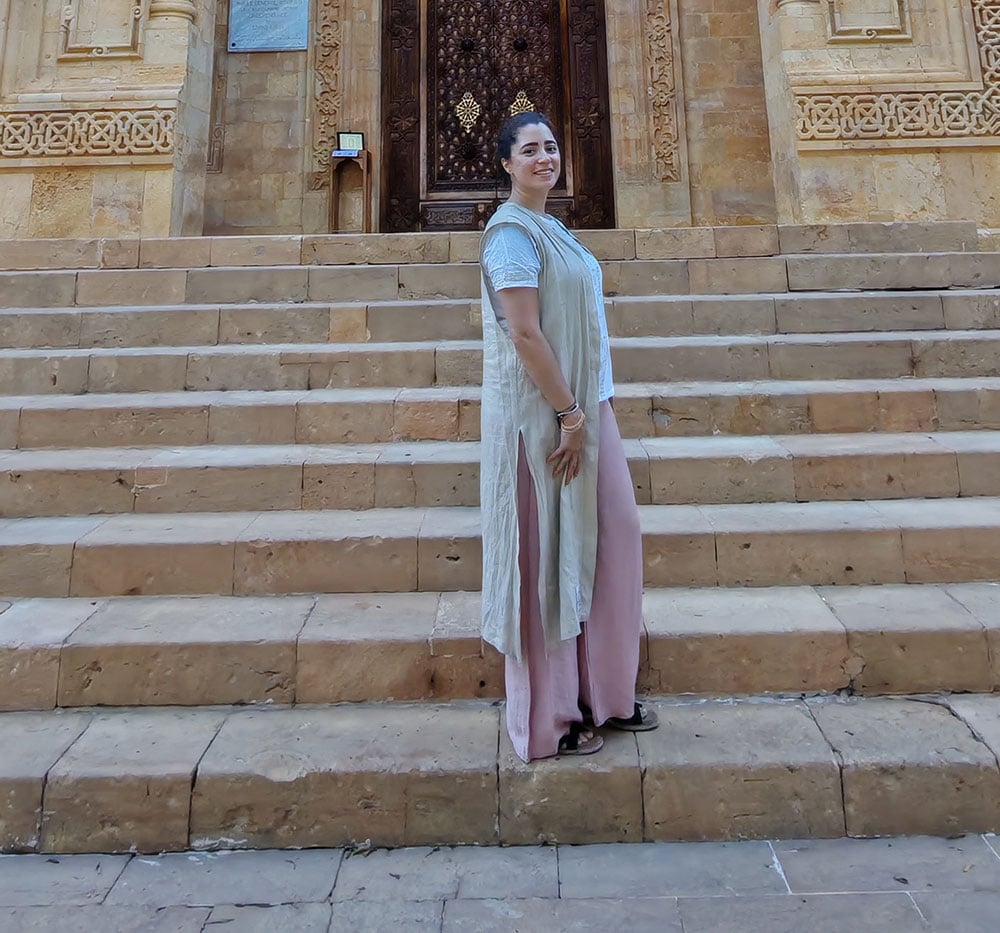
EcoRide for ecological and sustainable tourism
For winner Rouba Houssami, who holds a master’s degree in tourism and hospitality, the lack of eco-friendly mobility options, “limited access to sustainable local experiences, and the need to promote Beirut and rural regions” pushed her to launch EcoRide — an electric bike capable of carrying several people and combining “ecology, tourism and inclusion.”
Passionate about social and environmental impact, she said she has “always loved discovering, connecting people and creating ties with local areas.” EcoRide, she said, was born from a desire to promote responsible travel and social purpose.
In the short term, she aims to launch pilot circuits and test user engagement. Long term, she hopes to expand EcoRide to more regions, create local jobs and raise awareness about ecomobility.
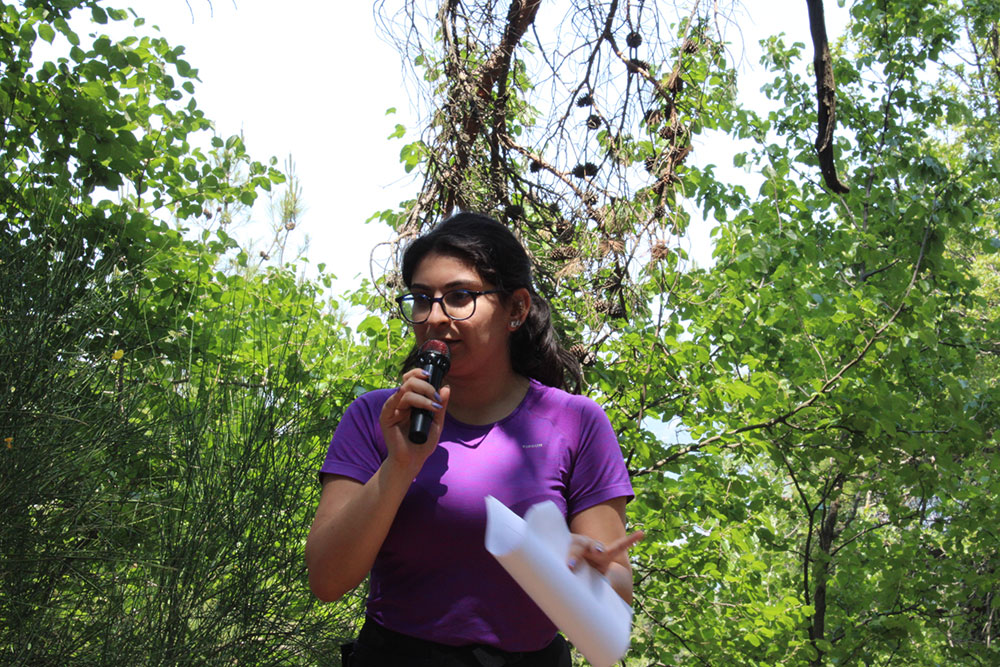
Nothing is lost, everything is transformed — art versus waste
Meanwhile, Marilyne al-Haddad, a researcher and project management assistant at HM39 Club, responded to “interconnected challenges” affecting Lebanon’s environment, economy and social fabric with artistic workshops that repurpose waste materials.
“The project helps protect the environment while improving the community’s financial situation and mental well-being,” she said. Inspired since adolescence by a desire to protect nature, she later realized that “environmental protection leads to sustainable development only when supported by a social approach.”
Seeking a sustainable model, she designed her project to generate both environmental and social impact. Her workshops teach women, youth and people with disabilities to transform waste into sellable artworks or reusable materials to cut daily costs.
Long term, she hopes to build “a community able to combine environmental protection, social inclusion and economic sustainability,” while promoting a recycling culture and green entrepreneurship. True to her project’s name, she said, “It is up to us to decide how we want to transform our reality: into opportunity, hope and lasting impact.”
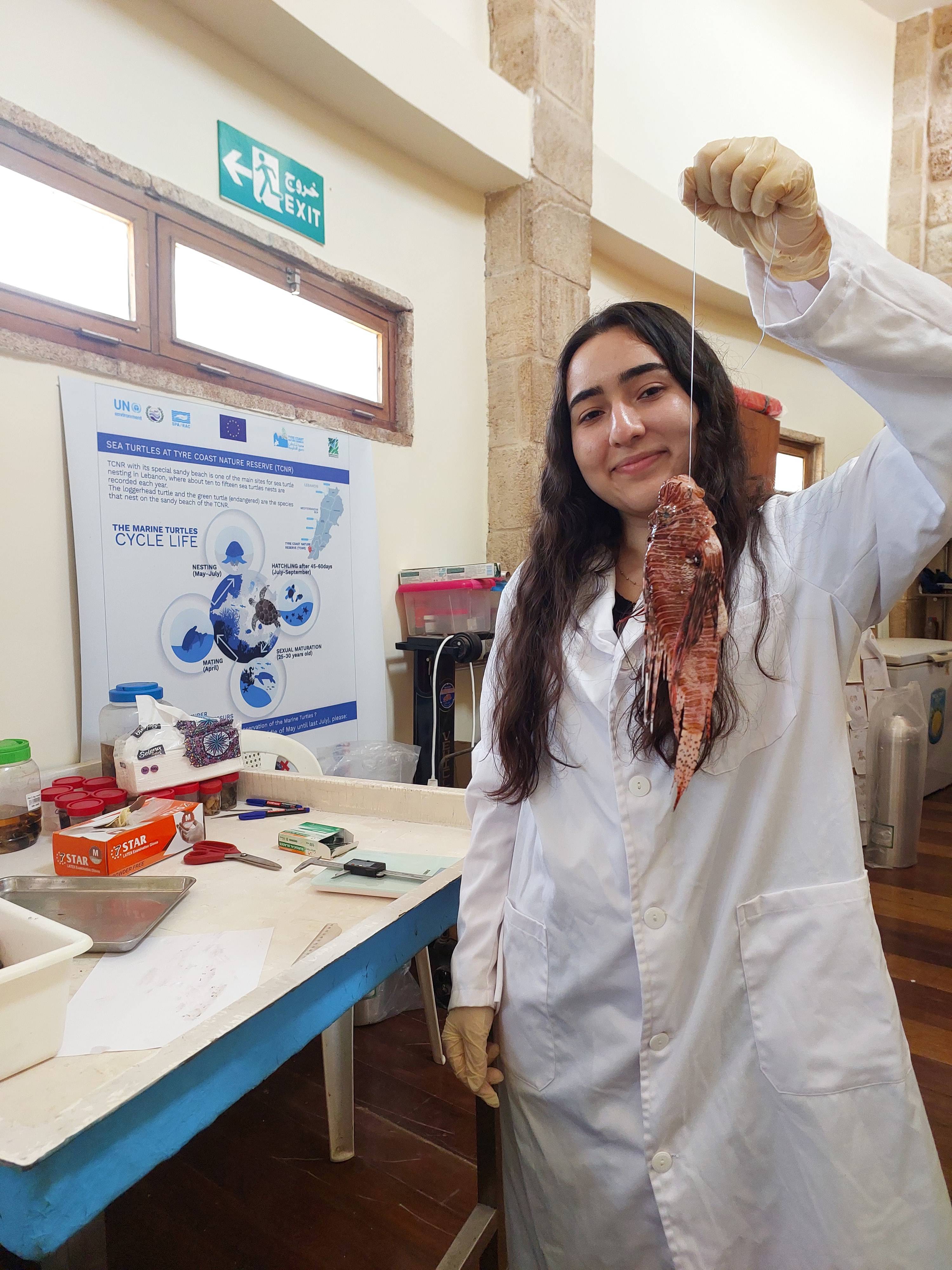
AlgaFilter: Algae to purify the air
Rebecca Liane, finishing her master’s in environmental engineering at the Lebanese University, developed an algae-based biofilter called AlgaFilter to treat air pollution.
She said the project addresses “the urgent need to improve air quality in Lebanon and protect citizens’ health.” Air pollution contributes to growing respiratory and public health concerns across the country. The natural system uses algae’s depolluting abilities to capture carbon dioxide, fine particles and other pollutants while releasing oxygen.
Passionate about marine ecosystems, she said she was motivated by the idea of a sea-based solution to an air-quality problem. Her goal is to develop and test a functional prototype, then deploy the system in public and industrial spaces to improve air quality and protect public health.
Jar: Reinventing traditional local products
In Lebanon’s traditional agri-food sector, Joelle al-Haber — a biochemistry graduate from the Lebanese University with a master’s in chemical process engineering from CNAM — built her project, Jar, around enhancing traditional, nutrient-rich jams by improving “both the content and the container.”
She noticed limited options for innovative or healthy culinary products, as well as barriers preventing rural women — experts in traditional foods — from accessing markets despite their expertise.
Her project aims to highlight these women’s skills and connect them with new opportunities while meeting consumer needs. Her long-term goal is to create “an authentic local brand, explore other artisanal products and expand internationally.”
Training as a springboard for developing projects
Other selected Lebanese projects include:
• EcoTank by Hassan Malkanany, a rainwater collection and storage system with solar UV disinfection for safe drinking water.
• Cideria by Joe Fakhry, supporting traditional vineyard production and local farmers facing climate impacts.
• La Science a la solution by Edward Sfeir, which trains youth in solutions-focused science journalism and highlights local green, job-creating initiatives through the Lebanese science media outlet “961 Scientia.”
In September, the seven winners participated in the #CapInnovation mentorship program, which included online training in communication and influence, sales and marketing, finance and accounting, and human resources. The program helped them structure their projects and prepare concrete deliverables showing their progress. These include a 90-second video pitch, a pitch deck to present their initiative and proof of company creation or documentation of steps taken.
“They will soon enter a more intensive support phase to refine their strategy and strengthen their initiatives’ potential, with mentoring to be set up in the coming weeks,” Méjean Heineman said.