


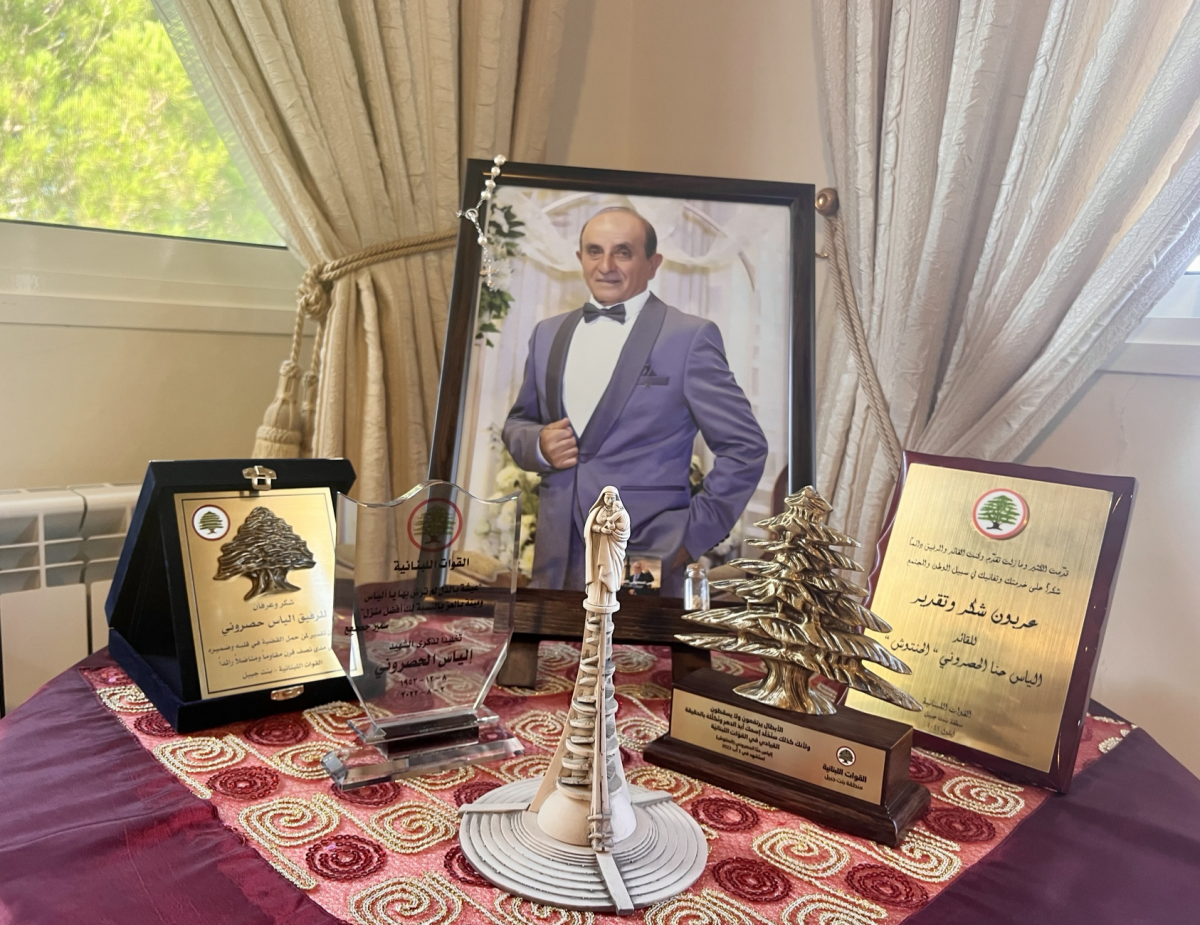
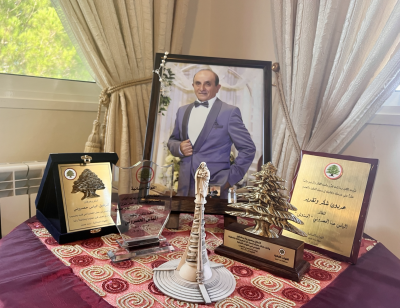
In Elias Hasrouni's living room in Ain Ibl, South Lebanon, on Sept. 29, 2023. (Archive photo: Lyana Alameddine/L'Orient Today)






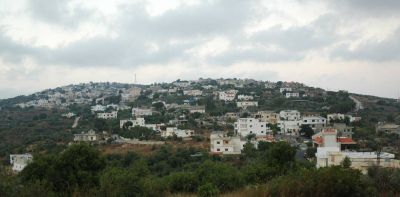
The Israeli army on Friday pointed a finger at a special Hezbollah unit for the assassination of former Lebanese Forces (LF) official Elias Hasrouni in August 2023. Israel alleges that Hezbollah spread "rumors" claiming "he had been killed in a car accident" when he died in his village of Ain Ibl, (Bint Jbeil), an area under Hezbollah influence. The case sparked tensions in Lebanon, two months before the start of the war in Gaza and the conflict between Hezbollah and Israel.
Hasrouni, 72, was found dead in his car on Aug. 2 in the predominantly Christian village. He was initially declared dead from "suffocation" following a car accident, according to the coroner’s report, before the LF and Kataeb raised the possibility of an assassination and accused Hezbollah, after a 40-second piece of surveillance footage showing his abduction was leaked.
"On the night of Aug. 1, 2023, members of Hezbollah's Unit 121 ambushed Hasrouni on a road near his home in Ain Ibl, southern Lebanon, where they kidnapped and killed him by poisoning after breaking his ribs," said Israeli army Arabic-language spokesperson Avichay Adraee on his X account, though he provided no evidence for these accusations. "Then, to make it look like he had veered off the road and died in an accident, they put his body back in the car, crashed it into a tree and left it inside, in a ditch by the roadside," the officer continued.
Contacted, a Hezbollah source who requested anonymity denounced the claim as a "lie" and called for reliance on the "investigation of the Lebanese state."
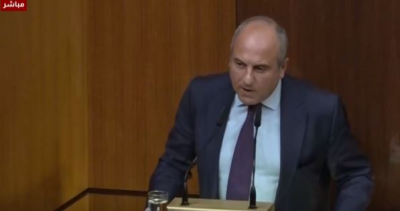
For his part, LF spokesman Charles Jabbour told L'Orient-Le Jour that his party "is certain that Hezbollah assassinated the martyr Elias Hasrouni." However, "the investigations have not yet yielded any results, because Hezbollah is obstructing the state" in its inquiries, he alleged. "Elias Hasrouni is a Lebanese citizen, and the Lebanese state is therefore the authority enabled to say whether what was mentioned by the Israeli army is true or not, or at least to ascertain it," Jabbour continued. "We have repeatedly asked the relevant state authorities to reveal the circumstances of the assassination," he also recalled.
The investigation, opened on Aug. 9, two days after a complaint was filed by the victim’s son, Charbel Hasrouni, has stalled since September 2023. LF leader Samir Geagea had said that the authorities informed his party they were "no longer able to pursue the investigation... because they are being prevented from doing so." Then-Interior Minister Bassam Mawlawi, for his part, assured that "the investigation would continue." Since then, there have been no developments.
Hezbollah's Unit 121
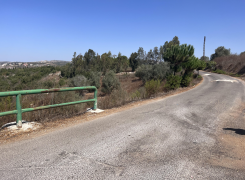
In the surveillance footage, an SUV can be seen abruptly stopping in front of Hasrouni's car, 400 meters from his home, while another vehicle follows him to block him from reversing. Men get out of their vehicle, open the door of the ambushed car, and one of them takes the wheel as the others prepare to leave. Hasrouni’s body was found 1.8 kilometers away, on a hill near his car, 40 minutes after the abduction.
According to the Israeli army, Hezbollah's Unit 121, a "surveillance and special operations unit" and the party's "internal security arm," carried out this assassination, as well as that of other figures "who oppose Hezbollah and its activity," including "former Lebanese Prime Minister Rafik Hariri" (assassinated Feb. 14, 2005). "The unit's leader, Salim Ayyash, was convicted in 2020 by the U.N.-backed Special Tribunal for Lebanon (STL) for heading the team that carried out Hariri's assassination," wrote Adraee.
In its final verdict in 2022, the STL indicted four Hezbollah members, including Salim Ayyash, for Hariri's assassination.
"Despite the blow Hezbollah suffered during the war, it is still trying to sow chaos in Lebanon and rebuild its strength, using Unit 121 and other tools. The Lebanese people, who aspire to stability and prosperity, are fully aware of the need to rid themselves of this disintegrated Iranian arm, which has led the country into senseless wars, spies on the population, and assassinates opponents," concluded the Israeli army statement.
Hezbollah emerged greatly weakened, both militarily and internally, from its last war with Israel, which began the day after Oct. 7. Since the cease-fire of Nov. 27, 2024, between Hezbollah and Israel, the Israeli army has continued its deadly strikes on Lebanon, saying it is preventing Hezbollah from rebuilding its forces.
In the meantime, Israeli and international pressure is mounting for the group’s disarmament, which refuses to give up its weapons across Lebanese territory. Lebanese authorities say they have started this process south of the Litani River, while the threat of a new Israeli war hangs over Lebanon.
This article originally appeared in French in L'Orient-Le Jour.

 7 p.m. recap: 1 person killed near border with Lebanon; 200 kilos of explosives carried by mules; Riyadh shuts its airspace