






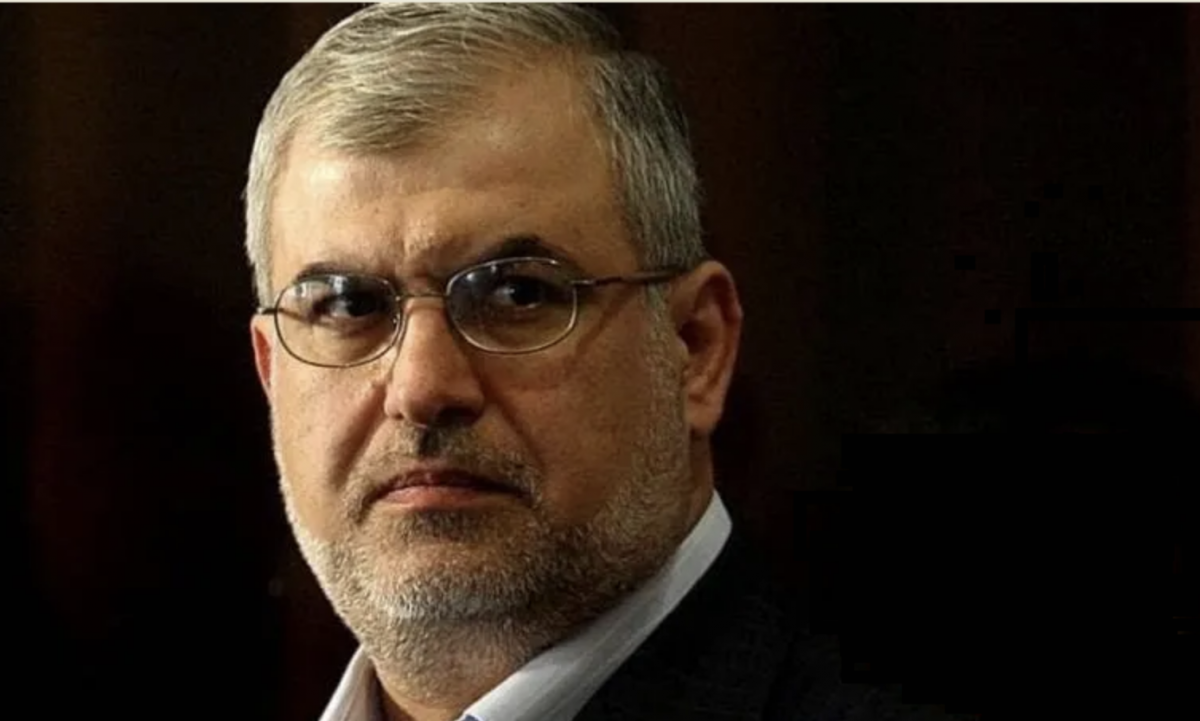
The head of Hezbollah's parliamentary bloc, Mohammad Raad. (Credit: NNA).






BEIRUT — Hezbollah's "Loyalty to the resistance" parliamentary bloc condemned on Thursday the American "attempts to tighten the financial blockade on Lebanon with the aim of preventing reconstruction", adding that these attempts "fall within the framework of controlling the operation of the Lebanese financial sector."
“The U.S. attempts to tighten the financial blockade on Lebanon to prevent reconstruction and blackmail its people and state which were recently advanced by a U.S. Treasury Department delegation through their impudent dictates of measures complementing Israel’s war on our country, are condemned and rejected", reads the statement relayed by the state-run National News Agency.
U.S. Undersecretary of the Treasury for Terrorism and Financial Intelligence John Hurley accompanied by a delegation that specializes in sanctions and counterterrorism visited Lebanon late last week to discuss ways to cut off Hezbollah’s funding sources.
"These attempts fall within the framework of imposing financial guardianship and controlling the operation of the financial sector, both public and private, without justification. Any compliance with this guardianship constitutes an abandonment of sovereignty, a violation of the constitution and laws, and a threat to stability," Hezbollah's parliamentary bloc added.
'Local promoters of the enemy's narrative'
Regarding the daily Israeli attacks on Lebanon in violation of the November 2024 cease-fire, the "Loyalty to the resistance" noted that the outcomes of these aggressions are "being exploited by some local promoters of the enemy’s narrative and threats." It added that the "top national priority today must be for the state to assume its responsibility to protect its citizens."
"This situation requires ... that every possible effort and option be pursued with the cease-fire’s guarantors, and that the supervising committee be compelled to impose measures to enforce the cease-fire and condemn the enemy, restraining its recklessness in accordance with the agreement", the block added. "The blood spilled by the enemy is not cheap and must not be taken lightly, nor should anyone exploit the enemy’s crimes to serve its interests on one hand and achieve despicable sectarian gains on the other, at the expense of Lebanon’s sovereignty and national dignity.”
The supervising committee is composed of France, the U.S., Israel, Lebanon and UNIFIL. While it regularly meets in Naqoura, it has failed to prevent Israeli attacks on Lebanese soil.
Diaspora law
The bloc also commented on the Lebanese cabinet's Nov. 6 decision to send an expedited draft law to Parliament, which would allow the Lebanese diaspora to vote for all 128 MPs in the 2026 parliamentary elections.
In this context, the bloc “strongly rejected repeated attempts to overthrow the formula of coexistence stipulated in the preamble of the constitution by issuing decisions that lack national consensus, the latest being the non-consensual vote on amendments to the electoral law.”
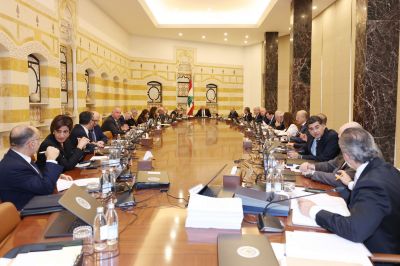
The draft law provides for the suspension of Article 112 of the electoral law, which limits the voting of Lebanese expatriates to only six seats. This issue has resulted in significant division among actors in recent months: Berri and his ally, Hezbollah, as well as the Free Patriotic Movement (FPM), have been calling for the current law to be applied as is. Their opponents, meanwhile, most notably the Lebanese Forces (LF), have been pushing to suspend it.
Hezbollah finally “condemned and denounced the malicious campaign targeting the position of the Speaker of Parliament through incitement and attacks against the national role played by Speaker Nabih Berri, both within his constitutional prerogatives and out of his concern to ensure elections are held on schedule and that the current electoral law is implemented.”

