






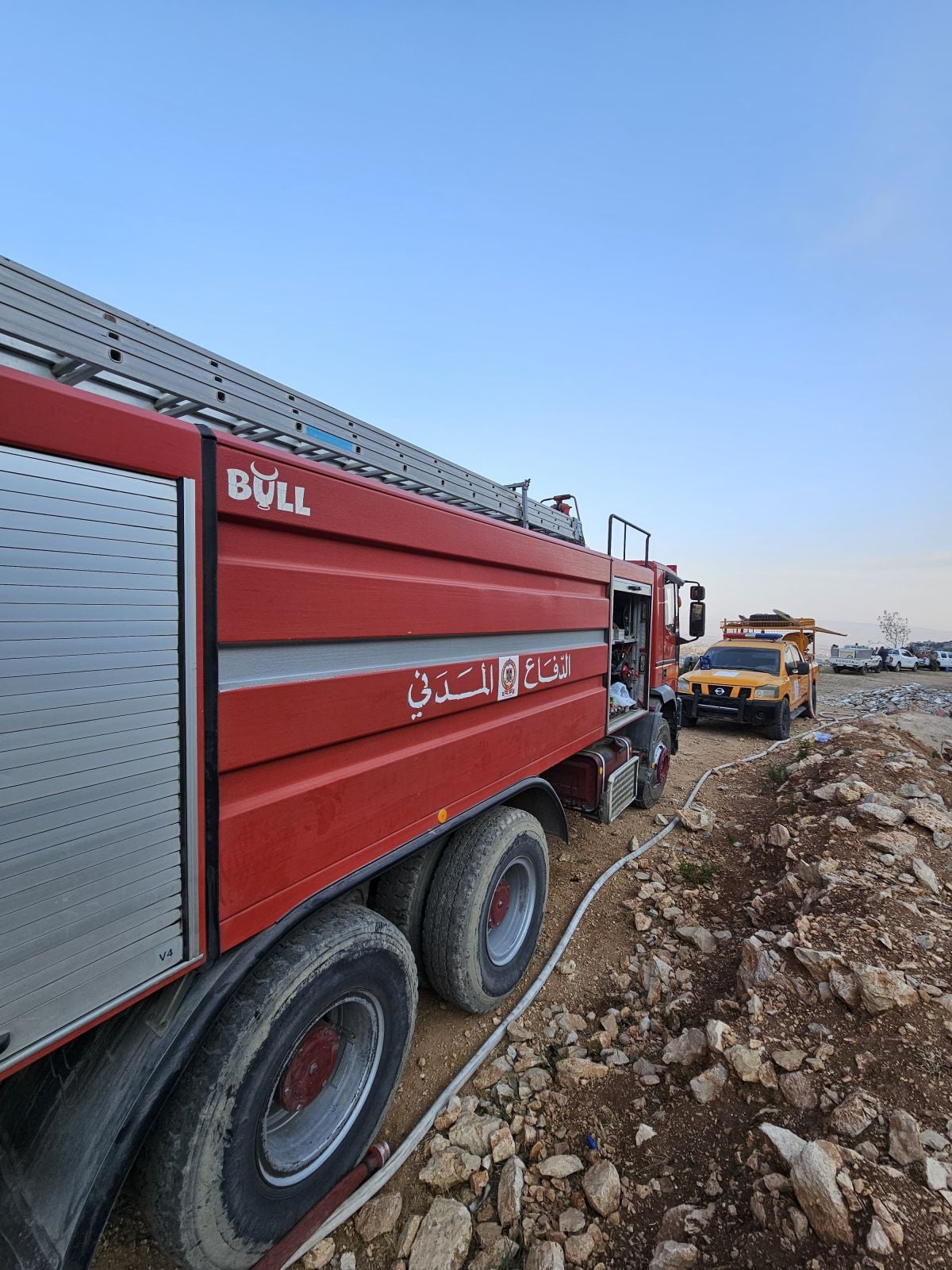
A Civil Defense vehicle fighting the flames in Akkar on Monday. (Credit: Michel Hallak)






Dry and windy weather conditions have contributed to the spread of large fires in southern Lebanon (unrelated to Israeli shelling), according to our correspondent in the South.
One such blaze broke out near the village of Ansar, in the Nabatieh district (close to the Meis Citadel). Firefighters from the Amal Islamic Mission Scouts, al-Rissala, and Civil Defense are working to contain its advance. An appeal has been made to owners of water tanker trucks to help fight the flames.
Another fire erupted in the village of Shehim, in the Chouf (Iqlim al-Kharroub, south of Beirut). The fire spread rapidly and came dangerously close to houses.
Much farther north, in Akkar, flames were still burning at dawn Monday in the Shadra oak forest after wreaking havoc all night, according to our correspondent in the North. Fourteen hours of continuous effort by Civil Defense teams, joined by the Tadbir and Darb Akkar associations and dozens of mobilized civilians, finally contained the fire by noon. Army helicopters could only intervene in the morning, at daylight.
The toll is unfortunately serious: Thousands of oak trees were burned over six hectares, according to a preliminary estimate from Darb Akkar.
In Shadra, efforts to battle the flames were complicated by the fire's location in an area inaccessible to vehicles, with no agricultural roads. The fight was conducted either on foot or using small vehicles belonging to Tadbir and Darb Akkar.
'Very high risk of fires' warning
If the fires have grown so significantly, it's because weather conditions are "extreme," says Georges Mitri, director of the Land and Natural Resources program at the University of Balamand.
"We already issued a warning on Nov. 6 through our 'Fire Lab' to highlight the very high risk of fires, especially in southern Lebanon and Akkar," he recalled in response to questions from L’Orient-Le Jour.
Weather conditions in recent days have been an especially volatile mix: humidity at its lowest, temperatures above seasonal norms and strong, hot, dry winds, he notes. "We are nearing the end of the wildfire season, but the drought is so severe that any risky act [throwing a cigarette butt, lighting a fire in dry grass, etc.] can spark a blaze that is very difficult to stop," the expert explains.
Mitri is thus calling for vigilance until the first rains, forecast at the end of the week. "We'll have to see if these rains are plentiful and bring a lasting rise in humidity, in which case the risk of fire will drop. But if rain is followed by another heat spell, it will only make things worse," he concludes.

