






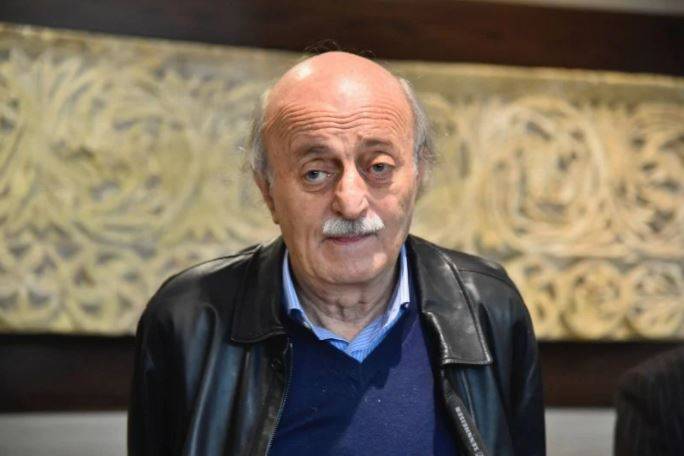
The Druze leader Walid Joumblatt. (Archive photo by Ahmad Azakir)






The former leader of the Progressive Socialist Party (PSP), Walid Joumblatt, on Friday denounced the presence of "Assad regime figures in Lebanon" and called for an end to the "security threat" posed by these members of the now-defunct Syrian regime, during an interview with the Syrian channel Al-Ikhbariya. He also commented on the situation of the Druze in Sweida, Syria, calling for "finding a formula to bring the people of Sweida closer to the Syrian government."
"Some political forces in Lebanon have not understood history and have not realized that Bashar al-Assad and the Baath Party have fallen," Joumblatt remarked, referring to the fall of the former Syrian dictator in December 2024 after Islamist leader Ahmad al-Sharaa took power.
The Druze leader also revealed the presence of "Assad regime figures in Lebanon who are protected by the regime's former allies, hence the importance of security coordination between Lebanon and Syria." "It is necessary to get rid of these individuals, as they pose a threat to both Lebanese and Syrian security," he added.
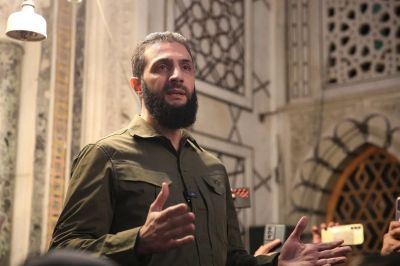
"Security exchange between Lebanon and Syria is necessary, and we want normal relations between the two states while taking into account certain particularities between Lebanon and Syria," Joumblatt said. He added, "Hezbollah was a state within a state, but today, Syria has regained its Arab identity."
Hezbollah fought alongside Assad's forces during the Syrian civil war, but was greatly weakened by the recent war with Israel in 2023/24. The rise to power of al-Sharaa in Damascus has cut off the weapon supply routes via Syria previously used by Hezbollah.
Syrian detainees in Lebanon
Regarding Syrian detainees in Lebanon, Joumblatt called for "a judicial and political settlement in this matter, taking into account that some of them fired on the [Lebanese] Army." Syria is calling for the release of all its citizens detained in Lebanon, and a judicial agreement between the two countries on this subject is being studied.

On the ouster of Assad, Joumblatt said he "was in France at the time of the regime's fall and then called former Prime Minister Saad Hariri to say: 'Allah Akbar' [God is great]."
Regarding the role of the Lebanese Army in southern Lebanon, the Druze leader affirmed that the troops "are doing a tremendous job." He also revealed that his memoirs would be published soon.
Justice in Sweida
Commenting on the situation of the Druze community in Syria, Joumblatt called for "finding a formula that brings the people of Sweida and the Syrian government closer together." "The gap is significant between some residents of Sweida and the government in Damascus," he added, while affirming that he "had fulfilled his humanitarian duty toward this region through the Syrian Red Crescent, in cooperation with the Druze community's Sheikh Aql, Sami Abi al-Mona." "What Sweida needs is investigation, justice, and punishment," he continued.
At the end of July, sectarian violence between Bedouin tribes supported by government forces and Druze factions left more than a thousand dead in Sweida, mostly among the Druze population. Joumblatt has long advocated calm and dialogue among the Druze of southern Syria, and was the first Lebanese political leader to go to Damascus after the fall of the Assad regime, expressing then his support for the new Syrian authorities. He also denounced "a Druze position that is not unified and deep divisions over Israeli intervention and Syria's unity." Shortly after the clashes in Sweida, Israel cast itself as protector of the Druze minority, intensifying pressure on Damascus and increasing its presence on the Golan Heights.

On the centralization of power in Syria, Joumblatt stressed that "Al-Sharaa, his associates, and his foreign minister must use their diplomacy to preserve Syria's unity," specifying that "it is not possible to return to the old centralized regime." "The Syrian government must take advantage of the network of relations it has established with Turkey, Saudi Arabia and Qatar to face the Zionist project that aims to fragment the region in order to control it," he continued.
The Druze leader also said he fears what he calls the "Zionist monster," asking: "Who can deter Israel in Gaza or the West Bank?"