





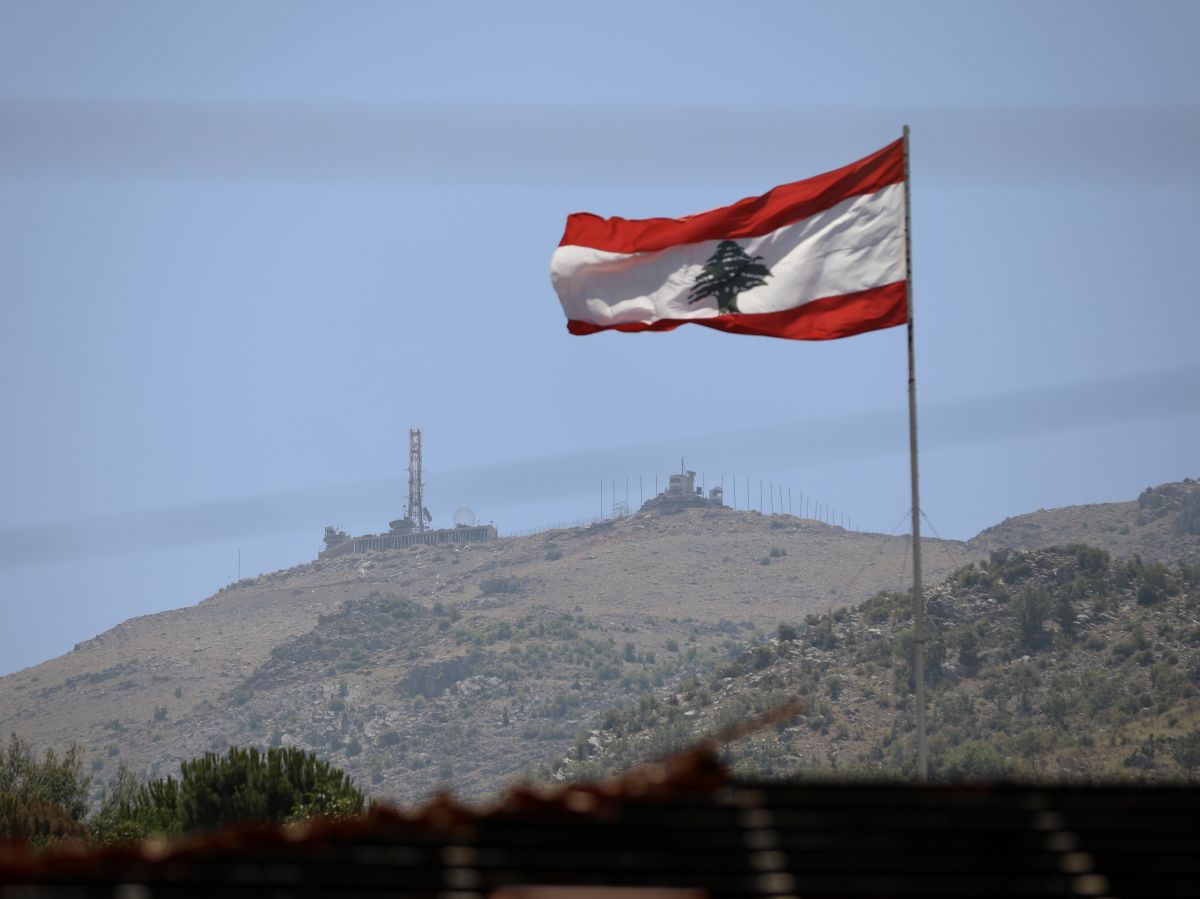
A view of the disputed Shebaa Farms, currently occupied by Israel, and the Ruwaisat al-Alam military site on Lebanese territory occupied by Israeli troops, in July 2025. (Credit: Matthieu Karam/L'Orient Today)






BEIRUT — The concept of direct negotiations between Lebanon and Israel is gaining attention following comments from President Joseph Aoun that such talks would be "necessary" for conflict resolution in the region and from Kataeb party leader Samy Gemayel, who said he thought they'd be "in Lebanon's best interest."
The U.S., taking advantage of the arrival in Beirut of its new ambassador, Michel Issa, is reportedly considering the development of a new "work plan" for Lebanon that includes encouraging direct negotiations with Israel to settle border demarcation and an end to Israeli troop occupation in the South.
Israel continues to attack Lebanon on a daily basis, despite having signed a cease-fire deal in November of last year. Since then, Israel has killed more than 320 people in Lebanon and continues to thwart attempts by southern residents to rebuild their homes or return to their land.
Capitulation to the 'absolute enemy'?
Several figures close to Hezbollah have spoken out against the possibility of opening a dialogue with Israel, arguing that doing so would work only in Israel's favor.
“Now is the time to protect Lebanon from the trap of negotiations that Washington is trying to impose in order to secure Israel’s interests,” Jaafarite Mufti Ahmad Qabalan said on Sunday. Israel “is an absolute enemy,” he added.
The mufti, who is allied with Hezbollah, warned that “any direct negotiation would blow up the country,” insisting that “Lebanon has not lost the war and will not lose it.”

MP Hassan Ezzeddine, in a statement made from Hasbaya district's Selaa village, declared that “making people believe that peace with the enemy would bring Lebanon prosperity and well-being is contrary to reality.”
“To those who think that imposing peace by force will lead to stability, we say that this is an illusion: whoever imposes peace by force does not create peace, because real peace requires justice,” he stated. “In a country like Lebanon, with its religious and political makeup, no party can impose its choices.”
Another Hezbollah MP, Hussein Jechi, stated that “the Zionist enemy — through its daily aggressions — seeks to subjugate our people and break their will, and aims to drag Lebanon into negotiations and normalization.”
Shiite cleric Ali Fadlallah, whose institution maintains a certain independence from Hezbollah, said that power play within Lebanon has also contributed to the level of foreign interference in the country. “Our problem is that we have built neither a homeland nor a state. We remain a collection of clans squabbling over power and privileges, each community seeking to dominate the other or to rely on foreign powers.”
According to him, it is time to “understand that our salvation lies in solidarity and cohesion to face the challenges and designs being plotted against this country and the entire region.”
Along the same lines, during an interview on “Voice of All Lebanon” radio, MP Imad al-Hout of al-Jamaa al-Islamiyya, a Sunni group close to Hamas, stated that “Lebanon will remain the last Arab country able to embark on the path of direct negotiations with Israel,” considering that “this option is rejected both nationally and popularly, as it contradicts the fundamental principles of the Lebanese state.”
“Joseph Aoun’s position is clear on this point and reflects unquestionable national constants,” Hout said. The Beirut MP also discussed the possibility of indirect discussions, as was the case during the maritime border delimitation.
... Or a path to stability and prosperity?
Kataeb party leader Samy Gemayel told LBCI over the weekend that he thinks negotiations with Israel would be to Lebanon's benefit, while clearly ruling out the possibility of normalization.
"I am in favor of anything that protects Lebanon and for Lebanon to negotiate with Syria and Israel to ensure its stability, protection, and prosperity, which can only be guaranteed by a truce or peace with its neighbors," said Gemayel, who is also an MP for Metn. Still, he noted during the broadcaster's Jadal program, "this decision belongs to the Lebanese state," adding that he considers it "preferable that it be taken unanimously."
“Nevertheless, the Lebanese must understand that it is in their interest,” he added.
"What matters is that Israeli strikes on Lebanon and attacks from Lebanese territory against Israel stop, so there is stability at the border with Israel," Gemayel continued. "It is also important that the children of the South no longer have to live in fear of seeing their homes destroyed and their children killed, as has been the case over the past 40 years."
However, Gemayel was clear that normalization was not currently on the table, arguing that the transition from a state of war to to a state of peace requires passing through several stages, namely border demarcation, Israel’s withdrawal from still-occupied territories, the return of prisoners, an end to violations of Lebanese sovereignty and airspace, and the fate of the Palestinians.
“Once all these matters are resolved, we will decide whether we want to stop there or go further,” he said.
Sunni MP Waddah Sadek, who emerged from the protest movement, made similar remarks. “It would be preferable for Lebanon to begin direct negotiations with Israel in order not to grant it a victory, as was the case in the maritime demarcation file, but these negotiations must come with conditions,” he said, adding that he understands it is natural that part of the population feels betrayed on the subject.

 Evening recap: Netanyahu announces West Bank offensive; 7 killed in Jordan church shooting; tents burned in south Lebanon
 US strike on Iran this weekend? ‘Absolutely,’ says Barrack; ‘I have no idea,’ says Trump